
Table of Contents
ToggleThe Mountain Bitter: A Comprehensive Guide to Homeopathic Medicine Gentiana Lutea
Gentiana lutea, commonly known as the Great Yellow Gentian, is a plant whose roots run deep not only in the alpine soils of central and southern Europe but also in the history of herbal and homeopathic medicine. In the realm of homeopathy, the remedy derived from this plant, simply known as Gentiana, holds a unique and specific place. It is not a polycrest remedy, one with a wide range of applications, but rather a targeted agent primarily associated with digestive disturbances and a particular state of mind. This article delves into the origin, preparation, uses, and nuances of the homeopathic medicine Gentiana.
Origin and Botanical Background
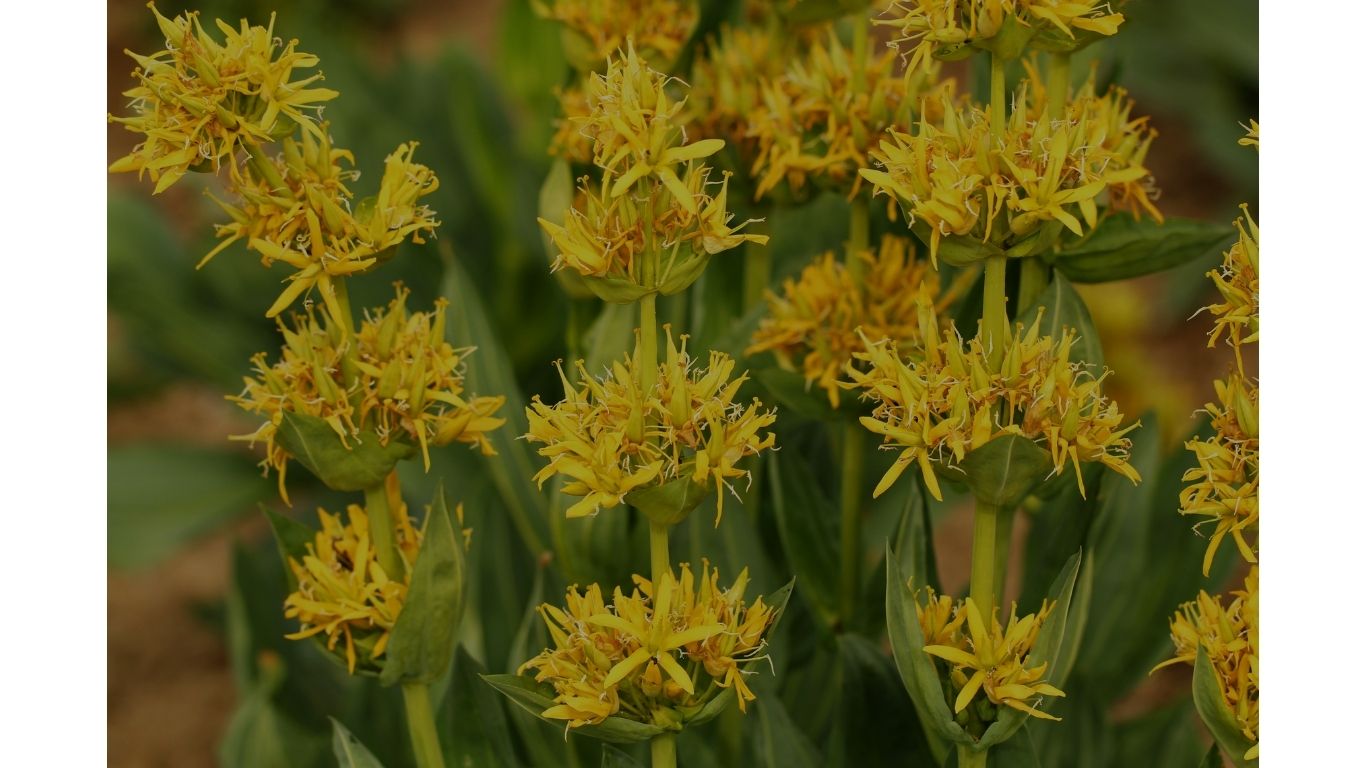
Gentiana lutea is a striking perennial herb that can grow up to four feet tall. It is characterized by its large, ovate leaves arranged in opposite pairs and its spectacular clusters of star-shaped, yellow flowers. It thrives in the mountainous regions, particularly the Alps, Apennines, and the Balkans, preferring limestone soils and high altitudes.
The plant has a long and storied history in traditional European medicine. For centuries, its intensely bitter root was prized as a digestive tonic and appetite stimulant. Its common name, Gentian, is derived from Gentius, the last king of Illyria (circa 180–167 BC), who is credited with discovering the plant’s medicinal properties. The root was traditionally used in folk medicine to treat a plethora of ailments, from fevers and worms to general debility, but its primary fame was always as a quintessential bitter for the stomach.
This herbal tradition directly influenced its adoption into homeopathy. Dr. Samuel Hahnemann, the founder of homeopathy, introduced and proved Gentiana, recognizing the healing potential locked within its bitter essence when prepared according to the homeopathic principle of potentization.
Extraction and Preparation: The Art of Potentization
The homeopathic preparation of Gentiana begins with the fresh root of the plant. The extraction process is meticulous and follows the standard homeopathic pharmacopeia to ensure purity and efficacy.
Mother Tincture (Ø): The fresh root is cleaned, chopped, and then macerated (soaked) in a mixture of alcohol and water. This process draws out the active chemical constituents from the plant material into the liquid, creating what is known as the mother tincture. This concentrated liquid form, designated by the symbol “Ø”, retains the bitter principles of the root and is sometimes used in very low potencies or as a herbal tonic, though its use in this form is more aligned with phytotherapy than classical homeopathy.
Potentization: The core principle of homeopathic preparation is a process of serial dilution and succussion (vigorous shaking). A small amount of the mother tincture is diluted with an alcohol-water mixture and then succussed. This process is repeated multiple times. Each round of dilution and succussion creates a higher potency, believed to enhance the energetic or dynamic healing power of the substance while eliminating any potential for chemical toxicity.
The resulting potencies are categorized into two main scales:
X (Decimal) Potencies: Dilutions at a ratio of 1:10. For example, Gentiana 6X means the original substance has been diluted 1:10 and succussed, repeated six times.
C (Centesimal) Potencies: Dilutions at a ratio of 1:100. Gentiana 30C, a common potency, has undergone this process thirty times.
Higher potencies (e.g., 200C, 1M) are used for more profound, constitutional symptoms, while lower potencies (6X, 6C, 30C) are typically employed for acute physical symptoms, particularly those related to digestion.
The Symptom Picture: Keynotes and Indications
A homeopathic remedy is prescribed based on the totality of symptoms it can produce in a healthy person (as discovered through “provings”) and, therefore, can cure in a sick person. The symptom profile of Gentiana is distinct, though not excessively broad.
Mental and Emotional Symptoms:
A key characteristic of a Gentiana state is a profound sense of discouragement and despondency, but with a very specific qualifier. The individual feels easily discouraged, especially regarding their health. They may be skeptical that any treatment will work for their ailment. This is not a deep, grief-stricken depression but a fleeting, reactive hopelessness tied directly to their physical discomfort. After a slight setback in their recovery, they may quickly lose heart and doubt their improvement.
Physical Symptoms and Chief Uses:
The primary action of Gentiana is on the digestive system. Its picture is one of atomic dyspepsia—weak, sluggish digestion with a lack of tone in the digestive organs.
Loss of Appetite: A marked and complete absence of hunger, often following an acute illness or during a period of convalescence.
Digestive Weakness: The stomach feels weak and unable to handle food. There is a sensation of fullness, heaviness, and pressure in the stomach after eating, even after a light meal.
Flatulence and Eructations: Significant gas formation, with sour or bitter regurgitation (eructations). The gas causes distension and discomfort in the abdomen.
Tongue Coating: The tongue often exhibits a thick, white coating, indicative of a sluggish digestive process.
Constipation: Associated with intestinal atony, where the bowel lacks peristaltic energy, leading to difficult and incomplete stools.
Convalescence: It is a prime remedy for weakness and lack of appetite during recovery from an acute disease like influenza or gastritis, where the digestive power is slow to return.
In essence, Gentiana is the remedy for a “gone” feeling in the pit of the stomach, accompanied by a loss of spirit and a sour, upset digestive tract.
Side Effects and Safety Considerations
A significant advantage of homeopathic medicines, when used correctly, is their exceptional safety profile. Due to the highly diluted nature of potencies beyond 12C, there is no risk of chemical toxicity or direct side effects.
Homeopathic Aggravation: A temporary, mild intensification of existing symptoms can occasionally occur after taking a well-selected remedy. This is often seen as a positive sign that the vital force is responding to the medicine. It is short-lived and followed by improvement.
Ineffectiveness: The most common “side effect” is simply a lack of effect, which occurs if the remedy is not well-matched to the individual’s symptom picture.
Mother Tincture: As with any herbal concentrate, the undiluted mother tincture could potentially cause irritation or side effects if misused, which is why its use is typically guided by professionals.
Homeopathic Gentiana is safe for all age groups, including infants and the elderly, and can be used during pregnancy and breastfeeding when indicated. However, as with any health intervention, consultation with a qualified homeopathic practitioner or healthcare provider is recommended for persistent or serious conditions.
Prevention: A Nuanced Perspective
Within a homeopathic framework, the concept of prevention is different from the conventional medical model of vaccination or prophylactic drugs. Homeopathy does not advocate for the routine use of remedies to “prevent” illnesses in a general population.
However, a constitutional homeopathic remedy, prescribed by a trained practitioner based on an individual’s entire physical, mental, and emotional makeup, can work by strengthening the vital force and overall constitution. A person in a state of better health is naturally more resistant to disease. Gentiana itself is not typically used as a preventive remedy. Its application is acute and specific—it is given when symptoms of digestive atony and discouragement are already present, not to prevent them from occurring.
Comparative Analysis with Other Remedies
A clear understanding of Gentiana is often achieved by contrasting it with other homeopathic remedies that have overlapping spheres of action.
Gentiana vs. Nux Vomica:
Both are renowned digestive remedies. The key difference lies in the cause and nature of the symptoms.
Nux Vomica is for digestive troubles caused by overindulgence: too much rich food, alcohol, coffee, or stress. The person is irritable, impatient, and chilly. They experience nausea, heartburn, and a feeling as if a stone were in their stomach. They are oversensitive to everything.
Gentiana is for simple weakness and lack of function. There is no history of abuse; the system is just “tired” and unable to perform. The mental state is discouragement, not irritability.
Gentiana vs. Lycopodium:
Lycopodium is another major remedy for gas, bloating, and liver dysfunction.
Lycopodium patients experience bloating that starts soon after eating, with gas that is trapped and causes distension that is often worse on the right side. They have a craving for sweets and may feel full after only a few bites. Their confidence is lacking in their abilities, though they may be domineering at home.
Gentiana has a more general weakness and a lack of appetite altogether, not early satiety. The bloating is not as localized. The mental state is a simple, health-related discouragement.
Gentiana vs. China (Cinchona officinalis):
China is a premier remedy for debility and gas, especially after fluid loss (e.g., diarrhea, bleeding, breastfeeding).
China has extreme, airy, painless bloating that is not relieved by belching or passing gas. The person is profoundly exhausted, nervous, and oversensitive to touch and drafts.
Gentiana bloating is accompanied by sourness and is less extreme. The debility is focused on the digestive system and is paired with a specific mental discouragement.
Gentiana vs. Abies Nigra:
Abies Nigra is a lesser-known remedy with a characteristic sensation of a “hard lump” in the stomach, as if a hard-boiled egg had lodged there, long after eating.
While Gentiana has heaviness and fullness, it lacks this very specific, localized “lump” sensation of Abies Nigra.
Frequently Asked Questions (FAQs) about Homeopathic Gentiana
Q1: What is homeopathic Gentiana primarily used for?
A: Gentiana is primarily used for digestive weakness, particularly a condition known as atomic dyspepsia. This includes a complete loss of appetite, a feeling of heaviness and fullness in the stomach after eating, sour belching, bloating, and general digestive sluggishness. It is also a key remedy for a specific state of discouragement that directly follows a slight setback in one’s health.
Q2: How does Gentiana differ from other digestive homeopathic remedies like Nux Vomica?
A: This is a crucial distinction. Nux Vomica is for digestive issues caused by overindulgence (e.g., too much rich food, alcohol, stress). The person is often highly irritable and chilly. Gentiana, on the other hand, is for simple weakness and lack of function without a history of abuse. The digestive system is just “tired.” The mental state is one of discouragement rather than irritability.
Q3: Can Gentiana be used to prevent digestive problems?
A: In classical homeopathy, remedies are not typically used as prophylactics (preventatives) in this way. Gentiana is prescribed when specific symptoms of digestive atony and discouragement are already present. The homeopathic approach to prevention focuses on strengthening the entire constitution with a well-matched constitutional remedy, rather than using a specific medicine like Gentiana in advance.
Q4: Is homeopathic Gentiana safe for children and pregnant women?
A: Due to the highly diluted nature of homeopathic potencies (especially those above 12C), Gentiana is generally considered safe for all age groups, including children, and during pregnancy and breastfeeding. However, it is always recommended to consult with a healthcare professional or a qualified homeopathic practitioner before administering any remedy, especially during pregnancy, to ensure it is the correct choice for the symptoms.
Q5: What are the side effects of taking Gentiana?
A: When used correctly, homeopathic Gentiana is not known to have chemical side effects due to its high dilution. The most common experience is simply no effect if the remedy is not well-matched. On rare occasions, a homeopathic aggravation can occur, which is a temporary, mild intensification of existing symptoms. This is usually seen as a positive sign that the body is responding and is followed by improvement.
Q6: What potency of Gentiana should I use?
A: For acute digestive issues like a sudden loss of appetite after an illness, lower potencies such as 6X, 6C, or 30C are commonly used and can be found in many health stores. The frequency of dosage depends on the intensity of the symptoms—often taken a few times a day until improvement is seen. For more chronic or constitutional issues, it’s best to consult a homeopath who may prescribe a higher potency based on a full assessment.
Q7: I feel easily discouraged about my health. Does that mean I need Gentiana?
A: Not necessarily. The discouragement associated with Gentiana is very specific. It is a fleeting, reactive state where a person feels instantly disheartened and skeptical about recovery after a minor setback or a wave of nausea. If your discouragement is deep, chronic, or unrelated to your physical health, other remedies like Aurum metallicum or Ignatia may be more appropriate. A homeopath looks at the entire symptom picture, not just one emotion.
Q8: Where does Gentiana come from?
A: The homeopathic remedy is prepared from the fresh root of the Gentiana lutea plant, also known as the Great Yellow Gentian. This is a large, flowering plant native to the mountainous regions of central and southern Europe. Its root has a long history of use as a bitter digestive tonic in traditional herbal medicine.
Q9: How long does it take for Gentiana to work?
A: For acute symptoms, such as a loss of appetite after a stomach bug, you might notice an improvement within a few hours or after a few doses. The return of a desire to eat is a key indicator. If there is no change after 24-48 hours, it is likely that Gentiana is not the correct remedy for your case, and you should reassess your symptoms.
Q10: Can I take Gentiana alongside my conventional medications?
A: There are no known pharmacological interactions between homeopathic medicines and conventional drugs due to the ultra-high dilutions. However, it is essential to inform your doctor about all the treatments and supplements you are using. You should never stop taking prescribed medication without consulting your physician.
Conclusion
Gentiana may not command the vast scope of remedies like Sulphur or Lycopodium, but its value in the homeopathic cabinet is precise and undeniable. It is the gentle stimulant for the discouraged spirit and the weakened stomach. It answers the call of a digestive system that has run out of energy and a mind that has momentarily lost hope in its recovery. From the bitter root of a majestic alpine flower, homeopathy has crafted a subtle yet powerful medicine that exemplifies the principle of treating the individual, not just the disease. By understanding its unique symptom picture—atomic dyspepsia with fleeting despondency—one can appreciate Gentiana’s role in guiding patients from a state of weakness and discouragement back to one of robust digestion and renewed vitality.