Table of Contents
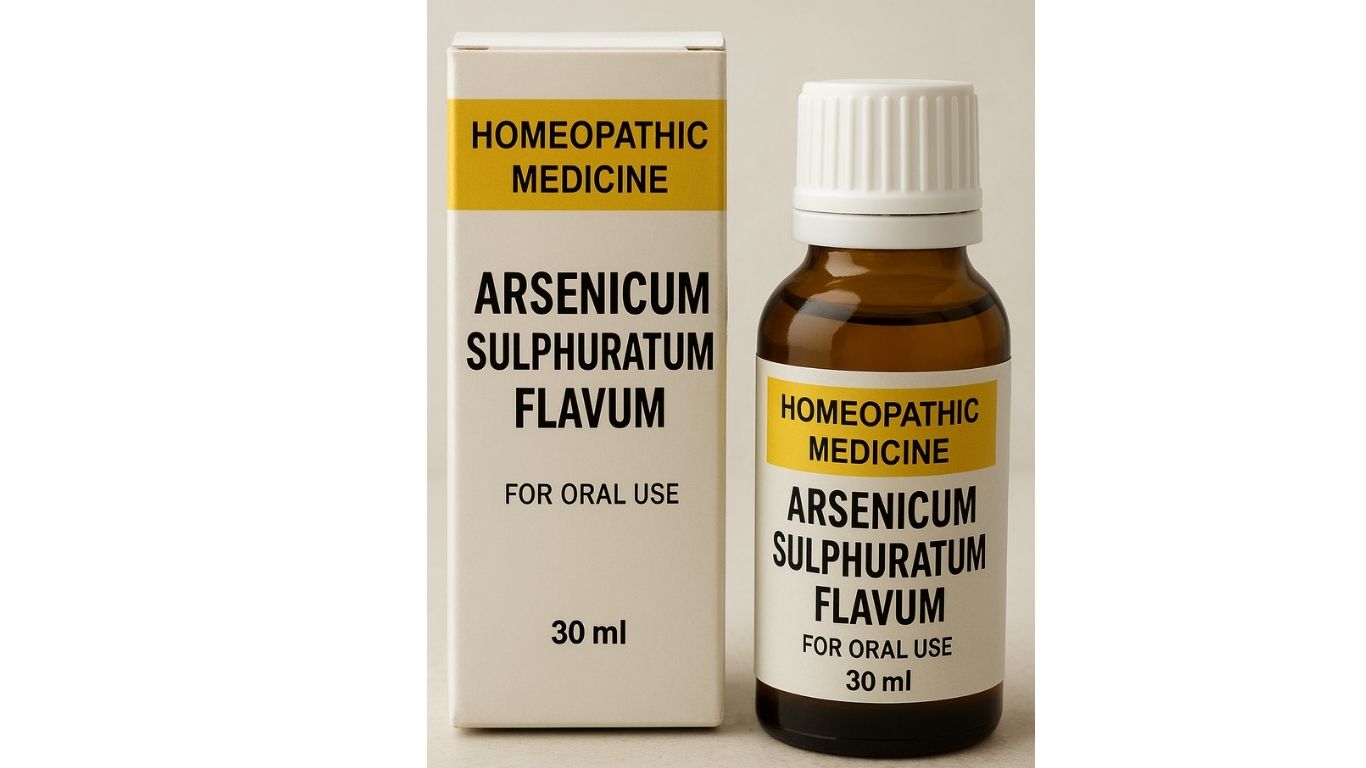
ToggleUnveiling the Golden Remedy: A Comprehensive Guide to Homeopathic Medicine Arsenicum Sulphuratum Flavum
Homeopathy, a system of alternative medicine founded on the principle of “like cures like,” boasts a vast pharmacopeia of remedies derived from natural substances. Among these, Arsenicum Sulphuratum Flavum stands as a distinctive and intriguing medicine, often recognized by its characteristic yellow hue. This compound remedy, a unique chemical combination of arsenic and sulphur, holds a specific and vital place in the homeopathic cabinet, particularly for addressing stubborn skin conditions and respiratory ailments. To fully appreciate its therapeutic potential, one must delve into its origin, preparation, symptomatic picture, and clinical applications.
Origin and Extraction: The Alchemy of Arsenic and Sulphur
Arsenicum Sulphuratum Flavum, also known as Arsenic Trisulphide or Orpiment, is not a plant or animal product but a mineral compound. Its history predates homeopathy, as it was known in ancient times as a pigment and a depilatory agent. The natural mineral form, Orpiment, is renowned for its brilliant lemon-yellow color and has been used in art and craft for centuries.
In homeopathy, the substance used for potentization is not the crude mineral in its raw, toxic form. Instead, it is a chemically prepared compound of arsenic trisulphide (As₂S₃). The process involves the precise combination of arsenic and sulphur under controlled conditions to create a stable, pure substance. This initial compound, Arsenicum Sulphuratum Flavum, is the starting point for the homeopathic manufacturing process.
The extraction and preparation follow the strict guidelines of homeopathic pharmacopoeias. The compound is first triturated—a process of grinding with lactose (milk sugar)—for several hours to create the initial powdered preparations. This meticulous trituration is believed to release the latent dynamic energy of the substance. Once a certain level of dilution is achieved, the remedy is then further processed through serial dilution and succussion (vigorous shaking). This dual process of dilution and succussion is fundamental to homeopathy, as it is thought to imprint the energetic signature of the original substance onto the water-alcohol mixture while simultaneously removing any toxicological effects of the crude material. The resulting potencies are safe, non-toxic, and used for their purported healing properties.
The Spectrum of Potencies: Unlocking Energetic Potential
Like all homeopathic remedies, Arsenicum Sulphuratum Flavum is available in a wide range of potencies, each suited to different situations and prescribing philosophies. The potency refers to the degree of dilution and succession the original substance has undergone.
Lower Potencies (e.g., 6C, 12C, 30C): These are typically used for acute conditions or for addressing local, physical symptoms. A practitioner might recommend a lower potency for a sudden flare-up of eczema or a bout of asthmatic coughing. They are often repeated more frequently.
Medium and Higher Potencies (e.g., 200C, 1M, 10M): These are generally reserved for chronic conditions, where the symptoms are deeply entrenched in the individual’s constitution. The selection of a high potency is a more nuanced decision, often based on a close match between the patient’s overall mental, emotional, and physical state and the drug picture of the remedy. Such potencies are usually administered infrequently and under the guidance of a qualified homeopath.
The choice of potency is a critical aspect of homeopathic practice and is not a decision to be made lightly. Self-prescribing, especially for chronic or serious conditions, is strongly discouraged. A homeopath selects the potency based on the totality of symptoms, the vitality of the patient, and the nature of the disease.
The Symptomatic Portrait: When is Arsenicum Sulphuratum Flavum Indicated?
Every homeopathic remedy has a unique “symptom picture”—a collection of characteristic mental, emotional, and physical symptoms that guide its selection. Arsenicum Sulphuratum Flavum shares traits with its parent remedies, Arsenicum Album and Sulphur, but has forged its own distinct identity.
Mental and Emotional Symptoms:
The individual needing Arsenicum Sulphuratum Flavum often exhibits a blend of anxiety and restlessness, reminiscent of Arsenicum Album, but perhaps less intensely perfectionistic. There can be a underlying despair, especially regarding their health, particularly when skin conditions are disfiguring or long-standing. They may feel a sense of hopelessness that their ailment will never improve. Irritability is common, and they can be easily vexed.
General Physical Characteristics:
A key general modality is a marked aggravation from bathing or washing. This is a paramount symptom, especially in skin cases. The patient may notice their itching or eruption becomes significantly worse after a bath or shower. There is often a profound sense of weariness and debility, a feeling of being completely drained of energy. The symptoms, in general, tend to be worse at night, disrupting sleep.
Key Physical Symptoms and Uses:
Skin Affections: This is the primary domain of Arsenicum Sulphuratum Flavum. It is a leading remedy for chronic skin diseases that are stubborn, itchy, and burning.
Eczema and Psoriasis: It is particularly indicated for dry, scaly, itchy skin where the itching is so intense it drives the person to scratch until the skin bleeds. After scratching, there is a burning sensation. The skin may look dirty, rough, and thickened. It is a top remedy for eczema that is worse on the legs.
Intense Itching (Pruritus): The itching is relentless and unbearable, often worsening at night and from the warmth of the bed. The “worse from bathing” modality is a strong confirming symptom.
Herpes Zoster (Shingles): It can be beneficial for shingles where the blisters are accompanied by a characteristic burning pain, and the person feels restless and anxious.
Respiratory Complaints: The remedy has a strong affinity for the respiratory tract, offering similarities to both Arsenicum Album and Hepar Sulphuris.
Asthma: It is indicated for asthmatic breathing with a sense of constriction in the chest. The cough is often loose and rattling, but the expectoration is difficult. The asthma may be worse at night, after midnight, and the person may feel suffocated and sit up for relief. There is often a concomitant feeling of weariness and chilliness.
Chronic Bronchitis and Coughs: For a chronic, deep-seated cough with yellow or greenish expectoration that is difficult to bring up. The cough is aggravated by cold air and relieved by warmth.
Other Uses: While less common, it has been used for rheumatic pains that are worse at night and for certain types of headaches with a burning sensation.
Safety, Side Effects, and the Importance of Professional Guidance
A fundamental tenet of homeopathy is the safety of its ultra-dilute preparations. In the potencies commonly available (e.g., 6C and above), Arsenicum Sulphuratum Flavum contains no measurable molecules of the original substance and is therefore chemically inert and non-toxic. It does not have the side effects associated with pharmaceutical drugs.
However, the primary “risk” in homeopathy lies in incorrect application. Using an ill-suited remedy will simply do nothing; it will not produce a harmful chemical reaction. A more nuanced consideration is the concept of a “homeopathic aggravation.” This is a temporary, mild intensification of existing symptoms that can sometimes occur after taking a well-matched remedy. It is seen as a positive sign that the vital force has been stimulated and is beginning to respond. Such aggravations are short-lived and are followed by improvement.
The most significant form of prevention when using homeopathy is to prevent a delay in seeking necessary conventional medical care. A serious condition like asthma or a persistent skin infection requires a proper diagnosis from a medical doctor. Homeopathy can be used as a complementary approach, but it should not replace essential allopathic treatment in critical situations. Always consult a qualified homeopathic practitioner for chronic conditions to ensure the correct remedy and potency are selected for your unique constitution.
Comparative Analysis: Distinguishing It from Its Peers
To truly understand Arsenicum Sulphuratum Flavum, it is essential to compare it with other remedies that have overlapping symptom pictures.
Arsenicum Sulphuratum Flavum vs. Arsenicum Album:
Both share anxiety, restlessness, and a burning sensation. However, Arsenicum Album is the picture of perfectionism, fastidiousness, and profound anxiety about health and security. The Arsenicum Album patient is chilly, exhausted, and has burning pains that are relieved by heat. Their discharges are often scanty and burning. Arsenicum Sulphuratum Flavum lacks the intense fastidiousness. Its focus is more on the skin and respiratory symptoms, with the key “worse from bathing” modality being a major differentiator. It is, in a sense, a less mentally refined but more physically stubborn version of Arsenicum Album.
Arsenicum Sulphuratum Flavum vs. Sulphur:
Sulphur is a great polycrest remedy with a very broad application. The typical Sulphur patient is philosophical, untidy, and warm-blooded. Their skin itches and burns, and they love scratching it. A key Sulphur modality is “worse from bathing,” which it shares strongly with Arsenicum Sulphuratum Flavum. However, Sulphur’s symptoms are often worse from warmth, and the patient is generally hot. Arsenicum Sulphuratum Flavum often has a chillier disposition, leaning more towards Arsenicum Album. Furthermore, Sulphur lacks the specific anxiety and restlessness of the Arsenicum types.
Arsenicum Sulphuratum Flavum vs. Graphites:
Graphites is another major skin remedy, excellent for moist, oozing eczema that exudes a sticky, honey-like discharge. The skin in Graphites is rough, hard, and cracked. Arsenicum Sulphuratum Flavum, in contrast, is more for dry, scaly, intensely itching skin where the burning after scratching is prominent. Graphites patients are often overweight, chilly, and indecisive, a different constitutional picture altogether.
Arsenicum Sulphuratum Flavum vs. Hepar Sulphuris:
Both can be used for asthmatic conditions and coughs with difficult expectoration. However, Hepar Sulph is extremely sensitive to cold in every form—cold air, cold drinks, drafts. The slightest exposure to cold triggers a coughing fit or aggravates their skin infection. They can be very irritable and hypersensitive. Arsenicum Sulphuratum Flavum is sensitive to cold but not to the extreme degree of Hepar Sulph. Its guiding symptoms of weariness and the skin’s aggravation from bathing help to distinguish it.
Frequently Asked Questions (FAQs): About Homeopathic Medicine Arsenicum Sulphuratum Flavum
Q1: What is Arsenicum Sulphuratum Flavum, and where does it come from?
Arsenicum Sulphuratum Flavum is a homeopathic medicine prepared from a compound of arsenic and sulphur, known chemically as arsenic trisulphide. Its natural mineral form is called Orpiment, which has a distinctive yellow color. In homeopathy, it is not used in its raw, toxic form. Instead, it undergoes a specific process of serial dilution and vigorous shaking (succussion) to create safe, potentized remedies that are used for their therapeutic properties.
Q2: What are the main health conditions this remedy is used for?
The two primary areas where Arsenicum Sulphuratum Flavum is most often indicated are:
Stubborn Skin Conditions: It is a leading remedy for chronic, itchy, and burning skin ailments like eczema and psoriasis, especially when the itching is intense and worse at night and, notably, after bathing or washing.
Respiratory Issues: It can be helpful for certain types of asthma and chronic bronchitis, particularly when there is a rattling cough with difficult expectoration, a feeling of chest constriction, and general weariness.
Q3: I see it contains arsenic. Is it safe to use?
Yes, when used according to homeopathic principles, it is considered safe. The process of potentization involves extreme dilution. In the potencies commonly available over-the-counter (like 6C, 12C, or 30C), there is no measurable molecular presence of the original substance left in the remedy. This makes it non-toxic and devoid of the chemical side effects associated with crude arsenic. The safety concern lies not in toxicity but in self-prescribing for a serious condition without a proper diagnosis.
Q4: What are the key symptoms that suggest someone might need this remedy?
Look for this combination of characteristics:
Intense Skin Itching: The skin itches ferociously, compelling the person to scratch until it bleeds, followed by a burning sensation.
Worse from Bathing: A hallmark symptom is a clear worsening of the skin’s itching or appearance after a bath or shower.
Burning Sensations: A burning feeling in the affected parts (skin or chest).
Profound Weariness: A deep-seated feeling of exhaustion and debility.
Restlessness and Anxiety: Especially anxiety about their health, though typically less intense than in Arsenicum Album.
Q5: How is Arsenicum Sulphuratum Flavum different from Arsenicum Album?
While they share traits like anxiety, restlessness, and burning pains, they have distinct focuses:
Arsenicum Album is known for intense perfectionism, fastidiousness (neatness), and profound fear about health and security. It is a major remedy for digestive issues (like food poisoning) and acute anxiety.
Arsenicum Sulphuratum Flavum is considered more of a “skin and respiration” remedy. It lacks the strong fastidiousness of Arsenicum Album, and its guiding symptom is the aggravation of skin symptoms from bathing.
Q6: What potency should I choose, and how often should I take it?
Potency selection is complex and best done by a qualified practitioner.
For acute flare-ups (like a sudden eczema itch), lower potencies like 6C or 12C may be used, potentially repeated a few times a day.
For chronic, long-standing conditions, higher potencies (200C and above) are typically used, and they are administered infrequently (e.g., once a week or even less often).
Self-prescription for chronic conditions is not recommended. The frequency of dosage depends on the individual’s vitality and the acuity of the condition. It is always best to follow the instructions of your homeopath or those on the product label if it is an over-the-counter preparation for a minor, self-limiting issue.
Q7: Are there any side effects?
In the traditional medical sense, no, there are no pharmacological side effects due to the high dilution. However, after taking a well-matched homeopathic remedy, some individuals may experience a “homeopathic aggravation.” This is a temporary, mild intensification of existing symptoms, which is seen as a sign that the body is responding to the remedy. This is usually short-lived and followed by improvement. If you experience any strong or concerning reactions, you should stop the remedy and consult your homeopath or doctor.
Q8: Can I use this remedy alongside my conventional (allopathic) medicines?
Homeopathic remedies are generally considered compatible with conventional medicines because they work on a different principle. There is no known chemical interaction. However, it is absolutely crucial to inform both your medical doctor and your homeopathic practitioner about all the medications and supplements you are taking. This ensures coordinated and safe care. Homeopathy should be seen as a complementary system, not a replacement for essential conventional treatment, especially for serious diagnoses like severe asthma.
Q9: Where can I purchase Arsenicum Sulphuratum Flavum?
It is available at many health food stores, specialty pharmacies, and numerous online retailers that specialize in homeopathic products. It is commonly found in pellet or liquid form.
Q10: When should I definitely see a doctor instead of self-prescribing this remedy?
You should always seek a conventional medical diagnosis for any persistent or severe symptom. Specifically, consult a doctor immediately for:
Difficulty breathing or a severe asthma attack.
A skin rash that is spreading rapidly, is intensely painful, or shows signs of infection (like pus, fever, or red streaks).
Any chronic health condition that has not been properly diagnosed.
A correct diagnosis is essential, and homeopathy can then be used as a complementary approach to support your overall well-being under proper guidance.
Conclusion
Arsenicum Sulphuratum Flavum emerges from the homeopathic tradition as a specialized and invaluable remedy. Born from the union of two profound polychrests, it carves its niche in the treatment of debilitating skin disorders and specific respiratory afflictions. Its hallmark symptoms—the unbearable itching worsened by water, the burning sensations, and the profound weariness—paint a clear picture for the discerning practitioner. While safe in its prepared form, its power is best harnessed through professional guidance, ensuring it acts as a key to unlock health for those whose symptoms echo its unique and potent signature.