
Table of Contents
ToggleMagnesium Deficiency: Understanding Symptoms, Causes, Effects, Prevention and Homeopathic Remedies for Magnesium Deficiency
Introduction
Magnesium is an essential mineral that plays a vital role in numerous physiological processes within the human body. It is involved in regulating muscle and nerve function, blood sugar levels, blood pressure, and the production of protein, bone, and DNA . Despite its importance, many individuals do not consume the recommended daily amounts of this mineral, potentially leading to a condition known as magnesium deficiency or hypomagnesemia. This article explores the multifaceted nature of magnesium deficiency, from its subtle symptoms to its long-term health implications, along with strategies for prevention and a discussion of traditional homeopathic approaches.
Understanding Magnesium and Its Role in the Body
Magnesium is one of the body’s essential electrolytes, minerals that carry an electric charge when dissolved in body fluids. However, the majority of magnesium in the body is not charged and is bound to proteins or stored in bone . While blood contains relatively little magnesium, this small amount is crucial for normal nerve and muscle function and for the development of healthy bones and teeth .
The recommended daily intake of magnesium varies by age and sex. For healthy adults, the recommended daily allowance ranges from 310 to 420 milligrams. Men generally require more magnesium (400–420 mg) than women (310–320 mg). Requirements increase during pregnancy and breastfeeding to support the developing fetus and the demands of lactation . The body typically absorbs about 30% to 40% of dietary magnesium, and the kidneys play a crucial role in regulating magnesium levels by limiting urinary excretion when intake is low .
Recognizing the Symptoms of Magnesium Deficiency
The symptoms of magnesium deficiency can be subtle in the early stages and may not become obvious for some time. In fact, in the short term, getting too little magnesium may not produce any noticeable symptoms, as the kidneys compensate by retaining the mineral . However, as the deficiency persists or worsens, a range of symptoms can emerge.
Early and Common Symptoms
Initial signs of magnesium deficiency often include gastrointestinal complaints such as loss of appetite, nausea, and vomiting. Individuals may also experience generalized fatigue and weakness . These symptoms are nonspecific and can easily be attributed to other causes, making magnesium deficiency challenging to identify without laboratory testing.
Neuromuscular Symptoms
As the deficiency progresses, neuromuscular symptoms become more prominent. These can include muscle spasms, tremors, and muscle fasciculations. Individuals may experience tetany, a condition characterized by involuntary muscle contractions. Two classic signs of tetany are the Trousseau sign (carpal spasm induced by reducing blood supply to the hand) and the Chvostek sign (involuntary twitching of facial muscles elicited by tapping the facial nerve) . Numbness and tingling sensations may also occur .
Psychological and Neurological Symptoms
Magnesium deficiency can affect mental health and neurological function. Personality changes, lethargy, and depression have been associated with low magnesium levels . Some individuals may experience increased anxiety, irritability, and emotional sensitivity . In severe cases, particularly in children, generalized tonic-clonic seizures may occur .
Cardiac Symptoms
The cardiovascular system is also affected by magnesium deficiency. Abnormal heart rhythms, known as arrhythmias, can develop. Palpitations and electrocardiographic changes may be observed. In severe cases, cardiac arrest is a risk .
Causes and Risk Factors for Magnesium Deficiency
Magnesium deficiency typically arises from a combination of inadequate intake and impaired absorption or increased excretion. Several factors can contribute to the development of this condition.
Dietary Insufficiency
Inadequate dietary intake of magnesium is a primary cause. Diets low in magnesium-rich foods, such as legumes, nuts, seeds, whole grains, and green leafy vegetables, can lead to deficiency over time . Food processing, particularly the refining of grains, substantially reduces magnesium content. For instance, white flour contains far less magnesium than whole wheat flour .
Gastrointestinal Disorders
Conditions that impair nutrient absorption in the gastrointestinal tract can lead to magnesium deficiency. These include Crohn’s disease, celiac disease, chronic diarrhea, and malabsorption syndromes. Extensive bowel resection or short gut syndrome can also result in inadequate magnesium absorption . Chronic vomiting or diarrhea increases magnesium loss through the digestive tract .
Medications
Several classes of medications can cause increased urinary excretion of magnesium. Diuretics, particularly loop diuretics such as furosemide, are common culprits. Chronic use of proton pump inhibitors (PPIs) for more than a year has been associated with hypomagnesemia . Other medications linked to magnesium depletion include the antifungal agent amphotericin B, the chemotherapy drug cisplatin, and certain antibiotics including aminoglycosides .
Underlying Medical Conditions
Various health conditions can predispose individuals to magnesium deficiency. Long-term alcohol use disorder is a significant risk factor, as it is associated with poor dietary intake and increased renal excretion of magnesium . Uncontrolled diabetes, particularly with poor glycemic control, can lead to increased magnesium loss through the kidneys . Hypercalcemia (elevated calcium levels) and hyperaldosteronism can also increase magnesium excretion .
Life Stages and Vulnerable Populations
Certain groups are at higher risk of magnesium deficiency. Older adults may have reduced dietary intake and impaired absorption. Teenagers, particularly girls, often have low magnesium intakes . Pregnant and breastfeeding women have increased magnesium requirements, and breastfeeding can increase magnesium excretion .
Health Effects and Complications of Magnesium Deficiency
Prolonged magnesium deficiency can have significant health consequences affecting multiple body systems.
Electrolyte Imbalances
Magnesium deficiency often occurs alongside other electrolyte disturbances. Hypokalemia (low potassium) and hypocalcemia (low calcium) are common in individuals with low magnesium levels . This is partly because magnesium is necessary for the proper regulation of these other electrolytes. Correcting magnesium deficiency is often required to resolve refractory hypokalemia or hypocalcemia .
Cardiovascular Complications
Chronic magnesium deficiency is associated with an increased risk of cardiovascular problems. These include hypertension, arrhythmias, and coronary artery disease. Magnesium deficiency can contribute to vasospasm and may increase the risk of cardiac arrest in severe cases .
Neurological and Psychiatric Effects
Long-term magnesium deficiency may contribute to various neurological and psychiatric conditions. Depression has been linked to low magnesium levels, with some research suggesting that magnesium insufficiency may be related to major and suicidal depression . Anxiety, migraines, and other neurological symptoms have also been associated with magnesium deficiency .
Skeletal and Muscular Effects
Magnesium is essential for bone health. Chronic deficiency can lead to reduced bone mineral density, increasing the risk of osteoporosis and fractures . Persistent magnesium deficiency can also cause degeneration of skeletal and cardiac muscle, as well as the kidneys and other tissues .
Metabolic Effects
Magnesium deficiency has been linked to insulin resistance and an increased risk of developing type 2 diabetes. People with higher magnesium intakes tend to have a lower risk of developing this condition .
Prevention of Magnesium Deficiency
Prevention of magnesium deficiency primarily involves ensuring adequate dietary intake of the mineral through a balanced diet.
Dietary Sources of Magnesium
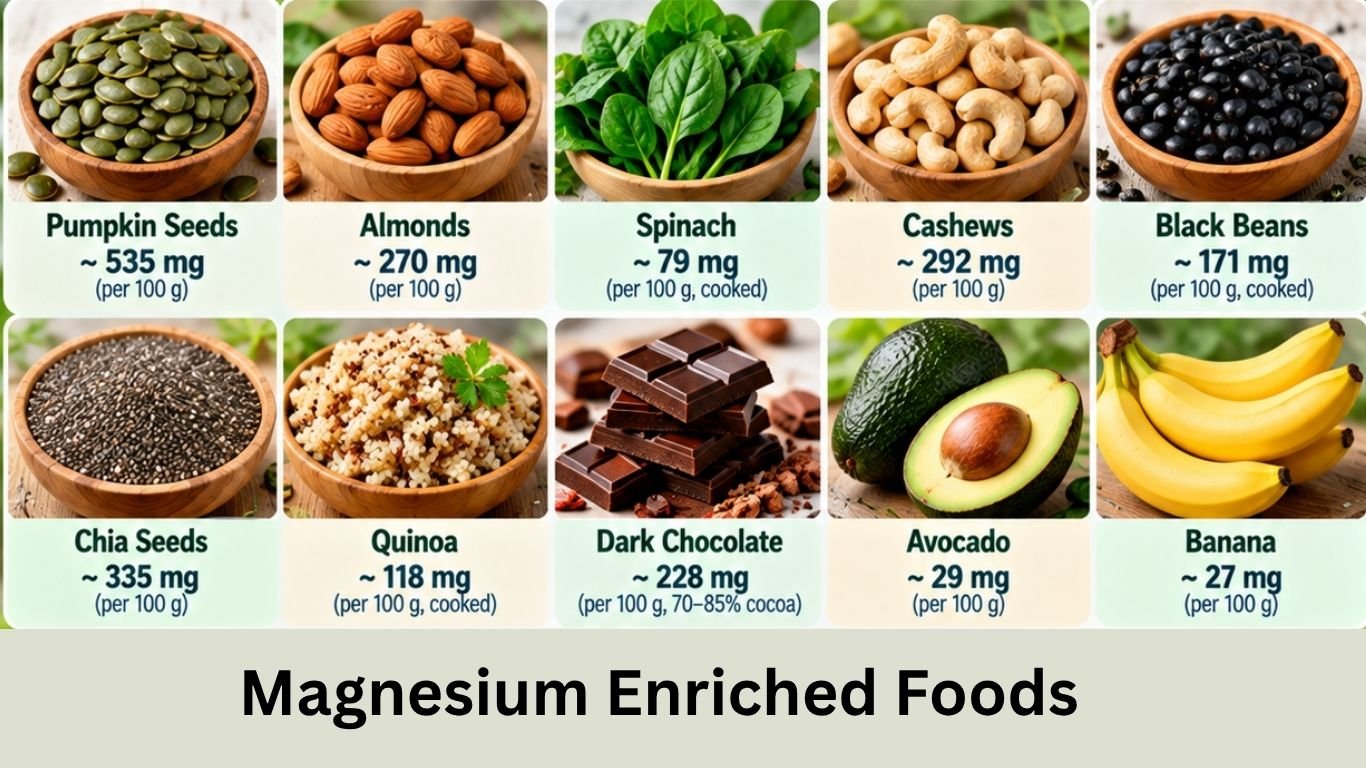
A varied diet rich in magnesium-containing foods is the best defense against deficiency. Excellent sources include pumpkin seeds (156 mg per ounce), chia seeds (111 mg per ounce), almonds (80 mg per ounce), and boiled spinach (78 mg per half cup). Other good sources include cashews, peanuts, black beans, edamame, peanut butter, baked potatoes with skin, brown rice, yogurt, and fortified breakfast cereals .
Legumes, nuts, seeds, whole grains, and green leafy vegetables are consistently highlighted as excellent magnesium sources . Including a variety of these foods in daily meals can help meet magnesium requirements.
Lifestyle Considerations
Limiting alcohol consumption can help prevent magnesium depletion, as alcohol use disorder is a significant risk factor for deficiency . For individuals taking medications that deplete magnesium, such as diuretics or proton pump inhibitors, regular monitoring of magnesium levels may be advisable, particularly with long-term use .
Supplementation
For individuals who cannot meet their magnesium needs through diet alone, magnesium supplements are available. Forms of magnesium that are more easily absorbed include magnesium aspartate, magnesium citrate, magnesium lactate, and magnesium chloride . Magnesium oxide is less bioavailable. It is important to note that supplements should be used with caution and under medical guidance, as excessive magnesium intake can cause diarrhea and other side effects, particularly in individuals with kidney disease .
Traditional Homeopathic Approaches to Magnesium-Related Symptoms
Homeopathy is a system of medicine that uses highly diluted substances to stimulate the body’s self-healing response. In homeopathic practice, magnesium-based remedies are traditionally used to address various symptoms that may overlap with those of magnesium deficiency. It is important to understand that these remedies are chosen based on the principle of “like cures like” and an individualized assessment of symptoms, not simply based on a diagnosis of magnesium deficiency. The following information describes traditional uses and should not be interpreted as a claim that homeopathic remedies cure magnesium deficiency.
Magnesium Carbonicum
Magnesium carbonicum is traditionally used in homeopathic practice for individuals who experience slow metabolism and a relaxed constitution. This remedy is often considered for those who are chilly, feel old, and have a tendency toward right-sided complaints. Traditional indications include digestive issues such as milk intolerance, sour stools, and abdominal cramping with nausea. It has also been associated with anticipatory anxiety and a sense of insecurity .
Magnesium Muriaticum
Magnesium muriaticum (magnesium chloride) is traditionally indicated for individuals with similar constitutional characteristics to magnesium carbonicum but with more pronounced emotional sensitivity. It may be considered for those who feel neglected or have a fear of loss. Digestive symptoms, including diarrhea with green, frothy stools, and abdominal pain that doubles the person up, are traditional indications .
Magnesium Phosphoricum
Magnesium phosphoricum, also known as magnesium phosphate, is one of the most commonly used homeopathic remedies. It is traditionally indicated for spasmodic and cramping pains, particularly those that are relieved by warmth and pressure. This remedy is often considered for intestinal colic, menstrual cramps, migraines, and muscle spasms . The traditional use of magnesium phosphoricum aligns with the understanding that magnesium deficiency can cause neuromuscular hyperexcitability manifesting as cramps and spasms.
Magnesium Sulphuricum
Magnesium sulphuricum, or magnesium sulfate, is traditionally used in homeopathy for a range of symptoms including lacerating pains in the limbs that are worse at night, a bruised feeling throughout the body, and great languor with a staggering gait. It has also been associated with chilliness, restless sleep, and a sad, weeping mood with foreboding anxiety .
Magnesium Iodatum
Magnesium iodatum (magnesium iodide) is another remedy in the magnesium family. It is traditionally considered for conditions involving the thyroid and lymphatic system, though its use is less common than the other magnesium remedies .
General Traditional Indications for Magnesium Remedies
In homeopathic literature, the magnesium family of remedies is described as having an affinity for the nervous system, with effects on conditions involving peripheral paralysis and muscle excitability. They are considered deep-acting remedies with main constitutional tendencies described as psoric and sycotic. Common characteristics across the magnesium remedies include aggravation from cold and touch, a desire for meat and vegetables, and an aversion to sweets and fatty foods .
It is important to emphasize that the use of homeopathic remedies is based on traditional principles and individual symptom matching. While some research has explored the role of magnesium in mental health and its potential antidepressant-like effects in animal models , the efficacy of homeopathic preparations specifically for magnesium deficiency has not been confirmed through evidence-based clinical research. Homeopathic remedies contain extremely low or undetectable concentrations of active substances . Individuals experiencing symptoms of magnesium deficiency should consult a qualified healthcare provider for proper diagnosis and treatment.
FAQs About Homeopathic Remedies for Magnesium Deficiency
Can Homeopathic Remedies Cure Magnesium Deficiency?
No. Homeopathic remedies are traditionally used to help manage certain symptoms that may overlap with those of magnesium deficiency, such as muscle cramps. They are not a primary way to correct low magnesium levels in the body. True magnesium deficiency usually needs medical diagnosis and direct magnesium replacement, such as oral magnesium supplements or intravenous magnesium in serious cases.
Which Homeopathic Remedies Are Traditionally Used for Related Symptoms?
In homeopathic practice, certain magnesium-based remedies are traditionally used for symptoms like cramps, nervous tension, and fatigue, which can sometimes resemble signs of magnesium deficiency.
Magnesia phosphorica
This is often called the antispasmodic tissue salt. It is traditionally used for cramps and spasmodic pains, especially when the pain feels better with warmth and pressure and worse with cold. It is commonly mentioned for muscle cramps, menstrual cramps, and abdominal colic.
Magnesia carbonica
This is traditionally used for digestive complaints with fatigue and nerve pain, and for certain conditions involving acidic secretions.
Magnesia muriatica
This is traditionally considered for people who are emotionally sensitive and have digestive issues such as green, frothy diarrhea and abdominal pain.
Magnesia sulphurica
This is traditionally used for shooting or lacerating pains in the limbs that are worse at night, a bruised feeling in the body, and restlessness with anxiety.
Combination products
Some over-the-counter homeopathic combinations contain several magnesium salts and are traditionally used to help with mild anxiety, stress, fatigue, and some symptoms associated with low magnesium.
Can Homeopathic Remedies Directly Replace Magnesium in the Body?
No. Homeopathic medicines are highly diluted, often to the point where little or none of the original physical substance remains. Their traditional use is based on matching symptoms, not on supplying the body with magnesium the way a dietary supplement does.
What Should I Do If I Think I Have Magnesium Deficiency?
The first and most important step is to see a doctor. A blood test can confirm whether you are actually low in magnesium. If you are, your doctor may recommend dietary changes, such as eating more nuts, seeds, leafy greens, and legumes, or taking magnesium supplements. In some cases, prescription magnesium may be needed.
Only after that should you consider homeopathy as a possible complementary approach. If you are interested, speak with a qualified homeopathic practitioner or your doctor before using any remedy. Do not use homeopathy to replace standard medical treatment.
Are Homeopathic Remedies Safe?
Homeopathic remedies are generally considered safe and side effects are rare. However, many products contain lactose, which can cause digestive upset in people who are lactose intolerant. Some products may also contain wheat starch, which matters for people with wheat allergies. Always check labels and consult a professional if you are unsure.
Conclusion
Magnesium deficiency is a common but often overlooked condition that can have wide-ranging effects on health. From subtle symptoms like fatigue and loss of appetite to serious complications involving the heart, muscles, and nervous system, the consequences of inadequate magnesium intake are significant. Prevention through a diet rich in magnesium-containing foods is the most effective strategy for maintaining adequate levels. For those at risk due to medications, underlying conditions, or lifestyle factors, monitoring and appropriate supplementation under medical guidance can help prevent deficiency. While traditional homeopathic approaches offer a different perspective on managing symptoms that may accompany magnesium deficiency, they should not replace evidence-based medical care. Understanding the importance of magnesium and taking steps to ensure adequate intake can contribute to overall health and well-being.