Table of Contents
ToggleThe Desert’s Gift: A Comprehensive Guide to the Homeopathic Medicine Euphorbium Officinarum
Homeopathy, a system of alternative medicine founded on the principle of “like cures like,” utilizes substances from the plant, mineral, and animal kingdoms, often transformed through a process of serial dilution and succussion. Among its vast pharmacopoeia lies a remedy of ancient origin and striking intensity: Euphorbium Officinarum. Derived from a cactus-like plant that thrives in arid, hostile environments, this remedy carries a signature of sharp, violent symptoms that mirror the harshness of its native habitat. It is a medicine of profound value for specific, often stubborn, conditions, particularly those affecting the mucous membranes and bones.
Origin and Botanical Profile
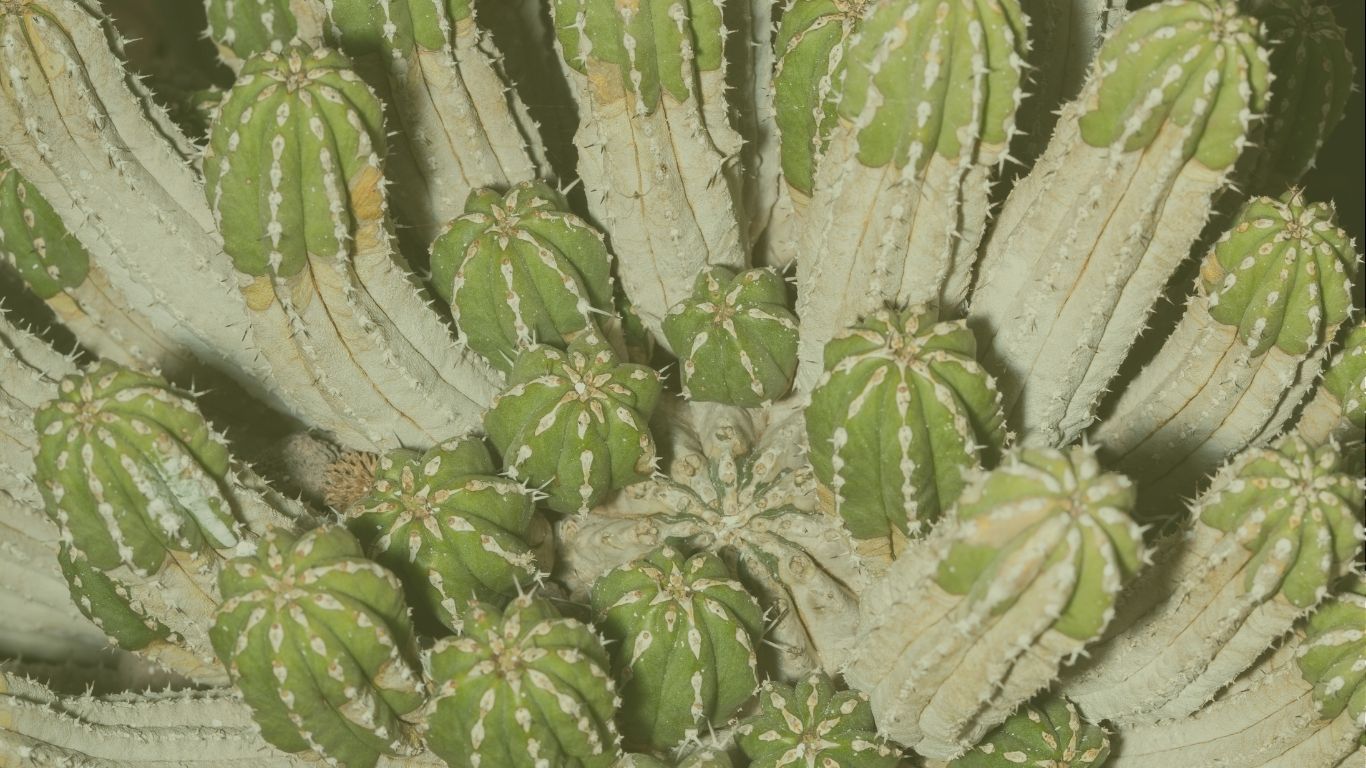
Euphorbium Officinarum is not prepared from a whole plant, but from the dried latex or resin of a plant known as Euphorbia resinifera. This species belongs to the sprawling Euphorbiaceae family, which includes poinsettias and the rubber tree. Native to the rocky slopes and deserts of Morocco, Euphorbia resinifera is a succulent, cactus-like plant that forms large, multi-angled clumps. Its survival in a water-scarce, sun-scorched landscape is a testament to its resilience.
The most defining characteristic of this plant, and the source of the homeopathic remedy, is its milky, acrid sap. This latex is a potent defensive substance, incredibly caustic and irritating to the skin and mucous membranes. Historically, this resin was known to ancient physicians like Pliny the Elder, who documented its use as a severe purgative and its application to wounds to induce inflammation and suppuration—a harsh practice aimed at healing through a counter-irritant effect. The very name “Euphorbium” is believed to be derived from Euphorbus, the Greek physician to King Juba II of Mauretania, who is credited with its discovery.
Extraction and Preparation: From Caustic Sap to Dynamic Remedy
The journey of Euphorbium from a toxic plant exudate to a homeopathic medicine is a perfect illustration of the foundational homeopathic principle. The raw resin is harvested by making incisions in the stems of the Euphorbia resinifera plant. The milky latex that exudes is then collected and allowed to dry and harden. In its crude form, this substance is dangerously powerful. Contact with the skin can cause severe burning, redness, blistering, and even ulceration. If it comes near the eyes, it can cause intense conjunctivitis and temporary blindness. Ingestion would lead to violent gastroenteritis.
To transform this poisonous substance into a therapeutic agent, homeopathic pharmacy employs a process called potentization. The initial step involves creating a mother tincture, typically by dissolving the resin in alcohol. This tincture represents the undiluted, crude substance. Subsequent potencies are created through a series of dilutions and succussions (vigorous shaking).
For example, to create a 1C (centesimal) potency, one drop of the mother tincture is diluted in 99 drops of a water-alcohol mixture and then succussed vigorously. To create a 2C potency, one drop of the 1C solution is diluted in another 99 drops of diluent and succussed again. This process is repeated to achieve the desired potency, such as 6C, 30C, 200C, or even 1M (1000C).
This process of serial dilution and succussion is believed by homeopaths to release the latent, dynamic energy of the substance while eliminating its material toxicity. Thus, Euphorbium, which in its crude form causes violent inflammation and suppuration, in its potentized form becomes a remedy capable of treating conditions characterized by these very same symptoms.
Potencies and Their Application
The selection of potency in homeopathy is a nuanced decision based on the individual’s symptoms, their vitality, and the nature of the illness.
-
Lower Potencies (6C, 12C, 30C): These are typically used for more localized, physical symptoms. For instance, a low potency of Euphorbium might be chosen for a clear case of acute sinusitis with thick, burning discharge or for a specific rheumatic pain. They are often repeated several times a day.
-
Higher Potencies (200C and above): These are employed when the symptoms are more general, the condition is chronic, or the mental and emotional state of the patient aligns strongly with the remedy picture. A single dose of a high potency may be sufficient to initiate a deep healing response and is not repeated until its action appears to have ceased.
For Euphorbium, lower potencies are more commonly used for their direct action on mucous membranes and acute pain, while higher potencies might be considered for chronic catarrhal conditions or deep-seated bone pains.
The Symptom Picture: Key Indications for Euphorbium
Understanding a homeopathic remedy involves studying its “symptom picture”—a collection of characteristic sensations, modalities (what makes it better or worse), and accompaniments that guide its prescription.
1. Catarrhal Conditions and Sinusitis:
This is the primary domain of Euphorbium. The remedy picture is one of violent, corrosive catarrh.
-
Discharge: The nasal discharge is typically thick, yellow-green, and intensely burning. It is so acrid that it excoriates the upper lip and nostrils, causing red, raw, and sore skin. Conversely, there can be alternating phases of fluent, watery coryza and complete obstruction.
-
Sensation: A feeling of fullness and pressure at the root of the nose and in the frontal sinuses is common. There may be a loss of smell (anosmia).
-
Modalities: Symptoms are often worse in the open air or from cold drafts.
2. Bone and Rheumatic Pains:
Euphorbium has a strong affinity for the periosteum (the dense layer of tissue covering the bones).
-
Nature of Pain: The pains are characteristically tearing, burning, and stitching. They feel as if they are deep in the bones.
-
Location: It is a noted remedy for pains in the facial bones, particularly the jawbone and cheekbones, often associated with chronic sinusitis. It is also used for rheumatic pains in the long bones.
-
Modality: The pains are distinctly worse at night and from changes in the weather, particularly the approach of cold, damp weather.
3. Skin Affections:
Reflecting the action of the crude resin, the skin symptoms of Euphorbium are severe.
-
Manifestations: It is indicated for burns, old ulcers that are stubborn to heal, and erysipelas (a bacterial skin infection). The affected areas are red, swollen, and burn intensely.
-
Sensation: A key sensation is a burning pain, as if from a hot coal.
4. General Modalities:
-
Worse: From cold air, cold washing, changes in weather, and at night.
-
Better: From warmth.
Clinical Uses and Applications
Based on its symptom picture, Euphorbium Officinarum finds its primary use in several clinical scenarios:
-
Chronic Sinusitis and Rhinitis: It is one of the foremost remedies for chronic catarrh, especially when the discharge is thick, purulent, and burning, leading to a raw and sore upper lip. It can be beneficial in cases of post-nasal drip with similar characteristics.
-
Acute Colds and Influenza: When a cold presents with the classic burning, excoriating nasal discharge and a feeling of fullness in the sinuses, Euphorbium can provide significant relief.
-
Facial Neuralgia and Bone Pains: For neuralgic pains in the face that are tearing or burning in nature and worse at night, Euphorbium is a key remedy. It is also considered for dental pains that extend into the jawbone.
-
Adjunctive Support in Cancer Care: Some homeopathic practitioners use Euphorbium for the burning pains associated with certain cancers, particularly bone cancer, or for the excoriating discharge from cancerous ulcers. This is always within a palliative and supportive context under professional guidance.
-
Burns: For minor burns with a sharp, burning pain, Euphorbium, especially in a topical preparation like a cream or gel in low potency, can be soothing.
Side Effects and Safety Considerations
As with all homeopathic medicines prepared through potentization, Euphorbium Officinarum is generally considered safe when used appropriately. Due to the high dilutions, there is no risk of the toxic effects associated with the crude resin.
The primary risk in homeopathy is the “aggravation,” a temporary intensification of existing symptoms following a well-indicated remedy. This is seen as a positive sign that the vital force is responding to the medicine. In the case of Euphorbium, a patient with sinusitis might experience a temporary increase in discharge or sinus pressure before improvement begins. Such aggravations are usually mild and short-lived.
It is crucial to remember that self-prescribing for serious, long-standing, or undiagnosed conditions is not advisable. A headache that feels like a “burning pain in the bones” could be sinusitis, or it could be something more serious. Professional diagnosis and guidance from a qualified homeopath are essential.
Comparisons with Other Homeopathic Remedies
A remedy’s identity is often clarified by comparing it with its closest counterparts.
Euphorbium vs. Arsenicum Album:
Both remedies feature burning pains and acrid discharges.
-
Euphorbium: The burning is intense but more localized to the mucous membranes and bones. The patient, while suffering, is not as profoundly restless, anxious, and weak as the Arsenicum patient.
-
Arsenicum: The burning is relieved by heat. The discharge is thin, watery, and acrid. The patient is exceedingly restless, profoundly anxious about their health, and feels a deep sense of exhaustion. The Arsenicum picture is one of systemic collapse and anxiety, whereas Euphorbium is more focused on local tissue irritation.
Euphorbium vs. Kali Bichromicum:
These are two of the most important remedies for thick, sticky sinus catarrh.
-
Euphorbium: The discharge is thick and distinctly burning, causing raw skin. Pains are tearing and burning in the bones.
-
Kali Bichromicum: The discharge is thick, ropy, and yellow-green, but it is not notably burning. A key characteristic is that the catarrh is sticky and difficult to expel, forming plugs. Pain is often localized to a small, specific spot, such as a single point at the root of the nose.
Euphorbium vs. Hepar Sulphuris:
Both can be used for sinus infections with pus formation.
-
Euphorbium: The focus is on the burning, corrosive quality of the discharge.
-
Hepar Sulphuris: The patient is hypersensitive to everything—touch, cold air, drafts. The discharge is often foul-smelling, and the patient is extremely irritable and oversensitive. The guiding modality for Hepar is “worse from cold and draft,” but with a strong component of irritability and splinter-like pains.
Euphorbium vs. Silicea:
Both can be used for chronic sinusitis and fistulous abscesses.
-
Euphorbium: Promotes suppuration with burning discharge; symptoms are worse from cold.
-
Silicea: Also promotes suppuration, but it is more indicated when the suppuration is slow to resolve and the patient is chronically fatigued, chilly, and lacking in vital warmth and confidence. Silicea can either help expel a foreign body (like a splinter) or help wall off an infection.
Frequently Asked Questions (FAQs) about Homeopathic Medicine Euphorbium Officinarum
1. What is Euphorbium Officinarum used for in homeopathy?
Euphorbium is primarily used for conditions involving intense inflammation and burning of the mucous membranes, especially in the sinuses and nose. Its most common uses include:
-
Chronic Sinusitis: Particularly when there is thick, yellow-green, and burning nasal discharge that makes the upper lip and nostrils raw and sore.
-
Acute Colds and Flu: When accompanied by that characteristic acrid, excoriating nasal discharge.
-
Facial Bone Pains and Neuralgia: For tearing or burning pains in the facial bones or jaw that feel deep and are often worse at night.
-
Skin Affections: For minor burns with a sharp, burning pain or old, stubborn ulcers.
2. Is Euphorbium safe? I heard the original plant is poisonous.
Yes, the homeopathic preparation of Euphorbium is considered safe. The potentization process, which involves serial dilution and vigorous shaking (succussion), removes the material toxicity of the original plant resin. You are not ingesting the physically poisonous substance. Homeopathic Euphorbium is non-toxic, non-habit-forming, and does not have known drug interactions. The primary risk, as with any homeopathic remedy, is a temporary aggravation of symptoms if the remedy is well-matched.
3. What does “acrid and burning discharge” mean exactly?
This is a key characteristic for Euphorbium. “Acrid” means the discharge is so harsh and irritating that it causes a red, inflamed, chapped, and painful rash on the skin it touches—specifically the upper lip and around the nostrils. The person might constantly wipe their nose because the skin is so sore. The sensation is one of burning, both inside the nose and on the external skin.
4. What potency of Euphorbium should I use?
Potency selection can be nuanced, but general guidelines exist:
-
For Acute, Recent Symptoms (e.g., a sudden cold): Lower potencies like 6C, 12C, or 30C are often used. These can be taken 3-4 times a day for a short period until symptoms improve.
-
For Chronic or Deeper-Seated Issues (e.g., long-standing sinusitis): Higher potencies like 200C or above may be considered. These are typically taken less frequently, often as a single dose, and waiting to see the response for days or weeks. It is always best to consult with a qualified homeopath for chronic conditions and potency selection.
5. Can I use Euphorbium for allergies (allergic rhinitis)?
You can, but it must match the specific symptoms. Euphorbium is not a general “anti-allergy” remedy. It is only indicated for allergies if the nasal discharge is thick and burning, causing rawness and soreness around the nose. Many cases of hay fever involve copious, watery, non-burning discharge (for which remedies like Allium Cepa or Euphrasia are more suitable), so the symptom picture must be a close match.
6. How is Euphorbium different from other common sinus remedies like Kali Bichromicum?
This is a very important distinction.
-
Euphorbium has thick discharge that is markedly burning, causing excoriation of the skin.
-
Kali Bichromicum also has thick, sticky, yellow-green discharge, but its key feature is that it is ropy—it can be pulled into strings. The burning sensation is not a primary feature for Kali Bich.
7. Are there any side effects?
In the traditional medical sense, no. Because of the high dilution, there are no pharmacological side effects. However, as mentioned, a “homeopathic aggravation” can occur. This is a temporary, mild intensification of your existing symptoms shortly after taking the remedy, which is often seen as a sign that the body is responding to the correct medicine. If this happens, you should stop the remedy and wait. The aggravation will pass, usually followed by improvement.
8. Can I use Euphorbium alongside my conventional medications?
Yes, homeopathic medicines are generally safe to use alongside conventional medications because they work on a different, energetic principle and do not interact chemically with drugs. However, it is crucial to inform both your medical doctor and your homeopath about all the medicines and supplements you are taking to ensure coordinated and safe care.
9. Where does Euphorbium Officinarum come from?
The remedy is prepared from the dried, milky latex or resin of the Euphorbia resinifera plant, a cactus-like succulent native to Morocco. This resin is incredibly caustic in its raw form, but through homeopathic preparation, its healing potential is unlocked.
10. Should I consult a professional before using Euphorbium?
For a simple, acute condition like a cold with clear Euphorbium symptoms, self-prescribing a low potency is generally safe. However, for any chronic, recurring, or serious health issue (like chronic sinusitis, facial neuralgia, or bone pains), a consultation with a qualified homeopathic practitioner is highly recommended. They can conduct a full case analysis to confirm that Euphorbium is the best match for your overall constitution and ensure the most effective and lasting results.
Conclusion
Euphorbium Officinarum stands as a powerful example of homeopathy’s core philosophy. It takes a substance whose crude effects are violent and destructive and, through the alchemy of potentization, transforms it into a precise healing tool. Its sphere of action, though narrow, is deep, targeting the violent burning and corrosion of mucous membranes and the deep, tearing pains of the bones. For the individual suffering from chronic sinusitis with raw, excoriated nostrils, or for the patient with rheumatic pains that burn deep within, Euphorbium can offer profound relief. Like the desert plant from which it originates, this remedy teaches that within great harshness can lie the potential for significant healing, provided it is understood and applied with wisdom and precision. Its story is a testament to the intricate and fascinating logic that underpins the homeopathic art.