Table of Contents
ToggleHomeopathic Medicine for Lumpy Skin Disease: A Comprehensive Guide for Animal Owners and Farmers
In the realm of livestock farming, few diseases evoke as much concern in modern times as Lumpy Skin Disease (LSD). This viral menace, once confined to specific regions, has marched across continents, leaving a trail of economic loss and animal suffering in its wake. For the farmer, it translates to sleepless nights watching over precious herds; for the individual animal owner, it is the heartache of seeing a beloved creature endure painful symptoms. Understanding this disease is not merely an academic exercise—it is a crucial step in safeguarding animal welfare and agricultural livelihoods.
What is Lumpy Skin Disease?
Lumpy Skin Disease is a severe, infectious viral disease affecting primarily cattle and water buffalo. It is caused by the Lumpy skin disease virus (LSDV), a member of the Capripoxvirus genus, closely related to the viruses that cause sheep pox and goat pox. First described in Zambia in 1929, LSD remained largely restricted to sub-Saharan Africa for decades. However, since the 2010s, it has spread explosively, moving through the Middle East into Southeast Europe, Russia, Asia, and recently reaching as far as India, Bangladesh, and China. The World Organisation for Animal Health (WOAH) lists it as a notifiable disease due to its rapid spread and significant economic impact.
The Root Cause: How is LSD Transmitted?
The primary cause of the disease is infection with the LSD virus. However, its transmission is a complex interplay between the pathogen, the host animal, and vectors. Direct transmission from one animal to another through contact with lesions, saliva, or nasal discharge is possible but considered inefficient. The primary culprits in LSD’s rapid spread are blood-feeding arthropod vectors.
Mosquitoes, biting flies (such as stable flies), and ticks act as mechanical vectors. This means the virus can be carried on their mouthparts from an infected animal to a healthy one without the virus replicating inside the insect. This vector-borne transmission explains the seasonal pattern of LSD, with outbreaks often peaking during warm, wet months when insect populations are high. The virus is hardy and can persist in the environment, particularly in scabs that slough off from lesions, which can contaminate feed, water, and bedding. Iatrogenic transmission (via contaminated needles, ear taggers, or other instruments) is also a significant risk if biosecurity is lax.
Recognizing the Signs: Symptoms of Lumpy Skin Disease
The incubation period ranges from 2 to 4 weeks. Symptoms can vary from mild, almost unnoticeable forms in some animals to severe, systemic illness in others. Key clinical signs include:
Fever: One of the first signs is a high fever (over 40.5°C or 105°F), often accompanied by depression, reduced appetite, and a drop in milk yield.
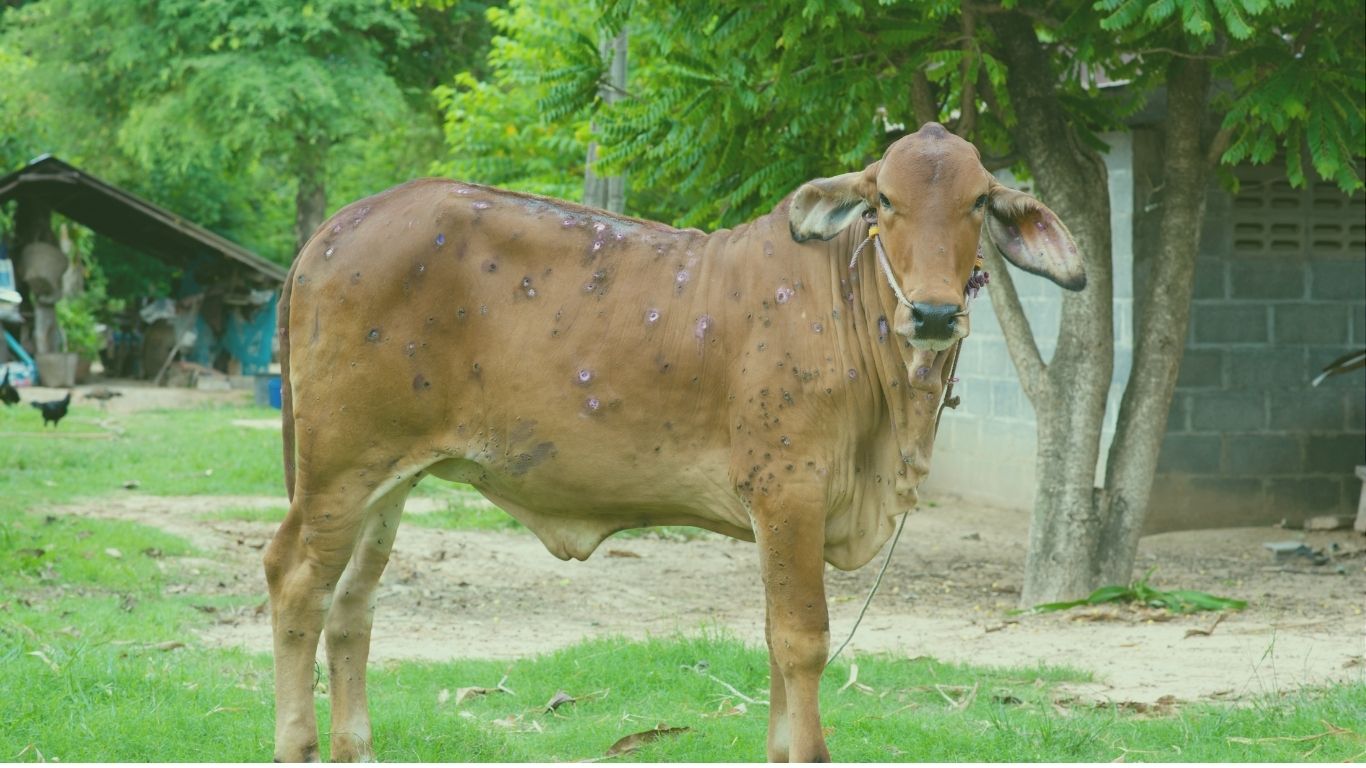
Characteristic Skin Nodules: The hallmark sign is the appearance of firm, raised, circumscribed nodules (lumps) on the skin. These can range from 0.5 cm to 5 cm in diameter and can number from a few to hundreds. They appear on the neck, head, limbs, udder, genitalia, and perineum. The nodules involve both the skin and the underlying tissue.
Lesion Progression: Over time, these nodules may develop a “sit-fast” appearance (a central depression) and become necrotic. Eventually, they slough off, leaving large, raw ulcers that are prone to secondary bacterial infections, leading to suppuration and maggot infestation.
Lymphadenopathy: Swelling of the superficial lymph nodes (prescapular and precrural) is a consistent and valuable diagnostic sign.
Edema: Severe swelling of the limbs (lameness) and brisket (chest) is common.
Systemic Involvement: The virus can affect internal organs. Lesions may develop in the mucous membranes of the eyes, nose, mouth, and respiratory and digestive tracts. This leads to nasal and ocular discharge, excessive salivation, and pneumonia.
Reproductive Issues: Infected cows may suffer from mastitis, and pregnant animals can abort. Temporary or permanent infertility may occur in bulls and cows.
Mortality rates are typically low (1-5%), but morbidity (rate of illness within a herd) can be staggeringly high, reaching 80-100%. The true devastation of LSD lies not in death toll, but in the prolonged convalescence and the multitude of secondary effects.
The Ripple Effect: Consequences of an LSD Outbreak
The impact of Lumpy Skin Disease extends far beyond the visible symptoms on an animal’s skin.
On the Animal:
Intense Suffering: The lesions are painful and itchy. Secondary infections worsen the pain and can lead to septicemia.
Permanent Damage: Healing skin nodules leave permanent scars or holes, severely damaging hides and rendering them worthless. Udder damage can permanently ruin a dairy cow’s milk-producing capability.
Debilitation: Affected animals experience severe weight loss and prolonged weakness, taking months to recover fully.
On the Farmer and Economy:
Catastrophic Production Losses: Drastic reduction in milk yield (often up to 50% or more), loss of condition and weight in beef cattle, and abortion lead to immediate income loss.
Trade Embargoes: Countries free of LSD impose strict bans on the import of animals, semen, embryos, and sometimes beef from affected regions, crippling export markets.
Control Costs: Expenses skyrocket due to veterinary care, insecticides, fortified feed for recovering animals, and labor for intensive care.
Culling and Mortality: Severely affected animals may need to be culled on welfare grounds, and death in calves and high-producing animals does occur.
On Food Security and Livelihoods:
For small-scale and subsistence farmers, a single outbreak can wipe out their primary asset and source of nutrition (milk), pushing families into poverty and threatening community-level food security.
Building a Fortress: Prevention and Control
There is no specific treatment for the viral infection itself, making prevention the absolute cornerstone of management. A robust strategy involves multiple layers of protection:
Vaccination: This is the single most effective tool. Live attenuated vaccines (like the Neethling strain vaccine) provide strong immunity. Mass vaccination campaigns, achieving high coverage (>80%), are essential to create herd immunity and halt virus circulation. Newer, homologous vaccines (based on the LSDV itself) are preferred over heterologous sheep pox vaccines for better efficacy and safety.
Strict Biosecurity: This is non-negotiable. Measures include:
Quarantining new animals for at least 28 days.
Preventing contact with neighboring herds.
Strict control of farm visitors and vehicles.
Disinfecting equipment and facilities.
Vector Control: Reducing insect populations breaks the transmission cycle. Use of insecticide sprays, pour-ons, ear tags, and ensuring clean drainage to eliminate breeding sites are critical. Housing animals indoors during peak insect activity (dusk and dawn) can help.
Movement Restrictions: During an outbreak, authorities must impose swift movement controls to prevent the virus from spreading to new areas via infected animals.
Surveillance and Reporting: Early detection and immediate reporting to veterinary authorities are vital for a rapid containment response.
The Role of Homeopathic Management: A Supportive Approach
It is crucial to state unequivocally that homeopathy is not a cure or a preventive vaccine for Lumpy Skin Disease. The viral infection requires conventional veterinary intervention, particularly supportive care and vaccination. However, within an integrated treatment plan under the guidance of a qualified veterinarian, homeopathic remedies may play a supportive role in managing symptoms, aiding recovery, and boosting the animal’s overall vitality. This is a holistic approach focused on the individual animal’s response to the disease.
A professional homeopathic veterinarian would select remedies based on the totality of the symptoms. Some remedies that might be considered for specific symptom pictures include:
Silicea: Often indicated for suppurating conditions. It may be considered for promoting the expulsion of necrotic tissue or foreign bodies (like maggots in wounds) and helping to wall off infection. It is sometimes thought of for abscesses that are slow to heal.
Hepar Sulphuris Calcareum: For infected, painful, pus-filled lesions that are hypersensitive to touch. The animal may be irritable and the discharge may be foul-smelling.
Arnica Montana: A primary remedy for trauma, bruising, and soreness. It may be useful in the early febrile stage when the animal is sore, lame, and refuses to move, or for the general trauma of the disease process.
Apis Mellifica: For pronounced edema and swelling, particularly if the swelling is hot and sensitive with stinging pain. This may be relevant for the severe limb and brisket edema seen in LSD.
Merc Sol: For ulcerated lesions with excessive, foul-salivation and general aggravation at night.
Sulphur: May be considered in chronic, itchy skin conditions with raw, infected areas, especially if the animal is irritable and the skin looks dirty.
Critical Considerations:
No Substitute: Homeopathy must never delay or replace conventional veterinary care, which includes fluid therapy, antibiotics for secondary infections, anti-inflammatory drugs, wound management, and most importantly, vaccination.
Professional Guidance: Prescribing must be done by a veterinarian trained in homeopathy, as incorrect remedies are ineffective.
Legality: In many regions, treating notifiable diseases like LSD is strictly regulated. All actions must be in coordination with the official disease control authorities.
Frequently Asked Questions (FAQs) about Homeopathic Medicine for Lumpy Skin Disease
Q1: Can homeopathic medicine cure Lumpy Skin Disease (LSD) in cattle?
A: No. Homeopathic medicines are not a cure for the viral infection caused by the Lumpy Skin Disease virus. LSD is a severe, notifiable disease that requires immediate conventional veterinary intervention. Homeopathy may be used as a supportive measure to help manage specific symptoms and support the animal’s overall vitality during recovery, but it must never be used as a substitute for standard medical care, vaccination, or official disease control protocols.
Q2: What is the role of homeopathy in managing LSD outbreaks?
A: In an integrated treatment plan under the guidance of a qualified veterinarian, homeopathy may play a supportive role. It aims to address the individual animal’s symptom picture—such as fever, pain, skin lesions, swelling, and secondary infections—and potentially aid the body’s natural healing processes. Its primary role is supportive care alongside essential conventional treatments like antibiotics for secondary infections, anti-inflammatories, wound management, and fluid therapy.
Q3: Are there specific homeopathic remedies commonly considered for LSD symptoms?
A: A professional homeopathic veterinarian selects remedies based on the totality of an animal’s unique symptoms. Some remedies that might be considered include:
Silicea: For promoting expulsion of necrotic tissue and supporting wounds that are slow to heal.
Hepar Sulph: For painful, infected, pus-filled lesions hypersensitive to touch.
Arnica Montana: For soreness, bruising, and trauma, especially in early stages with lameness.
Apis Mellifica: For hot, stinging, swollen edemas (e.g., swollen limbs or brisket).
Merc Sol: For ulcerated lesions with foul discharge and excessive salivation.
Sulphur: For chronic, itchy, raw skin conditions.
Remedy selection is highly individualized and should not be attempted without professional consultation.
Q4: Can I use homeopathy instead of vaccinating my herd against LSD?
A: Absolutely not. Vaccination is the single most effective, scientifically proven method to prevent Lumpy Skin Disease and create herd immunity. Relying on homeopathy for prevention would leave your animals completely vulnerable to infection and contribute to the spread of the disease. Homeopathy has no proven prophylactic effect against the LSD virus. Vaccination is a non-negotiable component of responsible livestock management.
Q5: Is it legal to treat LSD with homeopathy?
A: LSD is a notifiable disease in most countries, meaning by law it must be reported to government veterinary authorities. Treatment and control measures are often strictly regulated. Using any treatment (homeopathic or conventional) outside of an official disease control plan may be illegal. Always coordinate all actions with your veterinarian and follow the directives of your local animal health authorities.
Q6: How do I find a qualified practitioner to advise on homeopathic support?
A: Seek a licensed veterinarian who has additional accreditation or extensive training in veterinary homeopathy. It is crucial that the practitioner understands both conventional disease management and homeopathic principles. They will ensure that homeopathic support is integrated safely and legally with mandatory treatments like fluid therapy, antibiotics, and wound care.
Q7: Are homeopathic medicines safe to use alongside conventional antibiotics and painkillers?
A: When prescribed by a qualified veterinarian who is managing the entire treatment plan, homeopathic medicines are generally considered compatible with conventional drugs. The veterinarian will coordinate all aspects of care to avoid any interference. Never administer homeopathic remedies without informing your vet, as it is essential they have a complete picture of the animal’s treatment.
Q8: What are the main risks of relying solely on homeopathy for LSD?
A: Sole reliance on homeopathy poses severe risks:
Increased Suffering: The animal will not receive vital supportive care for pain, dehydration, or secondary infections.
Higher Mortality: While LSD mortality is often low with supportive care, without it, death rates can rise, especially in calves or weakened animals.
Disease Spread: Failure to implement official controls (like movement restrictions and vaccination) contributes to wider outbreaks.
Economic Loss: Permanent damage to hides, udders, and reproductive function will be more severe without comprehensive care.
Legal Repercussions: You may face penalties for not following notifiable disease regulations.
Q9: Can homeopathy help with the scarring and long-term effects after LSD?
A: This is an area where homeopathy may be considered as part of a long-term recovery plan. Remedies like Silicea or Graphites are sometimes used to support the healing of chronic skin lesions and scars. However, this should only be done after the acute disease has passed and under professional guidance, alongside good nutritional support and wound management.
Q10: Where can I learn more about integrated approaches to animal health?
A: Consult with veterinarians who practice integrative or holistic medicine, which combines the best of evidence-based conventional care with complementary modalities like homeopathy. Reputable organizations for veterinary homeopathy (such as the Academy of Veterinary Homeopathy or similar bodies in your country) can provide resources and directories of trained practitioners. Always prioritize information from qualified veterinary sources over general anecdotal advice.
Conclusion
Lumpy Skin Disease represents a clear and present danger to global cattle health and the agricultural economy. Its rapid geographical spread is a stark reminder of the interconnectedness of our world and the constant threat of emerging and re-emerging diseases. Combating LSD demands a respectful, science-based approach: vigilance through surveillance, unwavering commitment to biosecurity, and the widespread deployment of effective vaccines. While supportive care, including potential complementary modalities like homeopathy, can aid individual animal recovery, they are auxiliary to the main fight. The battle against LSD is won not in the treatment pen, but in the preventive measures taken long before the first fly bites. For farmers and animal owners, knowledge of this disease, its symptoms, and its prevention is the most powerful tool in protecting the health of their herds and the security of their livelihoods.













I found this post incredibly useful. The tips and insights you’ve shared are going to be very helpful for my work.
This is a really helpful resource.