Table of Contents
ToggleHomeopathic Medicine Datura Metel: A Homeopathic Perspective on the Thorn Apple
Origins and Botanical Profile
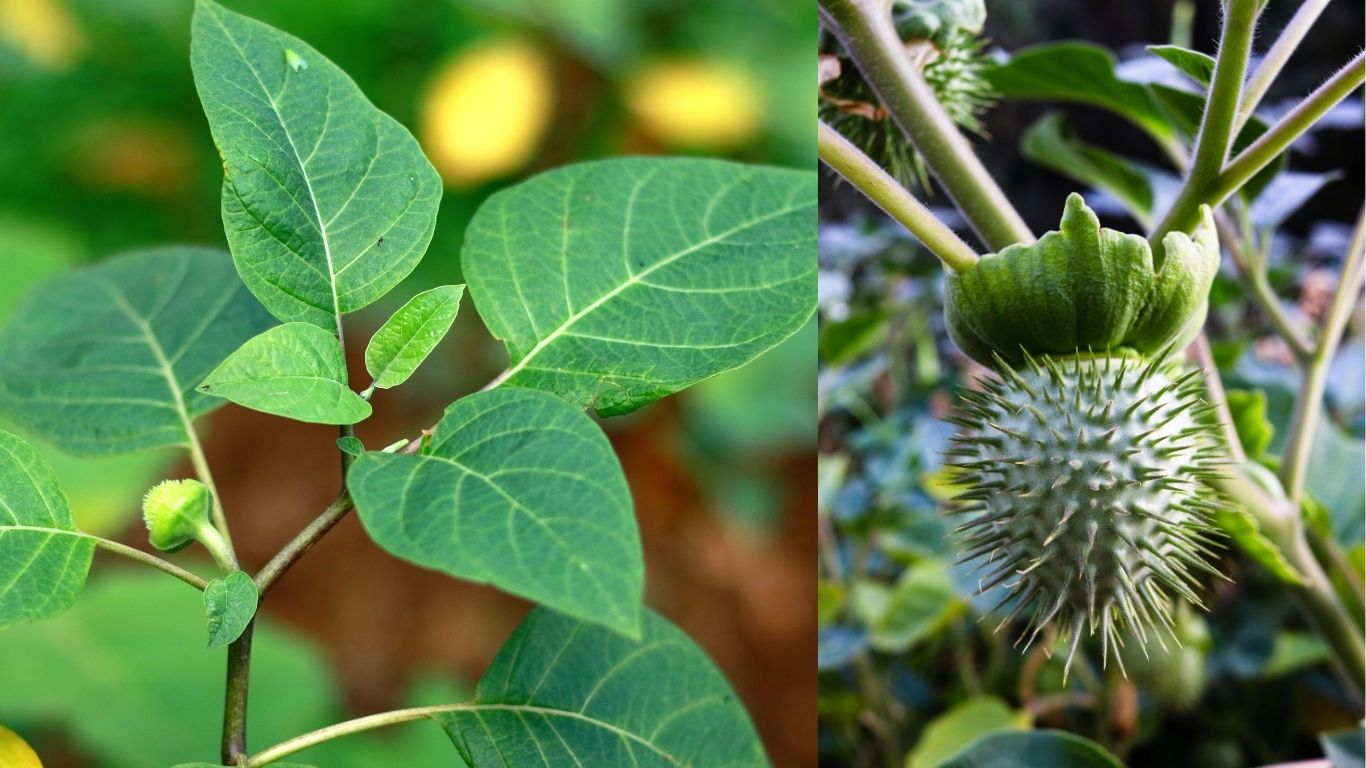
Datura metel, commonly known as the Devil’s Trumpet, Thorn Apple, or simply Datura, is a plant shrouded in both allure and danger. Native to the Indian subcontinent, it has since spread to tropical and temperate regions worldwide. This member of the Solanaceae (nightshade) family is an annual herb with striking, trumpet-shaped flowers, often white or purple, and a spiny seed capsule. Its history is deeply entwined with ancient medicinal and ritualistic practices. In Ayurveda and other traditional systems, it was used cautiously for conditions like asthma, pain, and psychiatric disorders. However, its potent toxicity, due to a high concentration of tropane alkaloids like scopolamine, hyoscyamine, and atropine, earned it a fearsome reputation, leading to its use in poisons and sacred rites of passage.
From Poison to Potentized Remedy: The Homeopathic Extraction
Homeopathy, founded by Samuel Hahnemann, operates on the principle of “like cures like” – a substance that causes symptoms in a healthy person can, in minute, potentized doses, treat similar symptoms in a sick person. Datura metel, with its profound effects on the mind and nervous system, was “proved” (tested on healthy individuals) and incorporated into the homeopathic materia medica.
The extraction process begins with obtaining the fresh plant, typically at its flowering stage, when its medicinal properties are considered most active. The whole plant is often used. It is cleaned, chopped, and macerated in a mixture of alcohol and water to create the mother tincture, denoted as Ø. This tincture is the foundational substance from which all homeopathic potencies are prepared.
The Alchemy of Potentization: Understanding Dilution
Homeopathic potency refers not to the material concentration but to the energetic imprint of the substance, achieved through serial dilution and succussion (vigorous shaking). The two main scales are:
-
Centesimal (C): One part of the mother tincture is diluted with 99 parts of a diluent (water/alcohol), then succussed to create 1C. This process is repeated to make 2C, 3C, and so on.
-
Decimal (X or D): One part is diluted with 9 parts diluent and succussed to make 1X.
For Datura metel, common potencies range from 6C or 30C for acute conditions to 200C, 1M (1000C), and higher for chronic or constitutional cases. The choice of potency is complex, relying on the practitioner’s assessment of the individual’s vitality and the depth of the symptoms. Higher potencies are generally used for conditions strongly mirroring Datura’s core mental and neurological picture.
The Symptom Picture: When is Datura Metel Indicated?
The homeopathic portrait of Datura is vivid, dramatic, and centers on a profound disturbance of the sensorium. The guiding theme is delirium, hallucinations, and a loss of boundaries between self and the external world. Key symptoms are:
-
Mental-Emotional State: This is the cornerstone. The patient experiences acute, frantic delirium with vivid, often terrifying visual and auditory hallucinations. They see animals, insects, ghosts, or faces. There is extreme restlessness, constant jumping out of bed, picking at clothes or imaginary objects (carphology), and nonsensical or lascivious talk. A marked sensation of being separated from reality or of having a dual existence is common. There can be sudden, violent impulses.
-
Physical Symptoms:
-
Fever: Characteristically high, burning fevers with a hot head and cold extremities. The fever often has a sudden onset and is accompanied by the intense delirium described above.
-
Thirst: A complete, paradoxical absence of thirst despite high fever and dry skin is a strong characteristic.
-
Eyes and Face: Pupils are dilated and fixed. The face may be flushed, hot, and swollen, with a besotted or terrified expression.
-
Neurological: Tremors, spasms, convulsions that may be triggered by touch or light. A sensation of the body or parts of it being enlarged or distorted.
-
Respiratory: Spasmodic, dry, barking cough. Difficult breathing with a sense of constriction.
-
Gastrointestinal: Violent nausea and vomiting. A sensation of emptiness or coldness in the stomach.
-
Primary Therapeutic Uses in Homeopathy
Based on this symptom picture, Datura metel is considered in the following scenarios:
-
Acute Febrile Delirium: The prime use. Sudden high fevers from infections (e.g., meningitis, encephalitis, severe influenza) where the patient is hallucinating, wildly restless, and thirstless.
-
Mental Health Episodes: Acute manic or psychotic episodes with hyperactivity, delusions, and hallucinations. It may be considered in conditions like schizophrenia during phases that match the Datura state.
-
Neurological Disorders: As a palliative in convulsive disorders like epilepsy or in meningitis where the symptom similarity is strong.
-
Respiratory Ailments: For whooping cough or croup with a spasmodic, suffocative cough and facial congestion.
-
Post-Surgical or Traumatic Delirium: Delirium following anesthesia, head injury, or shock that presents with the characteristic hallucinations and restlessness.
Safety, Side Effects, and Prevention
It is paramount to understand that homeopathic Datura, in its potentized form, contains little to no measurable molecules of the original plant and is not chemically toxic in the way the crude herb is. However, its action is energetic.
-
Side Effects (Homeopathic Aggravation): A temporary intensification of existing symptoms can occur after taking a well-matched homeopathic remedy, seen as a sign that the vital force is responding. This is usually mild and self-limiting. An incorrect prescription could theoretically provoke new symptoms related to the remedy’s picture.
-
Critical Prevention Note: Self-prescription of Datura metel for serious conditions is strongly discouraged. The symptoms it treats are severe and require professional medical diagnosis. Mistaking meningitis for a simple fever and delaying allopathic care could be fatal. Homeopathy should be used under the guidance of a qualified practitioner, often alongside conventional medicine. Furthermore, handling or ingesting the raw Datura plant is extremely dangerous and potentially lethal. It should never be used as a home remedy.
Comparative Analysis with Key Homeopathic Remedies
Distinguishing Datura from similar remedies is the art of homeopathic practice.
-
Vs. Belladonna (Deadly Nightshade): Both treat acute, sudden fevers with delirium. Belladonna has a violent, throbbing onset – pounding headache, bright red face, dilated pupils, and intense thirst. The delirium is more frenzied but with less distinct, fragmented hallucinations. Datura’s delirium is more theatrical and vivid, with clear visions and absence of thirst.
-
Vs. Hyoscyamus Niger (Henbane): Both share delirious, lascivious behavior. Hyoscyamus exhibits profound jealousy, suspicion, and obscene behavior with less intense hallucinations. The patient is more sly, talkative in a rambling way, and exposes themselves. Datura is more acutely frantic, hallucination-driven, and has the pronounced duality of existence.
-
Vs. Stramonium (Thorn Apple’s relative): This is the closest analogue. Both share terror, hallucinations, and violence. Stramonium’s core is raw terror – of darkness, solitude, and imagined things. It seeks light and company desperately. Datura’s state, while terrified, is more aggressively manic and disjointed, with the peculiar sensation of being double.
-
Vs. Aconite (Monkshood): Both have sudden onset. Aconite is dominated by acute anxiety, fear of death, and restlessness but with a clear mind. The patient is predictable in their fear. They have intense thirst. Datura’s mind is clouded, hallucinating, and disconnected from reality, without thirst.
Frequently Asked Questions (FAQs) About Homeopathic Medicine Datura Metel
Q1: What is the source of the homeopathic remedy Datura metel?
A: The remedy is derived from the whole fresh plant Datura metel, commonly known as the Devil’s Trumpet or Thorn Apple. It is a flowering plant belonging to the toxic nightshade family (Solanaceae). In homeopathy, it is used in an ultra-diluted, “potentized” form, which renders it non-toxic.
Q2: What are the key mental and emotional symptoms that indicate Datura metel?
A: The mental picture is its most defining feature. Key indicators include:
-
Acute Delirium: Sudden, frantic confusion often with high fever.
-
Vivid Hallucinations: Seeing animals, insects, ghosts, or frightening faces.
-
Loss of Reality: A sensation of being disconnected from self, or feeling a “double consciousness.”
-
Extreme Restlessness: Constant motion, picking at clothes or bedcovers (carphology), and wanting to jump out of bed.
-
Talkativeness: Often with nonsensical, silly, or lascivious chatter.
Q3: What are the main physical symptoms guiding its use?
A: Important physical symptoms that often accompany the mental state are:
-
High Fever with No Thirst: A burning, sudden fever where the patient surprisingly has no desire to drink water, despite having a dry mouth and hot skin.
-
Pupil Dilation: The pupils are often widely dilated and fixed.
-
Neurological Signs: Tremors, twitching, or convulsions that may be triggered by touch or light.
-
Respiratory Issues: A dry, spasmodic, barking cough or difficulty breathing.
Q4: For what kinds of conditions is Datura metel typically used in homeopathy?
A: It is not used for a diagnosed disease name, but for a specific set of symptoms. It is most commonly considered for:
-
Sudden, high fevers with accompanying delirium and hallucinations (e.g., in severe flu, meningitis).
-
Acute episodes of manic or psychotic behavior with the characteristic restlessness and visions.
-
Spasmodic coughing fits, like in whooping cough or croup, when the mental state matches.
-
Delirium following a traumatic event, shock, or anesthesia.
Q5: Is homeopathic Datura metel safe? Can it cause poisoning?
A: Homeopathically prepared Datura metel in potencies like 30C, 200C, etc., is manufactured through a process of serial dilution and succession (vigorous shaking). These potencies contain no detectable chemical molecules of the original plant and therefore do not cause the poisoning effects associated with the raw herb. However, it is a powerful homeopathic medicine that should be selected based on a close match of symptoms and ideally under the guidance of a professional.
Q6: What is the most important symptom that distinguishes Datura from Belladonna, a similar remedy?
A: The most striking difference is thirst. Both remedies cover high fever with delirium. However, a Belladonna patient has an intense, burning thirst and drinks large amounts of water. A Datura metel patient, in contrast, has a conspicuous absence of thirst despite having a high fever and a dry mouth. This is a key guiding symptom for choosing Datura.
Q7: Can I take Datura metel for insomnia or anxiety?
A: It is not a general remedy for common insomnia or anxiety. It is specifically indicated for acute, severe states of delirium and hallucination, often with a fever. Using it for everyday stress or mild sleeplessness would be incorrect and ineffective. For chronic anxiety or insomnia, a constitutional homeopathic prescription by a qualified practitioner is necessary.
Q8: Where can I find homeopathic Datura metel, and what potency should I start with?
A: It is available at many homeopathic pharmacies, health food stores with homeopathic sections, and online retailers. For an acute situation (like a sudden fever with delirium), a 30C potency is commonly used. However, potency selection is nuanced. For serious conditions or if you are unsure, it is crucial to consult a homeopathic practitioner or a healthcare professional. Do not attempt to self-treat serious medical emergencies.
Q9: How does Datura metel differ from Stramonium, another remedy from the Datura family?
A: They are very similar, both causing terror and hallucinations. The core difference lies in the nature of the fear.
-
Stramonium patients experience raw, paralyzing terror—of darkness, monsters, and being alone. They desperately crave light and company.
-
Datura metel patients are more manically agitated and confused by their hallucinations. They have a stronger theme of duality (feeling double) and are less coherent in their expression of fear.
Q10: Is there any precaution I should take when considering this remedy?
A: Yes. The most critical precaution is to seek immediate conventional medical care for symptoms like high fever with confusion, stiff neck, severe headache, or convulsions, as these can indicate life-threatening conditions like meningitis or encephalitis. Homeopathy can be used alongside such care under professional supervision. Never ingest or handle the raw Datura plant, as it is highly poisonous.
Conclusion
Homeopathic Datura metel stands as a powerful example of the system’s foundational principles. Through the alchemy of potentization, a deadly plant is transformed into a precise medicinal tool for some of the most chaotic and frightening states of human illness. Its picture—a mind unmoored from reality, besieged by visions, in a body burning with fever yet devoid of thirst—is unmistakable. Its value lies not in treating a diagnosed disease name, but in addressing this specific, holistic pattern of suffering. As with all potent homeopathic remedies, its application demands deep knowledge, careful differentiation from its botanical cousins in the materia medica, and respect for the complexity of the human condition it seeks to heal. It reminds us that the boundary between poison and medicine, both in nature and in therapeutics, is often defined not by the substance itself, but by the wisdom with which it is applied.