Table of Contents
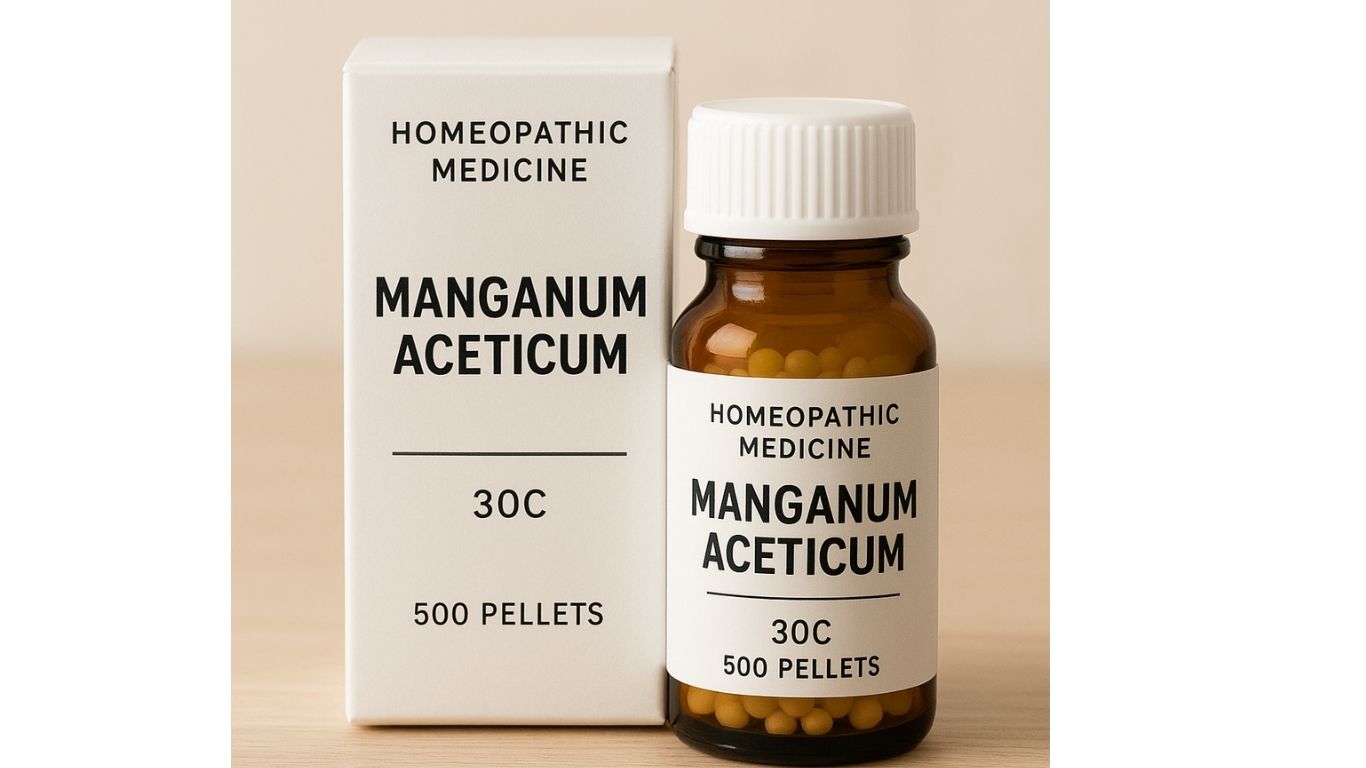
ToggleHomeopathic Medicine Manganum Aceticum Profile: A Deep Dive into the Manganese Remedy
Homeopathy, a system of alternative medicine developed in the late 18th century, operates on the principle of “like cures like.” This means a substance that causes symptoms in a healthy person can, in a highly diluted form, treat similar symptoms in a sick person. Among its vast materia medica of thousands of remedies, Manganum Aceticum holds a distinct place, primarily known for its profound action on the bones, joints, blood, and the nervous system. This article explores the origins, preparation, therapeutic applications, and unique characteristics of this fascinating remedy.
Origin and Extraction: The Chemical Foundation
Manganum Aceticum is a homeopathic preparation whose source is manganese acetate. Manganese itself is a trace element essential for human health, playing a crucial role in bone formation, connective tissue health, blood clotting, and the metabolism of fats and carbohydrates. It is a transition metal, found naturally in combination with other elements in the environment.
The process of creating the homeopathic mother tincture begins with pure manganese acetate, a chemical compound formed by the reaction of manganese carbonate with acetic acid. In homeopathic pharmacy, this raw material undergoes a specific process of serial dilution and succussion (vigorous shaking). This process, known as potentization, is fundamental to homeopathy. It is believed to release the dynamic or energetic healing properties of the substance while eliminating its material toxicity.
The initial stage involves dissolving the manganese acetate in a water-alcohol mixture to create the mother tincture, labeled as “Ø.” From this mother tincture, various potencies are prepared. Common scales include the centesimal (C) potency, where one part of the mother tincture is diluted with 99 parts of a diluent (water and alcohol) and succussed, resulting in a 1C potency. This process is repeated to create 2C, 3C, and so on, up to very high potencies like 1M (1000C) or even CM (100,000C). The higher the potency, the less of the original material substance remains, according to homeopathic theory, the more deeply and energetically it acts.
The Symptom Picture: Guiding the Prescription
A homeopathic remedy is not prescribed for a specific disease name like arthritis or anemia. Instead, it is selected based on a holistic and individualistic symptom picture that matches the “symptom portrait” of the remedy. The key to using Manganum Aceticum effectively lies in understanding its characteristic symptoms and the unique modalities that affect the patient.
1. Mental and Emotional State:
The Manganum Aceticum patient often presents with a distinct emotional landscape. There is a marked tendency towards sadness and melancholy. They are prone to weeping easily, often without knowing the exact reason. A profound sense of weariness and world-weariness is common, where the individual feels tired of life itself. They may be highly sensitive, especially to noise and music, which can aggravate their emotional state and even cause physical pain. There is often a fear of impending misfortune, a foreboding sense that something bad is about to happen.
2. Physical Symptoms and Key Affinities:
The physical symptoms of Manganum Aceticum are its most defining features, with a strong affinity for several body systems.
-
Bones and Joints: This is the primary domain of Manganum Aceticum. It is a leading remedy for various types of arthritic and rheumatic pains. The pains are characteristically tearing, stitching, or burning in nature. A hallmark symptom is pain felt deep within the bones, as if the bone itself is sore. The joints are often affected, with a peculiar sensation of feeling weak and loose, as if they could easily dislocate. The pains are markedly worse from the slightest motion and from touch. Conversely, they are often better from firm pressure and from lying on the affected side. It is frequently indicated in osteoarthritis, rheumatoid arthritis, and particularly in affections of the ankle and knee joints.
-
Blood and Anemia: Manganum Aceticum is a well-known homeopathic remedy for a specific type of anemia known as chlorosis or green sickness. This was a historical term for an iron-deficiency anemia primarily affecting young women, characterized by a pale, slightly greenish complexion, fatigue, breathlessness, and general debility. The patient looks pale and waxy, and they may experience a peculiar, transient flushing of the face.
-
Ears and Hearing: The remedy has a strong affinity for the ears. There is often a history of recurrent ear infections, particularly in children. A key symptom is otalgia (earache) that is worse from the slightest exposure to cold air. The patient is extremely sensitive to cold. Tinnitus (ringing in the ears) is also common, and the character of the sound can vary from roaring to buzzing. Notably, hearing human voices can be painfully jarring or can even trigger a headache.
-
Headaches: Headaches associated with Manganum Aceticum are typically one-sided (hemicranial) and are often triggered or worsened by listening to music or conversation. The pain is often described as a boring or pressing pain, feeling as if it originates from within the bones of the skull.
-
Generalities and Modalities:
-
Aggravations (Worse): From motion, touch, cold air or drafts, music, conversation, and in the evening.
-
Ameliorations (Better): From firm pressure, lying on the painful side, and from warmth.
-
Clinical Uses and Applications
Based on its symptom picture, Manganum Aceticum finds its application in a range of clinical conditions. It is important to reiterate that self-prescription for serious ailments is not advisable, and consultation with a qualified homeopathic practitioner is essential.
-
Rheumatoid and Osteoarthritis: It is most suitable for cases where the joint pains are deep, bony, and worse from the slightest movement. The feeling of joint weakness and looseness is a strong guiding symptom.
-
Chronic Otitis Media: For children or adults with a tendency for recurrent ear infections, especially when accompanied by extreme sensitivity to cold and the characteristic ear pain.
-
Certain Forms of Anemia: When anemia presents with the classic “chlorotic” appearance—pale, greenish tint, fatigue, and breathlessness—along with the mental state of sadness and weariness.
-
Neuralgic Pains: It can be effective for neuralgias, especially facial neuralgia or sciatica, where the pain is stitching or tearing and follows the characteristic modalities of the remedy.
-
General Debility and Fatigue: Used for states of profound exhaustion and weakness, particularly when associated with a history of blood loss or chronic illness.
Side Effects and Safety Considerations
In the highly diluted forms used in homeopathy, Manganum Aceticum is considered safe and non-toxic. The potentization process is designed to remove any toxicological effects of the raw manganese acetate. However, as with any homeopathic remedy, there is a possibility of a “homeopathic aggravation.” This is a temporary intensification of existing symptoms following the first dose, which is seen by homeopaths as a positive sign that the vital force is responding to the similar remedy. This aggravation is usually mild and short-lived.
It is critically important to understand that homeopathic remedies are not a substitute for conventional medical diagnosis and treatment for serious, acute, or life-threatening conditions. Anemia, for instance, requires a proper medical diagnosis to determine its cause (e.g., iron deficiency, B12 deficiency, chronic disease) and appropriate treatment. Persistent joint pain should be evaluated by a physician to rule out serious pathologies. Homeopathy can be used as a complementary approach alongside conventional care, but it should not delay necessary medical intervention.
Prevention and Constitutional Prescribing
Homeopathy is often used as a system of constitutional medicine, aiming to strengthen the individual’s overall vitality and susceptibility to disease. From this perspective, a deeply acting remedy like Manganum Aceticum, when prescribed constitutionally to a person whose overall physical and mental symptoms match the remedy picture, may help to prevent the recurrence of chronic issues for which they are prone, such as joint disorders or chronic ear infections. This is not prevention in the conventional sense of vaccination, but rather a rebalancing of the organism’s innate healing capacity to make it more resilient.
Comparative Analysis with Other Remedies
A remedy’s identity is often sharpened by comparing it with similar ones. Here is how Manganum Aceticum distinguishes itself from other common homeopathic medicines.
-
Manganum Aceticum vs. Rhus Toxicodendron: Both are premier remedies for rheumatic pains worsened by motion. However, the key difference lies in the pattern of aggravation and amelioration. Rhus Tox is for pains that are worse on initial motion but get better with continued motion. The patient is stiff and restless. Manganum, in contrast, is worse from the slightest motion; there is no improvement from continued movement. Furthermore, Rhus tox lacks the profound sadness, bone pains, and ear symptoms characteristic of Manganum.
-
Manganum Aceticum vs. Bryonia Alba: Bryonia is perhaps the remedy most clearly contrasted with Manganum regarding motion. Bryonia patients experience severe worsening from any motion, even the slightest, such as moving the eyes or breathing deeply. They are extremely irritable and desire absolute stillness. While Manganum is also worse from motion, its pains are more focused on the bone-deep soreness and joint looseness, and its mental state is one of tearful sadness rather than intense irritability.
-
Manganum Aceticum vs. Ferrum Metallicum: Both are important remedies for anemia with pallor and fatigue. Ferrum met is often indicated for individuals who have a false vitality—they may appear flushed and animated in social situations but collapse into exhaustion and pallor when alone. Their face flushes easily from any excitement. Manganum anemia is accompanied by a more consistent and profound melancholy, weariness of life, and the distinctive sensitivity to cold and music.
-
Manganum Aceticum vs. Causticum: Causticum is another remedy for joint weakness and a feeling of looseness, as if the tendons are shortened. However, Causticum has a strong affinity for paralysis and weakness, especially of the facial muscles or vocal cords. Mentally, the Causticum patient is deeply sympathetic to the suffering of others and filled with a sense of justice, which is different from the introspective sadness of Manganum.
Frequently Asked Questions (FAQs) About Homeopathic Medicine Manganum Aceticum
1. What is Manganum Aceticum, and what is it used for?
Manganum Aceticum is a homeopathic remedy prepared from manganese acetate. It is primarily used for conditions affecting the bones, joints, and blood. Its most common applications include treating deep, bony arthritic pains, a specific type of anemia characterized by paleness and weakness (historically called chlorosis), and chronic earaches with a marked sensitivity to cold.
2. What are the key mental and emotional symptoms that guide its use?
The typical Manganum Aceticum patient often experiences a profound sense of sadness and melancholy. They tend to weep easily without a clear cause and feel a deep weariness or being “tired of life.” There is also a notable sensitivity to noise, especially music and human conversation, which can aggravate their emotional state and even cause physical headaches.
3. How does Manganum Aceticum help with joint pain?
This remedy is indicated for joint pain that feels deep within the bones—a sore, bruised, or tearing sensation. A unique characteristic is a feeling of weakness and looseness in the joints, as if they could easily give way or dislocate. The pain is typically worse from the slightest motion and from touch, but improves with firm pressure and lying on the painful side.
4. I have anemia. Can Manganum Aceticum cure it?
In homeopathy, Manganum Aceticum is known as a remedy for a particular symptom picture of anemia, not for anemia as a broad diagnosis. It may be considered if the anemia presents with a pale, sometimes slightly greenish complexion, profound fatigue, breathlessness, and is accompanied by the remedy’s characteristic sadness and bone pains. However, it is crucial to seek a conventional medical diagnosis to determine the cause (e.g., iron deficiency, vitamin12 deficiency) and receive appropriate treatment. Homeopathy can be used as a complementary approach under professional guidance.
5. What are the side effects of taking this remedy?
In the highly diluted potencies used in homeopathy, the remedy is generally considered safe and non-toxic. The most common potential reaction is a “homeopathic aggravation,” where symptoms temporarily and mildly intensify after the first dose before improving. This is seen as a positive sign that the body is responding. If any strong or unexpected reactions occur, you should stop taking the remedy and consult your practitioner or doctor.
6. Can I self-prescribe Manganum Aceticum for my arthritis?
While the symptoms can be matched, self-prescribing for chronic conditions like arthritis is generally not recommended. A qualified homeopathic practitioner will consider your complete physical, emotional, and mental symptom profile to ensure it matches the Manganum Aceticum picture precisely. What you perceive as a matching joint pain might lack the key emotional or general symptoms (like sensitivity to music or cold) that make it the correct remedy. An incorrect selection will likely be ineffective.
7. How is Manganum Aceticum different from other common joint pain remedies like Rhus Tox or Bryonia?
This is a key distinction in homeopathy:
-
Manganum Aceticum: Pain is worse from the slightest motion. Joints feel weak and loose. The mental state is sad and tearful.
-
Rhus Toxicodendron: Pain is worse on initial motion but gets better with continued movement. The person feels stiff and restless.
-
Bryonia Alba: Pain is worse from any and all motion, even slight. The person is extremely irritable and desires absolute stillness.
8. What potencies of Manganum Aceticum are commonly available and how do I choose?
Manganum Aceticum is available in a range of potencies, such as 6C, 30C, 200C, and 1M. Lower potencies (like 6C or 30C) are often used for more localized or physical symptoms and can be repeated more frequently. Higher potencies (200C and above) are used for deeper, constitutional issues and are taken less often. The selection of potency and dosage is complex and is best determined by a practitioner based on the intensity and nature of your condition.
9. Is this remedy safe for children?
Yes, homeopathic remedies in general are safe for children when used appropriately. Manganum Aceticum can be particularly relevant for children who suffer from recurrent ear infections, especially if they are very sensitive to cold air and have the characteristic sad, tearful disposition associated with the remedy. However, a professional consultation is strongly advised for treating children.
10. Where does the name “Manganum Aceticum” come from?
The name is derived from its source material. “Manganum” is the Latin word for the element Manganese, and “Aceticum” refers to Acetic Acid, the component of vinegar used to create the manganese acetate salt from which the homeopathic mother tincture is prepared.
Conclusion
Manganum Aceticum is a nuanced and deeply acting homeopathic remedy. with a clear and specific therapeutic profile. Its core action revolves around the bones, joints, and blood, accompanied by a distinctive mental state of tearful melancholy and a high sensitivity to environmental stimuli like cold and sound. Its value in homeopathic practice lies in its ability to address chronic conditions where this unique constellation of symptoms is present, offering a potential path toward restored balance and health when prescribed by a skilled practitioner. As with all homeopathic interventions, its success hinges on the precise matching of the remedy’s picture to the individual’s total expression of illness.