Table of Contents
ToggleHomeopathic Medicine Oscillococcinum: A comprehensive Guide
Oscillococcinum is one of the most recognizable names in homeopathic medicine, a small tube of sugar pellets that has become a best-selling remedy for the flu in many parts of the world. Its popularity, however, stands in stark contrast to the intense scientific scrutiny and skepticism it faces. To understand Oscillococcinum is to explore a fascinating intersection of historical error, commercial success, and the enduring debate between alternative medicine and evidence-based science. This article delves into the complete story of this controversial remedy, from its dubious origins to its modern-day use, examining what it is, how it’s made, and what you should know before considering it.
The Bizarre Origin and History of Oscillococcinum
The story of Oscillococcinum begins not with ducks, but with a French physician named Joseph Roy. In the midst of the devastating Spanish flu pandemic of 1917-1919, Dr. Roy was examining the blood of victims under his microscope. He claimed to have observed a strange, oscillating bacterium that appeared to be the cause of the disease. He named this mysterious microbe Oscillococcus .
Roy’s discovery did not stop with the flu. He became convinced that this same “oscillating” bacterium was the root cause of a staggering array of illnesses, including cancer, tuberculosis, syphilis, eczema, rheumatism, chickenpox, and measles . This belief in a “universal germ” was a fringe idea even in the early 20th century and has since been thoroughly discredited by medical science. We now know that these diseases have vastly different causes, from viruses to autoimmune dysfunctions, and are not caused by a single bacterium . Furthermore, no other scientist has ever been able to independently replicate Roy’s observation, and it is widely believed today that what he saw through his lens was likely an artifact of his microscope, a blood cell, or a completely different, harmless organism .
Undeterred, Roy went on a search for a plentiful source of his elusive microbe. He eventually claimed to have found it in the liver of a Long Island duck, a choice that seems to have been entirely arbitrary . Adhering to the homeopathic principle of “like cures like,” he theorized that a remedy made from this substance could treat the very diseases he believed the Oscillococcus caused. He coined the name “Oscillococcinum” for his preparation in his 1925 book, Towards Knowledge and the Cure of Cancer . Initially, he attempted to use it as a vaccine-like therapy for cancer patients, but these attempts were unsuccessful .
Despite the fantastical and scientifically baseless nature of its origin, the remedy found a foothold. It was eventually manufactured and popularized by the French pharmaceutical company Boiron, which remains its sole producer to this day. It became particularly popular in France, where it was one of the top ten selling drugs by the year 2000, and has since spread to over 50 countries, including the United States .
Extraction and Preparation: From Duck to Sugar Pill
The preparation of Oscillococcinum is a process of extreme dilution, so profound that it borders on the absurd from a chemical standpoint. The starting ingredient is an extract from the heart and liver of a Muscovy duck, known in homeopathic nomenclature by the Latin name Anas barbariae hepatis et cordis extractum .
The production involves two key homeopathic concepts: dilution and succussion.
Dilution: The original extract is subjected to a series of 200 successive dilutions. Each step is a 1:100 dilution, meaning one part of the mixture is added to 99 parts of a water-alcohol solution. This is known as a centesimal (C) dilution. After the first dilution (1C), the mixture contains 1% of the original extract. After the second (2C), it contains 1% of that 1%, or 0.01%, and so on.
The Korsakovian Method: The “K” in “200CK” stands for the Korsakovian method, a quicker, less precise way of performing these serial dilutions. Instead of using a new clean vessel for each step, a single container is used. It is filled with the solution, shaken, and then emptied. It is then refilled with fresh diluent (water/alcohol), and the small amount of liquid clinging to the walls is assumed to represent a 1:100 dilution from the previous step . This process is repeated 200 times.
The final dilution of Oscillococcinum is 200C. To grasp the magnitude of this dilution, we can turn to Avogadro’s number, a fundamental constant in chemistry which states that one mole of a substance (approximately 6.022 × 10²³ molecules) is the standard unit for counting particles. By the time a homeopathic remedy reaches a dilution of 12C or 24X, the probability of a single molecule of the original substance remaining is effectively zero . At 200C, the dilution factor is 1 part in 100 raised to the power of 200 (1 followed by 400 zeros). To put this incomprehensible number in perspective, one scientist calculated that a final product at this dilution would be equivalent to one molecule of duck extract being dissolved in 10^400 molecules of solvent. For comparison, the entire observable universe is estimated to contain around 10^80 atoms . Statistically speaking, there is no chance that a single molecule of the original duck liver and heart remains in the final tube of Oscillococcinum.
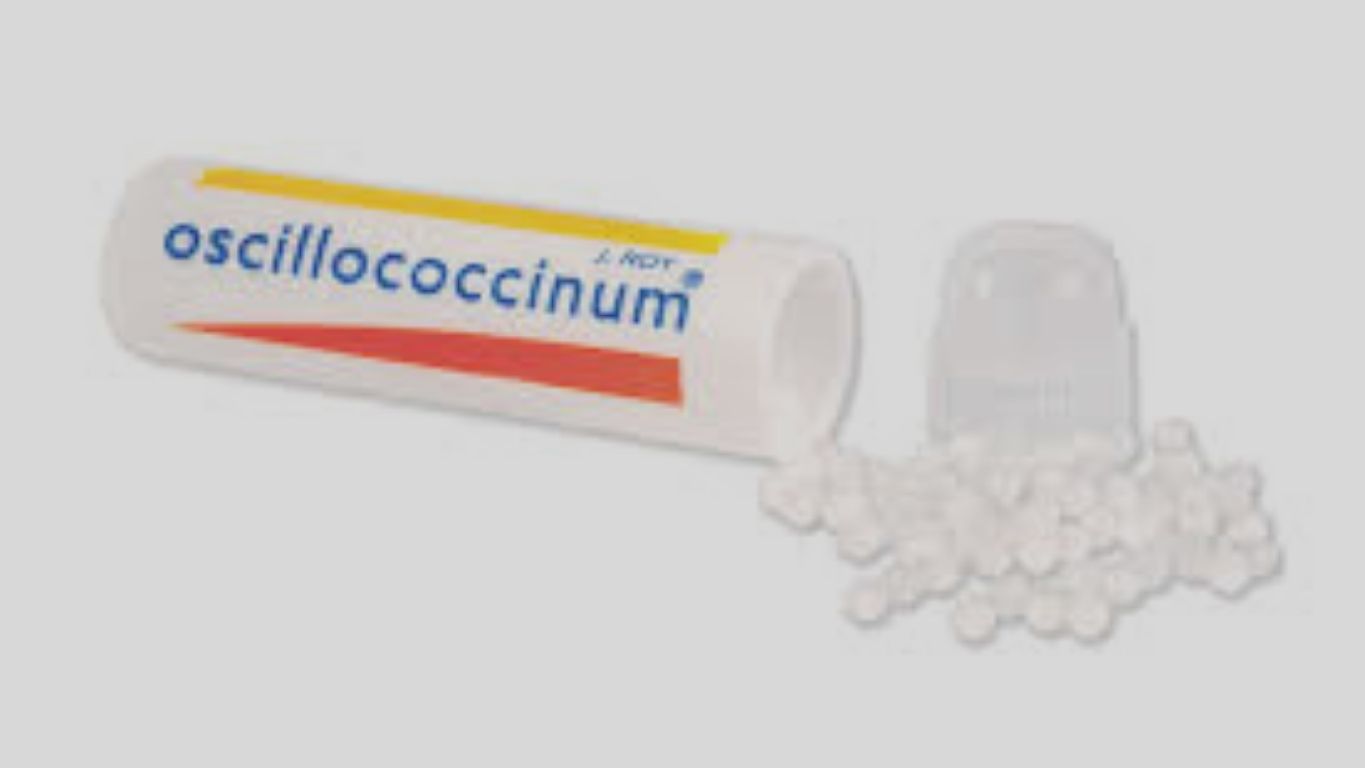
The final product is not a liquid, but tiny sugar pellets. The highly diluted solution is used to moisten these pellets, which are composed of 0.85 grams of sucrose and 0.15 grams of lactose . As a Boiron spokeswoman once candidly stated when asked about the safety of a product made from duck heart and liver, “Of course it is safe. There’s nothing in it” .
Potencies and Administration
Oscillococcinum is almost universally sold in a single potency: 200CK. This is a departure from classical homeopathy, where remedies are often prescribed in varying potencies based on the specific symptoms and constitution of the patient.
The product comes in a box containing three or six single-dose tubes. According to the manufacturer’s instructions, for adults and children over two years of age, the entire contents of one tube should be dissolved under the tongue at the first sign of flu-like symptoms . This dose can be repeated for two more doses, at six-hour intervals, for a total of three doses in a 24-hour period . It is recommended to avoid strong flavors like coffee, mint, or garlic for about 30 minutes before and after taking the dose, as these are thought to interfere with the remedy’s action in homeopathic theory .
Intended Uses and Reported Symptoms
Oscillococcinum is marketed exclusively for the relief of flu-like symptoms. These are the “symptoms” it is intended to address according to its packaging and promotional materials :
-
Fever and chills
-
Body aches and pains
-
Headache
-
Fatigue and general weakness
-
Cough
In homeopathic theory, a remedy’s “drug picture” includes a vast and often esoteric list of mental, emotional, and general symptoms that it is supposed to cover. Historical “provings” of Oscillococcinum have produced bizarre lists of indications, including anxiety when a spouse is late, a fear of dirt leading to compulsive hand washing, a feeling of electric currents running through the body, and a craving for fresh air despite being chilled . These are not the symptoms for which the modern product is marketed, nor are they used by most practitioners or consumers to guide its use. Its marketing has been streamlined to a simple, straightforward claim: it helps your body recover from the flu .
Side Effects and Safety Profile
From a toxicological standpoint, Oscillococcinum is considered harmless or safe. Since it contains no detectable active ingredient, it cannot cause direct side effects in the way a conventional drug can . The most common “side effect” reported is that the product is ineffective . The FDA’s adverse event reporting system shows very few reports for the product, and those that exist—such as headache, swelling, or agitation—are mild and could easily be attributed to the flu itself or other factors .
However, there are indirect risks associated with its use that are more significant:
-
Delaying Effective Treatment: The primary danger of relying on Oscillococcinum is that it may cause a person to delay seeking proven medical care. For individuals in high-risk groups—such as the elderly, young children, pregnant women, or those with chronic health conditions like asthma or diabetes—influenza can lead to serious complications like pneumonia. Relying on an ineffective remedy could postpone the use of antiviral medications (like Tamiflu) which, while modest in their effect, are proven to shorten the duration of illness if taken early .
-
Sugar Content: People with diabetes should be aware that each dose of Oscillococcinum contains nearly a gram of sugar (sucrose and lactose) .
-
Lack of Regulation: As a homeopathic product, Oscillococcinum is not held to the same rigorous FDA standards for efficacy and safety as conventional drugs. Its “uses” are not evaluated by the FDA [citation:25].
Frequently Asked Questions About Homeopathic Medicine Oscillococcinum
Given the widespread popularity and persistent questions surrounding Oscillococcinum, it is helpful to address some of the most common inquiries people have when considering this homeopathic remedy for flu symptoms.
What exactly is Oscillococcinum made from?
Oscillococcinum is prepared from an extract of the heart and liver of the Muscovy duck. In homeopathic terminology, this ingredient is referred to as Anas barbariae hepatis et cordis extractum. This original substance is then subjected to an extreme process of dilution to create the final product that is sold in tubes of sugar pellets.
How does Oscillococcinum work?
According to homeopathic theory, the remedy works by stimulating the body’s own vital force to heal itself, based on the principle of “like cures like.” This theory suggests that a substance capable of causing certain symptoms in a healthy person can, when highly diluted, help the body resolve those same symptoms during illness. However, from a scientific and pharmacological standpoint, there is no accepted mechanism of action. Because the dilution process removes any detectable trace of the original duck extract, conventional science maintains that the product cannot have a direct biochemical effect on the body.
Is Oscillococcinum safe to take?
From a toxicological perspective, Oscillococcinum is considered safe for most people. Since it contains no measurable active ingredient, it cannot cause direct toxic side effects or interact negatively with other medications. The pellets themselves are made of sucrose and lactose, so they are essentially small amounts of sugar. However, individuals with diabetes should be aware of the sugar content. The primary risk associated with the product is not direct harm from the pellets themselves, but the potential for delaying or forgoing proven medical treatments for influenza, particularly in high-risk populations.
Can Oscillococcinum prevent the flu?
There is no scientific evidence to support the use of Oscillococcinum for preventing influenza. The most authoritative review of the available clinical trials, conducted by the Cochrane Collaboration, found no evidence that taking Oscillococcinum before or during flu season could prevent someone from getting sick. Proven methods for flu prevention include annual vaccination, regular handwashing, and avoiding close contact with infected individuals.
How should I take Oscillococcinum?
The manufacturer recommends taking the entire contents of one single-dose tube at the first sign of flu-like symptoms. The pellets should be allowed to dissolve under the tongue, away from meals. This dose can be repeated for two more doses at six-hour intervals, for a total of three doses within a twenty-four hour period. It is often suggested to avoid strong flavors such as coffee, mint, or garlic for about thirty minutes before and after taking the dose.
Does Oscillococcinum have any side effects?
Because the product contains no detectable active ingredient, it is not associated with the kind of side effects typical of conventional medications. The most common “side effect” reported is that the product does not work. Some individuals may experience mild digestive discomfort from the sugar content, but this is not common. As with any product, allergic reactions are theoretically possible, though extremely unlikely given the absence of the original protein.
Can children take Oscillococcinum?
The manufacturer states that Oscillococcinum is safe for children age two and older. For younger children and infants, it is always advisable to consult with a pediatrician before administering any remedy. The pellets themselves pose a choking hazard for very young children, so they should only be given when the child is old enough to safely allow the pellets to dissolve under the tongue.
Is Oscillococcinum approved by the FDA?
Oscillococcinum is regulated by the FDA as an over-the-counter homeopathic drug. However, it is important to understand that homeopathic products are not subject to the same rigorous pre-market approval process as conventional drugs. The FDA does not evaluate the safety or efficacy of homeopathic remedies before they are sold to the public. The product can be marketed for its intended uses based on homeopathic theory rather than clinical evidence accepted by conventional medicine.
Why do people believe Oscillococcinum works if science says it doesn’t?
There are several reasons why people may experience positive results. The most significant factor is the placebo effect, a well-documented phenomenon in which a person experiences real symptomatic improvement because they believe they are receiving an effective treatment. Additionally, influenza is a self-limiting illness, meaning the body’s immune system typically clears the infection on its own within a week. If a person takes Oscillococcinum at the onset of symptoms and recovers a few days later, they may naturally attribute their recovery to the remedy rather than to their own immune system. This logical error is known as post hoc ergo propter hoc.
Is there any duck DNA or protein left in the final product?
Based on the laws of chemistry and physics, the answer is no. The 200C dilution is so extreme that the probability of a single molecule of the original duck heart and liver extract remaining in the final product is effectively zero. This has been confirmed by numerous scientific analyses. The final product is, from a chemical standpoint, simply sugar.
Can I take Oscillococcinum with other medications?
Yes, Oscillococcinum can generally be taken alongside conventional medications because it contains no active ingredients that would interact pharmacologically. However, it is always wise to inform your healthcare provider about all products you are taking, and to remember that Oscillococcinum should not replace proven treatments for influenza.
How should Oscillococcinum be stored?
The manufacturer recommends storing Oscillococcinum at room temperature, away from direct sunlight, strong odors, and electronic devices. In homeopathic theory, it is believed that strong electromagnetic fields and powerful scents can diminish a remedy’s effectiveness. More practically, storing the tubes in a cool, dry place will prevent the sugar pellets from degrading.
Conclusion
The story of Oscillococcinum is a remarkable journey from a microscopic observation during the Spanish flu pandemic to a pharmacy shelf staple in over fifty countries. It is a product born from the imagination of a single physician whose claims of a universal oscillating bacterium have been thoroughly discredited by modern microbiology, yet it endures as one of the most popular remedies for influenza in the world.
What makes Oscillococcinum so fascinating is the profound disconnect between its theoretical foundation and its commercial success. The remedy is prepared from an arbitrary source, the liver of a Long Island duck, through a dilution process so extreme that no molecule of the original substance can possibly remain. The final product is, by any objective chemical analysis, simply sugar. The laws of physics and chemistry as we understand them provide no mechanism by which such a preparation could exert any biological effect, and the most rigorous scientific reviews consistently conclude that it performs no better than a placebo in clinical trials.
Yet millions of people continue to purchase and use Oscillococcinum, and many report positive experiences. This paradox can be explained by a combination of factors that extend beyond the simple question of whether the product “works.” The natural course of influenza, a self-limiting illness from which most people recover within days, means that taking anything at the onset of symptoms will often be followed by recovery. The powerful placebo effect, in which belief in a treatment generates real physiological changes and symptomatic relief, cannot be dismissed. There is also something to be said for the ritual of taking a remedy, the sense of agency it provides during an illness, and the appeal of a product marketed as gentle and natural.
For the consumer trying to navigate these waters, the decision to use Oscillococcinum ultimately rests on personal philosophy and expectations. Those seeking a product grounded in evidence-based medicine and supported by a plausible biological mechanism will find little reason to choose Oscillococcinum over conventional approaches such as vaccination, antiviral medications when appropriate, and supportive care with rest and hydration. For those who find value in the homeopathic approach, who experience subjective relief from the ritual of treatment, and who understand that they are participating in a tradition based on principles outside of conventional science, the product offers a harmless option.
What remains most important is that consumers make informed choices. Oscillococcinum should never be relied upon as a substitute for proven medical care, particularly for individuals at high risk of complications from influenza. The elderly, young children, pregnant women, and those with chronic health conditions should seek guidance from healthcare professionals and consider interventions with demonstrated efficacy.
In the end, Oscillococcinum occupies a unique and somewhat contradictory space in modern healthcare. It is a remedy with no active ingredient, a story rooted in scientific error, and a popularity that defies the evidence against it. It stands as a testament to the enduring human desire for simple solutions to complex problems, the power of marketing and tradition, and the complex nature of healing that extends beyond the purely biochemical. Whether viewed as a placebo, a harmless ritual, or a misunderstood remedy ahead of its time, Oscillococcinum will likely continue to occupy its place in medicine cabinets around the world, a tiny tube of sugar carrying the weight of a hundred years of controversy and belief.