Table of Contents
ToggleHomeopathic Medicine Paraffinum: The Remedy from Petroleum Wax
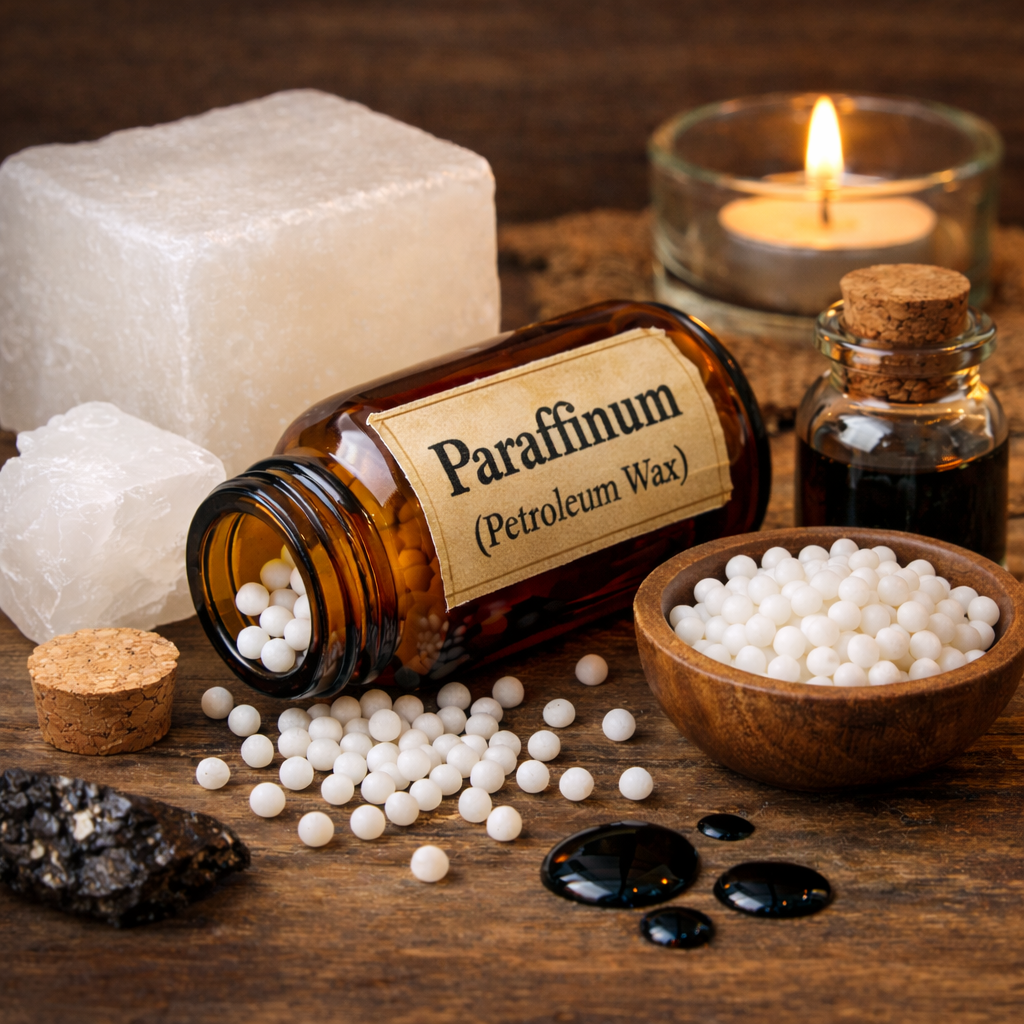
Homeopathy, a holistic system of medicine founded by Samuel Hahnemann, operates on the principle of “like cures like.” Within its vast materia medica lies a fascinating remedy derived from a ubiquitous modern substance: Paraffinum. This is not the liquid kerosene (often called paraffin in some countries) but the solid, waxy hydrocarbon mixture known as mineral wax or hard paraffin. As a homeopathic preparation, Paraffinum offers a unique therapeutic profile, primarily addressing deep-seated skin conditions, sensory disturbances, and peculiar mental states.
Origin and Extraction: From the Earth to the Pharmacy
The journey of Paraffinum begins far from the plant-based origins of many homeopathic remedies. It is a fossil fuel derivative, a product of the distillation of petroleum, shale, or coal. Crude oil is refined through a complex process of fractional distillation, separating its components based on boiling points. The heavier fractions, after further purification and de-oiling, yield a mixture of solid saturated hydrocarbons known as paraffin wax.
This wax is inert, odorless, and colorless in its pure form. For homeopathic use, the crude paraffin wax itself is the starting point. The preparation follows the standard homeopathic pharmacopeia method for insoluble substances.
Since paraffin wax does not dissolve in water or alcohol, it undergoes a process called trituration. This is a meticulous, labor-intensive technique of grinding the raw substance with lactose (milk sugar) in precise proportions. The first stage creates a 1/10 or 1/100 mixture (1 part paraffin to 9 or 99 parts lactose). This mixture is ground for a specific duration, typically an hour, in a mortar and pestle. This process is believed to release the medicinal energy of the substance. Subsequent dilutions are made from this triturated powder. Once a sufficient level of dilution is reached (usually the 3x or 6x potency), the material becomes soluble and can then be further potentized using the standard serial dilution and succussion (vigorous shaking) method to create the full range of potencies, from low (e.g., 6C, 30C) to very high (e.g., 200C, 1M, and beyond).
This transformational process, from a physically inert wax to a dynamic homeopathic medicine, encapsulates the homeopathic principle that the therapeutic power of a substance lies not in its material quantity but in its patterned energy, unlocked through dilution and succussion.
Potencies and Their Application
The choice of potency in homeopathy is a nuanced decision based on the individual’s symptoms, their intensity, and the nature of the illness. For Paraffinum, this holds true.
-
Low Potencies (6X, 6C, 30C): These are often employed for local, physical symptoms, particularly in chronic skin conditions. A low-potency Paraffinum might be prescribed for long-standing, stubborn eczema or psoriasis where the skin is intensely dry, cracked, and leathery. It is also considered in conditions like ichthyosis, where the skin resembles fish scales.
-
Medium to High Potencies (200C, 1M): These potencies are used when the characteristic mental and general symptoms are prominent. The peculiar sensations (like the “pins and needles” or the feeling of being encased in wax), the profound indifference, or the specific modality of worsening at night and in the open air would call for a higher potency. These are typically used for deeper, constitutional prescribing.
-
Prescription Method: As with all classical homeopathy, Paraffinum is not prescribed for a diagnosed disease name alone. It is given when the totality of the patient’s symptoms—physical, mental, and emotional—matches the unique “picture” of the remedy. A single dose of a high potency may be administered, followed by a wait to observe the response, or lower potencies may be given more frequently for a local condition.
The Symptom Picture: Who is Paraffinum?
The homeopathic remedy picture of Paraffinum is constructed from its historical provings and clinical observations. Its themes revolve around insulation, numbness, and deep dryness.
Mental and Emotional Symptoms:
A key characteristic is a profound indifference. The person may feel detached, apathetic, and uninterested in their work, family, or even their own life. They might describe a feeling of being wrapped up, isolated, or insulated from the world, much like being coated in wax. There can be a sense of moral deficiency or a lack of ethical warmth. Anxiety is often present, particularly worsening at night. Forgetfulness and difficulty concentrating are also noted.
Physical Symptoms and Sensations:
The sensory disturbances are paramount. The most striking symptom is a sensation of “pins and needles” (formication), as if ants are crawling under the skin. This can occur anywhere but is frequently noted in the limbs. There is a peculiar feeling that the body or parts of it are made of wax, wood, or glass—dead, insensible, or brittle. Numbness and coldness are common.
A hallmark is the aggravation from open air. The patient often feels worse when outside, craving warmth and shelter. Symptoms also prominently worsen at night, causing restlessness and discomfort.
Skin Symptoms:
This is Paraffinum’s primary theater of action. The skin exhibits extreme, pathological dryness. It is not merely dry but hard, thick, leathery, and cracked, often with deep, painful fissures that may bleed. It can look shiny, taut, and scaly, resembling parchment or the skin of a reptile. Itching is common and is often worse at night and from warmth (like in bed). Conditions like chronic eczema, psoriasis, severe chilblains, and ichthyosis may call for Paraffinum when this dryness is the dominant feature.
Other Physical Affinities:
It has an affinity for the nerves, with neuralgic pains that are burning or shooting. It is also considered in rheumatic pains that are worse in the open air. Some provings noted a tendency for urinary frequency and a sensation of coldness in the stomach.
Clinical Uses and Applications
In modern homeopathic practice, Paraffinum is considered a niche but valuable remedy. Its primary uses are:
-
Chronic Dermatological Conditions: It is a leading remedy for hyperkeratotic skin disorders. This includes severe hand eczema with deep fissures, plantar psoriasis where the soles are thick and cracked, and generalized psoriasis with marked scaling and dryness. It is also thought of for winter-related chilblains that are intensely burning and itchy.
-
Neuropathic Sensations: For persistent, unexplained paresthesia—feelings of numbness, crawling, or burning in the skin—especially if linked to a history of nerve injury or systemic illness like diabetes, when the symptom picture matches.
-
Psychological States: In supportive constitutional care for individuals exhibiting the characteristic emotional insulation, apathy, and detachment, particularly if coupled with physical symptoms of dryness or coldness.
-
Rheumatic Pains: For pains that have a burning character and are distinctly worse in open air or drafts.
Side Effects and the Homeopathic Aggravation
In the context of homeopathy, “side effects” in the conventional pharmaceutical sense are not applicable due to the highly diluted nature of the remedies. However, two concepts are crucial:
-
Homeopathic Aggravation: This is a temporary intensification of existing symptoms following a well-indicated remedy, seen as a sign that the vital force is responding. A patient taking Paraffinum might experience a short-term increase in itching or a reappearance of an old skin symptom. This is usually mild and self-limiting, indicating the remedy is acting. It is distinct from an adverse drug reaction.
-
Incorrect Prescription: If Paraffinum is given without a matching symptom picture, it will simply have no effect. Homeopaths believe a poorly matched remedy does not cause harm but produces no therapeutic action. The primary risk lies in the delay of seeking appropriate conventional care for serious conditions. Severe skin diseases, neurological symptoms, or mental health issues require proper medical diagnosis. Homeopathy should be used as a complementary approach under the guidance of a trained practitioner, not as a substitute for necessary medical intervention.
Prevention: A Constitutional Approach
Homeopathy does not conceptualize prevention in the sense of a vaccine. Instead, it aims to strengthen the individual’s overall constitution, making them less susceptible to illness. A deeply acting constitutional remedy, which could be Paraffinum for a person with that specific diathesis, may help to rebalance the system. This could, in theory, reduce the predisposition to develop the severe dry skin conditions or nervous sensitivities that characterize the remedy state. The prevention is individualized and systemic, not disease-specific.
Comparative Analysis with Other Remedies
To understand Paraffinum’s unique place, it is essential to compare it with other remedies that may present similarly.
-
Petroleum: This is Paraffinum’s closest relative, as both are petroleum derivatives. Both have extremely dry, cracked skin. However, Petroleum’s cracks are deeper, more painful, and bleed more easily. The skin is rough, hard, and dirty-looking. Mentally, Petroleum is more irritable, anxious about health, and suffers from intense nausea and vertigo, especially when traveling. Paraffinum’s indifference and wax-like sensations are less prominent in Petroleum.
-
Graphites: Another major remedy for dry, cracked skin. Graphites’ discharges are sticky, honey-like, and oozing from the cracked skin. The skin is rough, hard, and cracked, but often with this characteristic exudate. Graphites patients are typically timid, indecisive, and weepy, contrasting with Paraffinum’s apathy.
-
Sulphur: For a wide range of skin ailments with itching and burning worse from warmth. Sulphur’s skin is often dirty, red, and itchy, but not necessarily as profoundly dry and leathery as Paraffinum’s. The Sulphur patient is typically theoretical, messy, and selfish, with a strong heat aggravation, whereas Paraffinum craves warmth.
-
Arsenicum Album: For dry, scaly, itchy skin that is worse from cold and better from warmth (like Paraffinum). However, Arsenicum features intense burning pains relieved by heat, and profound anxiety, restlessness, and perfectionism. The Arsenicum patient is fastidious and fearful, quite different from the indifferent Paraffinum state.
-
Silicea: For skin with deep infections, suppurations, and fistulas. Silicea can have dry skin, but its keynote is lack of vital heat and a tendency for things to fester and not heal. The Silicea personality is nervous, yielding, and lacking grit, yet can be stubborn in certain aspects.
Frequently Asked Questions (FAQs) About Homeopathic Paraffinum
1. What is homeopathic Paraffinum made from?
Homeopathic Paraffinum is made from paraffin wax, a solid, white, odorless mixture of saturated hydrocarbons derived from petroleum, coal, or shale oil. It is not made from liquid kerosene (which is sometimes called paraffin in some countries). The insoluble wax undergoes a special homeopathic preparation called trituration with lactose to make it medicinally available.
2. What conditions is Paraffinum most commonly used for?
Its most prominent use is for severe, chronic skin conditions characterized by extreme, pathological dryness. This includes eczema, psoriasis, or ichthyosis where the skin becomes thick, hard, leathery, and deeply cracked, resembling parchment or scales. It is also considered for unusual nerve sensations like “pins and needles” and specific emotional states of indifference and detachment.
3. How is Paraffinum different from Petroleum (another homeopathic remedy from oil)?
Both are petroleum derivatives for dry, cracked skin, but key differences exist:
-
Skin: Petroleum’s cracks are deeper, more painful, and bleed more readily. The skin often looks dirty.
-
Mental State: Petroleum is associated with irritability and marked anxiety, especially about health or during travel (with nausea/vertigo). Paraffinum features a more profound indifference and a feeling of being insulated or “waxy.”
-
Sensations: Paraffinum has the unique sensation of the body feeling like it is made of wax, wood, or glass.
4. What are the unique guiding symptoms for choosing Paraffinum?
Three key symptoms often guide its selection:
-
Extreme Skin Dryness: Skin that is not just dry but hardened, leathery, and cracked.
-
Peculiar Sensations: Feelings of numbness, “pins and needles,” or the specific illusion that a body part is made of wax or is dead.
-
Characteristic Modalities: Symptoms that distinctly worsen in the open air and at night, and are better with warmth.
5. Can I self-prescribe Paraffinum for my dry skin?
Caution is advised. While dry skin is common, Paraffinum is a very specific remedy for an extreme, chronic pathological state. Self-prescribing for a simple dry patch is unlikely to help and could delay proper diagnosis of conditions like eczema or psoriasis. It is best used under the guidance of a qualified homeopath who can match your complete physical and mental symptom picture to the remedy.
6. What potency of Paraffinum is usually recommended?
Potency selection is individualized. Lower potencies (like 6C or 30C) may be used for localized physical skin symptoms. Medium to high potencies (200C and above) are typically chosen when the characteristic mental/emotional symptoms and general sensations (like the waxy feeling) are clear. A homeopath decides this based on the case’s depth and intensity.
7. Are there any side effects from taking homeopathic Paraffinum?
In the conventional sense, there are no pharmacological side effects due to the high dilutions. However, a well-indicated homeopathic remedy can sometimes cause a “homeopathic aggravation.” This is a temporary, mild intensification of existing symptoms, seen as a sign the body is responding. For example, skin itching might briefly increase. If any strong or concerning reaction occurs, you should stop the remedy and consult your practitioner.
8. How long does it take to see results with Paraffinum?
The timeframe varies. For acute flare-ups of a chronic condition, some relief in sensation (like itching) may be noticed relatively quickly. For deep-seated, long-term skin conditions, a more prolonged course may be needed to see significant structural change in the skin. The response depends on the individual’s vitality and the chronicity of the disease.
9. Can Paraffinum be taken alongside conventional medicines?
Yes, homeopathic medicines are generally considered safe to use alongside conventional treatments as they do not interact chemically. However, it is crucial to inform both your medical doctor and homeopath about all medications and treatments you are using. Homeopathy is often used as a complementary therapy, not a replacement, for necessary medical care.
10. Is there a “Paraffinum personality”?
While homeopathy treats the individual, not a stereotype, the Paraffinum state often presents with a theme of insulation and detachment. The person may appear apathetic, indifferent to work and family, and emotionally “wrapped up.” They may feel morally dull or isolated, as if separated from the world by an invisible waxy layer. This mental state, when combined with the physical symptoms, completes the remedy picture.
Conclusion
Paraffinum stands as a testament to homeopathy’s principle that any substance, processed according to its laws, can become a healing agent. From its origins as an inert petroleum wax, it is transformed into a medicine with a distinct portrait of deep dryness, sensory alienation, and emotional insulation. Its mastery lies in treating not just the cracked, leathery skin but the individual who feels as if they are encased in a waxy shell, detached from the world. While its application is specific, in the hands of a skilled homeopath, it can provide profound relief for conditions where conventional medicine often offers only palliative management. As with all homeopathic remedies, its power is unlocked not by its material dose, but by the precise match between its symptom signature and the lived experience of the patient.