Table of Contents
ToggleSkin Whitening: Symptoms, Causes, Effects, Prevention and Homeopathic Medicines for Skin Whitening.
Introduction
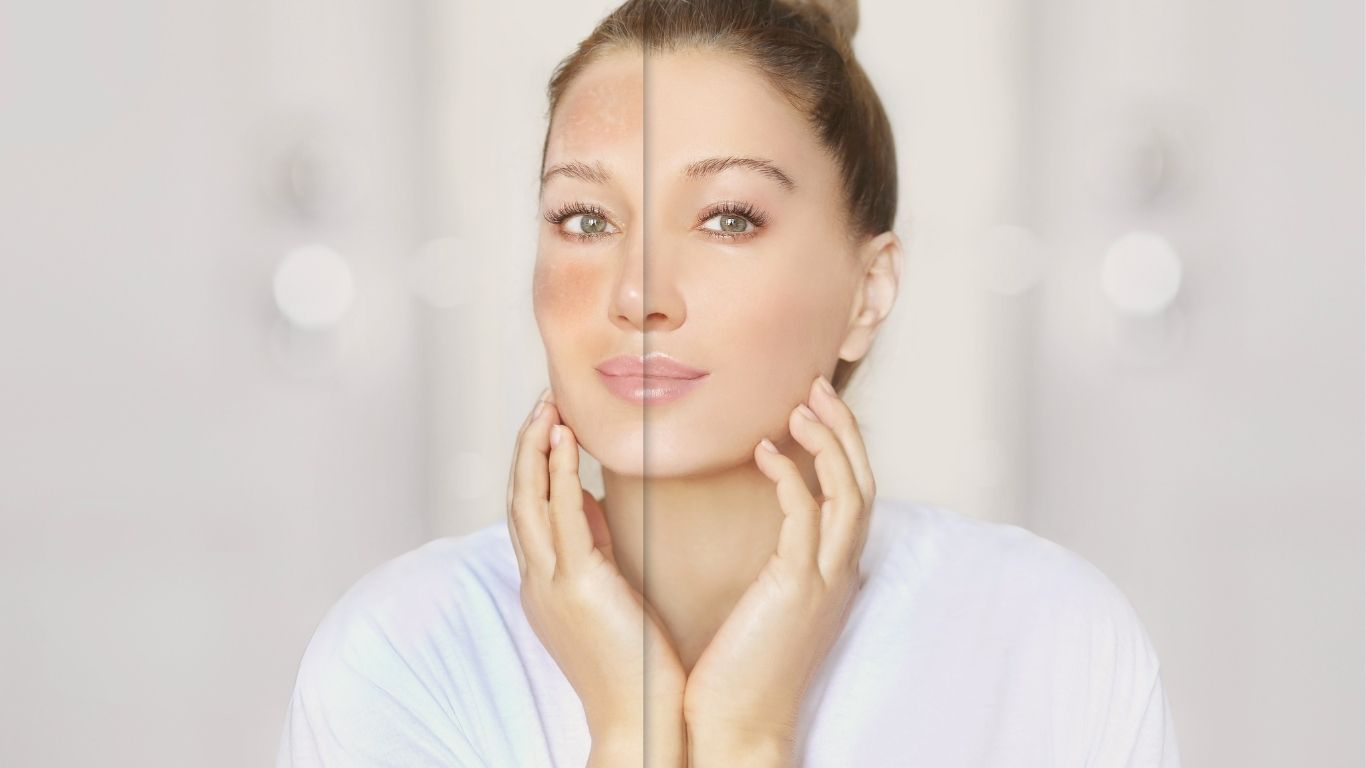
The quest for skin lightening, often referred to as skin whitening or bleaching, is a complex and deeply personal journey for many. It is a practice that sits at the intersection of dermatological science, cultural history, and socio-economic pressures. While it is often pursued to treat specific skin conditions like hyperpigmentation, melasma, or post-inflammatory scars, it is also driven by widespread cultural preferences for fairer complexions . To understand this topic fully, one must look beyond the surface to explore the biological mechanisms of pigmentation, the various causes of skin discoloration, the potential dangers of unregulated treatments, and the holistic approaches some seek for management.
Understanding Skin Pigmentation: The Biology of Color
Human skin color is determined by the concentration and type of a pigment called melanin, produced by specialized cells known as melanocytes located in the epidermis . Think of melanocytes as tiny factories; their job is to produce melanin and distribute it to other skin cells to protect them from ultraviolet (UV) radiation.
There are two primary types of melanin. Eumelanin is responsible for brown and black hues and offers significant protection against UV rays by absorbing them. In contrast, pheomelanin produces yellow and red tones but is less effective at blocking UV radiation, making individuals with more pheomelanin prone to sun damage . The amount and type of melanin you produce are largely dictated by genetics, specifically the MC1R gene, which regulates how your skin responds to sun exposure .
When we discuss “skin whitening,” we are referring to the process of interfering with this natural melanin production. The primary target for most skin-lightening agents is an enzyme called tyrosinase. This enzyme is the key catalyst that kick-starts the chemical reaction converting the amino acid tyrosine into melanin. By inhibiting tyrosinase, these agents aim to reduce the amount of pigment produced by the skin .
Symptoms and Causes of Pigmentation Disorders
Before considering any form of skin lightening, it is crucial to understand what you are trying to treat. Pigmentation disorders generally fall into two categories: hyperpigmentation (too much color) and hypopigmentation (too little color) .
Hyperpigmentation: When Skin Darkens
Hyperpigmentation manifests as patches of skin that become darker than the surrounding area. This is caused by an overproduction of melanin. The most common causes include:
-
Sun Exposure: This is the most frequent culprit. When UV rays hit the skin, they generate free radicals and activate biological agents that stimulate melanocytes. This triggers a surge in tyrosinase activity, leading to increased melanin production to protect the skin, which we see as a tan or, over time, as dark spots .
-
Post-Inflammatory Hyperpigmentation (PIH): This occurs after an injury or inflammation to the skin. Acne scars, eczema, burns, or even harsh cosmetic procedures can leave behind a flat area of dark discoloration. This is incredibly common and can be more pronounced in individuals with darker skin tones .
-
Melasma: This condition presents as brown or blue-gray patches, usually on the face. It is often triggered by hormonal fluctuations, making it common during pregnancy (often called the “mask of pregnancy”) or in women taking hormonal contraceptives. Sun exposure exacerbates it significantly .
-
Freckles (Ephelides) and Lentigines (Age Spots): Freckles are usually genetic and become more pronounced with sun exposure. Lentigines, also called liver spots or age spots, are small, flat, tan-to-brown oval spots that appear on sun-exposed areas like the face and hands as we age, due to years of cumulative UV damage .
-
Medications: Certain drugs can trigger hyperpigmentation. This includes some antibiotics, antimalarials, chemotherapy drugs, and even tetracyclines. These reactions can sometimes result in unusual colors like blue-gray or yellow-brown patches .
-
Systemic Diseases: Conditions like Addison’s disease (which affects hormone production) or hemochromatosis (iron overload) can cause a generalized darkening or bronzing of the skin .
Hypopigmentation: When Skin Lightens
On the other end of the spectrum is hypopigmentation, where the skin loses color. Understanding this is important because sometimes the desire for “whitening” is actually a desire to treat the appearance of lighter patches, such as in vitiligo.
-
Vitiligo: An autoimmune condition where the body attacks its own melanocytes, leading to smooth, chalky-white patches on the skin .
-
Pityriasis Alba: Commonly seen in children and adolescents, this presents as oval, pale patches with fine scales, often on the face. They are more noticeable in individuals with darker skin .
-
Tinea Versicolor: A fungal infection caused by Malassezia that interferes with the normal pigmentation of the skin, resulting in small, discolored patches that can be either lighter or darker than the surrounding skin .
The Practice of Skin Whitening: Effects and Dangers
The market for skin lightening is vast and growing, projected to be worth billions of dollars . However, the methods used to achieve a lighter complexion vary drastically in safety.
The “Gold Standard” and Its Risks: Hydroquinone
In the medical world, hydroquinone has long been considered the most effective treatment for hyperpigmentation. It works by reducing the number of melanocytes and inhibiting melanin production . When prescribed by a dermatologist for short-term use on specific dark patches, it can be safe and effective. However, its misuse—particularly in high concentrations or for prolonged periods—can lead to devastating side effects.
One of the most serious is exogenous ochronosis, a condition where the skin turns a dark, bluish-black color and becomes thickened with caviar-like bumps. Paradoxically, the very treatment meant to lighten the skin ends up making it permanently darker and disfigured . This is why hydroquinone is a prescription-only medication in many countries and has been removed from over-the-counter markets in others .
The Hidden Dangers of Unregulated Products
Perhaps the greatest danger in skin whitening lies in the unregulated market. Because the practice is so prevalent—particularly in Africa, Asia, and the Caribbean—many people turn to over-the-counter creams, soaps, and powders that are easily available online or in local shops but are not subject to safety inspections . These products often contain hazardous ingredients:
-
Topical Corticosteroids: Strong steroids can lighten skin initially by suppressing the immune response and melanin production. However, prolonged use leads to skin atrophy (thinning), telangiectasia (visible broken blood vessels), acne, and stretch marks. Because the steroid is absorbed into the bloodstream, widespread use can also suppress the body’s natural adrenal glands, leading to adrenal insufficiency, a potentially life-threatening condition .
-
Mercury: Inorganic mercury is sometimes found in bleaching creams because it inhibits melanin formation. Mercury is a heavy metal that is toxic to humans. It can cause severe skin rashes, discoloration, and scarring. Systemically, it damages the kidneys and nervous system .
-
Unproven Injectables: Glutathione is an antioxidant that is sometimes injected intravenously for skin whitening—a practice that is not FDA-approved and carries significant risks .
These complications highlight a crucial point: skin lightening is not without consequence. The pursuit of lighter skin, especially through unregulated channels, can result in permanent damage.
Prevention: The First Line of Defense
Regardless of whether you choose to treat pigmentation, prevention is the most critical step in managing skin health.
Sun Protection is Non-Negotiable. Since UV radiation is the primary trigger for melanin production, diligent sun protection is essential. This means applying a broad-spectrum sunscreen with an SPF of 30 or higher every single day, even when it is cloudy. Sunscreen should be reapplied every two hours when outdoors . Without this, any treatment for hyperpigmentation will be fighting a losing battle, as the sun will constantly be stimulating new melanin.
Additionally, for those with darker skin tones who are more prone to PIH, it is vital to treat inflammatory skin conditions like acne promptly and gently to prevent the dark spots that follow healing .
Homeopathic Treatment for Pigmentation
In contrast to the harsh chemicals found in some cosmetic and allopathic treatments, homeopathy offers a gentler, constitutional approach. It is important to clarify what homeopathy is and is not. In homeopathy, the goal is not to forcibly bleach the skin, but to stimulate the body’s own healing mechanisms to restore balance. There is no single “magic pill” to change one’s natural skin color; rather, treatment is highly individualized based on the patient’s physical symptoms, emotional state, and overall constitution .
The Principles of Homeopathic Care
When treating a skin condition like hyperpigmentation (dark spots) or hypopigmentation (like vitiligo), a homeopath will look at the patient holistically. Why is the pigmentation happening? What are the triggers? What is the patient’s temperament? This individualized approach is key.
Common Homeopathic Remedies for Pigmentation
While a professional homeopath must be consulted for proper dosing and remedy selection, some commonly indicated remedies for pigmentation issues include:
-
For Hyperpigmentation (Melasma, Dark Spots):
-
Sepia officinalis: Often indicated for women with melasma, especially if it is related to hormonal changes like pregnancy, contraceptive use, or menopause. The skin may have a brown, saddle-like discoloration across the nose and cheeks. These individuals are often irritable, tired, and indifferent to loved ones.
-
Berberis vulgaris: Sometimes used for liver spots and pigmentation associated with a sluggish liver.
-
Arsenicum album: May be considered for dry, rough, scaly skin with pigmentation, often accompanied by anxiety and restlessness.
-
-
For Hypopigmentation (Vitiligo/Leucoderma):
Homeopathy has a long history of use in treating vitiligo, aiming to halt the spread of white patches and stimulate repigmentation .-
Hydrocotyle asiatica (Centella asiatica): Known for its skin-healing properties, it is often used to improve skin health and texture.
-
Arsenicum album: Indicated when the skin is dry and the patient is anxious.
-
Sepia officinalis: Useful for vitiligo that may be associated with hormonal disturbances.
-
Syphilinum: A deep-acting constitutional remedy sometimes used in chronic, stubborn cases of vitiligo.
-
It is important to note that while there are commercial homeopathic formulations marketed for conditions like vitiligo, the FDA includes a disclaimer that these products have not been scientifically evaluated for safety and efficacy in the way conventional drugs are, and that the agency is not aware of scientific evidence to support homeopathy as effective . Therefore, these treatments should be approached as a complementary therapy under the guidance of a qualified practitioner, not as a replacement for conventional medical diagnosis and monitoring.
The Role of Natural Ingredients in Modern Science
Interestingly, the search for safer skin lightening has led modern science back to nature. Because synthetic inhibitors like hydroquinone can cause irritation and other side effects, researchers are actively studying natural compounds . Ingredients like silymarin (from milk thistle), azelaic acid (a natural fungal derivative), arbutin (from the bearberry plant), and even white birch sap are being investigated for their ability to inhibit tyrosinase and reduce melanin with fewer side effects . This convergence of traditional botanical knowledge and modern dermatology may pave the way for safer topical treatments in the future.
Frequently Asked Questions About Homeopathic Medicines for Skin Whitening
1. Can homeopathic medicines permanently change my natural skin color?
Homeopathy does not aim to alter your natural, genetic skin color. Instead, it works on the principle of stimulating the body’s innate healing mechanisms to correct imbalances. When used for skin concerns, the goal is to treat specific pigmentation disorders like melasma, dark spots, or vitiligo by addressing underlying internal triggers, thereby helping the skin return to its natural, even tone rather than making it artificially fairer.
2. How do homeopathic remedies work for skin pigmentation?
Homeopathic remedies for pigmentation are chosen based on the individual’s complete picture—physical symptoms, emotional state, lifestyle, and triggers. Rather than topically bleaching the skin, these internal remedies aim to regulate the systemic factors that may be causing the overproduction (hyperpigmentation) or loss (hypopigmentation) of melanin. This could involve balancing hormones, reducing stress responses, or supporting liver function, depending on the constitutional remedy prescribed.
3. Are homeopathic medicines safe to use on my skin?
Homeopathic remedies are generally considered safe as they are highly diluted and typically taken orally in the form of small pills or liquid drops. They do not contain the harsh chemical bleaching agents like hydroquinone, mercury, or potent steroids found in some topical creams. However, it is crucial to take them under the supervision of a qualified homeopathic practitioner to ensure the correct remedy and dosage for your specific condition.
4. Is there a specific homeopathic medicine for skin whitening?
No, there is no single “magic bullet” or universal remedy for skin whitening in homeopathy. Treatment is highly individualized. For example, the remedy prescribed to a woman with hormonal melasma (like Sepia) will be completely different from the remedy given to someone with vitiligo triggered by stress (like Arsenicum album). The medicine is matched to the person, not just the disease label.
5. How long does it take to see results with homeopathic treatment for pigmentation?
Homeopathy treats chronic conditions by working on a deep, constitutional level, so patience is essential. Unlike topical bleaches that may show superficial lightening in weeks, homeopathic treatment aims for lasting correction, which can be a slower process. Depending on the chronicity of the condition and the individual’s vitality, it may take several months to a year or more to see significant, stable improvement.
6. Can homeopathy treat vitiligo (white patches)?
Yes, homeopathy is one of the alternative systems of medicine commonly sought out for treating vitiligo (leucoderma). The goal of treatment is to halt the progression of the disease and, over time, stimulate the melanocytes to produce pigment again, leading to repigmentation of the white patches. Remedies like Hydrocotyle asiatica, Arsenicum album, and Sepia are among those used constitutionally for this condition.
7. What are some common homeopathic remedies used for pigmentation issues?
While a professional must prescribe the remedy, some commonly indicated ones include:
-
Sepia officinalis: Often for women with melasma (brown patches on face) linked to hormonal changes, pregnancy, or menopause.
-
Arsenicum album: For dry, rough, scaly skin with pigmentation, often in anxious individuals.
-
Berberis vulgaris: Sometimes used for pigmentation thought to be associated with liver sluggishness.
-
Hydrocotyle asiatica (Centella): Frequently used for various skin conditions, including vitiligo and to improve overall skin health.
-
Sulphur: For unhealthy skin that is prone to various eruptions and itching, often with burning sensations.
8. Are there any side effects of homeopathic skin lightening medicines?
When prescribed by a qualified practitioner, homeopathic remedies are highly diluted and generally free from toxic side effects. However, it is not uncommon to experience a “healing aggravation”—a temporary, mild worsening of symptoms at the very beginning of treatment as the body’s vital force begins to rebalance itself. This is usually a positive sign and subsides on its own. You should always report any changes to your practitioner.
9. Can I use homeopathic remedies alongside my dermatologist-prescribed creams?
In many cases, yes. Homeopathy can be used as a complementary therapy alongside conventional topical treatments. For instance, you might use a prescribed dermatological cream to manage the surface pigmentation while taking a constitutional homeopathic remedy to address the internal imbalance. However, it is vital to inform both your dermatologist and your homeopath about all treatments you are using to ensure there are no contraindications and to create a coordinated care plan.
10. How does a homeopath choose the right remedy for my skin?
The selection process, known as “constitutional prescribing,” is detailed. The homeopath will conduct an in-depth consultation asking about your skin symptoms (when it started, what makes it better or worse), your medical history, your food preferences, your sleep patterns, your fears, your dreams, and your emotional responses to stress. This holistic portrait is then matched to a remedy in the homeopathic materia medica that covers the totality of your symptoms.
Conclusion
The topic of skin whitening is multifaceted. From a medical standpoint, it involves the safe management of pigmentation disorders like melasma and PIH using regulated treatments and rigorous sun protection. The dangers of this practice emerge when it moves from treating a specific condition to altering one’s entire complexion, often through unregulated products that contain steroids, mercury, or high concentrations of hydroquinone. These substances can cause irreversible damage, from ochronosis to kidney failure.
Holistic approaches, such as homeopathy, offer a different path by focusing on the individual’s overall health rather than just the skin symptom. While the principles of homeopathy are gentle, it is essential to rely on evidence-based information and consult with healthcare professionals—whether a dermatologist or a licensed homeopath—before starting any treatment. Ultimately, protecting the skin’s health through sun safety and informed choices is the most sustainable way to achieve a clear and even-toned complexion.