
Table of Contents
ToggleHow to Grow Hairs with Homeopathic Remedies: A Comprehensive Guide
Introduction
Hair is often seen as a barometer of our inner health and a cornerstone of our personal identity. For many, a thick, healthy head of hair is synonymous with vitality and youth. Conversely, noticing more hair than usual in the shower drain or on your hairbrush can be a source of significant distress. Understanding the intricate biology of hair growth, the myriad factors that can disrupt it, and the full spectrum of treatment options—from conventional prevention to the principles of homeopathy—is the first step toward regaining control and confidence. This article delves deep into the world of hair, offering a comprehensive, human-centric look at its life cycle, the challenges it faces, and the paths to nurturing it.
The Biology of Hair Growth
To understand why hair falls out, we must first understand how it grows. Hair is more than just a strand of protein; it’s a product of a complex, dynamic structure beneath the skin known as the hair follicle. Think of the follicle as a tiny, tunnel-shaped organ in the dermis, the middle layer of your skin . At the very base of this follicle lies the hair bulb, or matrix, which houses rapidly dividing cells. Nourished by blood vessels, these cells multiply and are pushed upward. As they travel away from their blood supply, they die and harden into a protein called keratin, forming the hair shaft we see . This entire process is a marvel of biological engineering, and it operates in a continuous cycle with three distinct phases .
Anagen (Growth Phase): This is the active phase where cells in the follicle are dividing rapidly, adding to the hair shaft. For the hair on your scalp, this phase is long, typically lasting between two to seven years. The length of this phase is genetically determined and is what dictates the maximum length of your hair. At any given time, about 85-90% of your hairs are in this active growth stage.
Catagen (Transition Phase): This is a very short transitional stage, lasting only about two to three weeks. In this phase, hair growth stops, and the outer sheath of the hair root shrinks and attaches to the root of the hair. It’s the end of the active growth period.
Telogen (Resting Phase): This is the final phase, lasting around three to four months. During this time, the follicle is completely at rest, and the club hair—the fully formed hair—is no longer growing. At the end of the telogen phase, the hair falls out, and a new hair begins to grow from the same follicle, starting the cycle all over again . It is perfectly normal to lose between 50 to 100 scalp hairs each day as part of this natural shedding process .
The shape of your follicle determines whether your hair is straight or curly—circular follicles produce straight hair, while oval follicles produce curly hair . The color of your hair is determined by the type and amount of melanin (eumelanin for black/brown, pheomelanin for red) produced by cells in the follicle .
Recognizing the Symptoms of Hair Loss
Hair loss, or alopecia, can manifest in several ways depending on its underlying cause. Recognizing the specific signs is crucial for seeking the right help. It can appear gradually or suddenly, and it can affect just your scalp or your entire body .
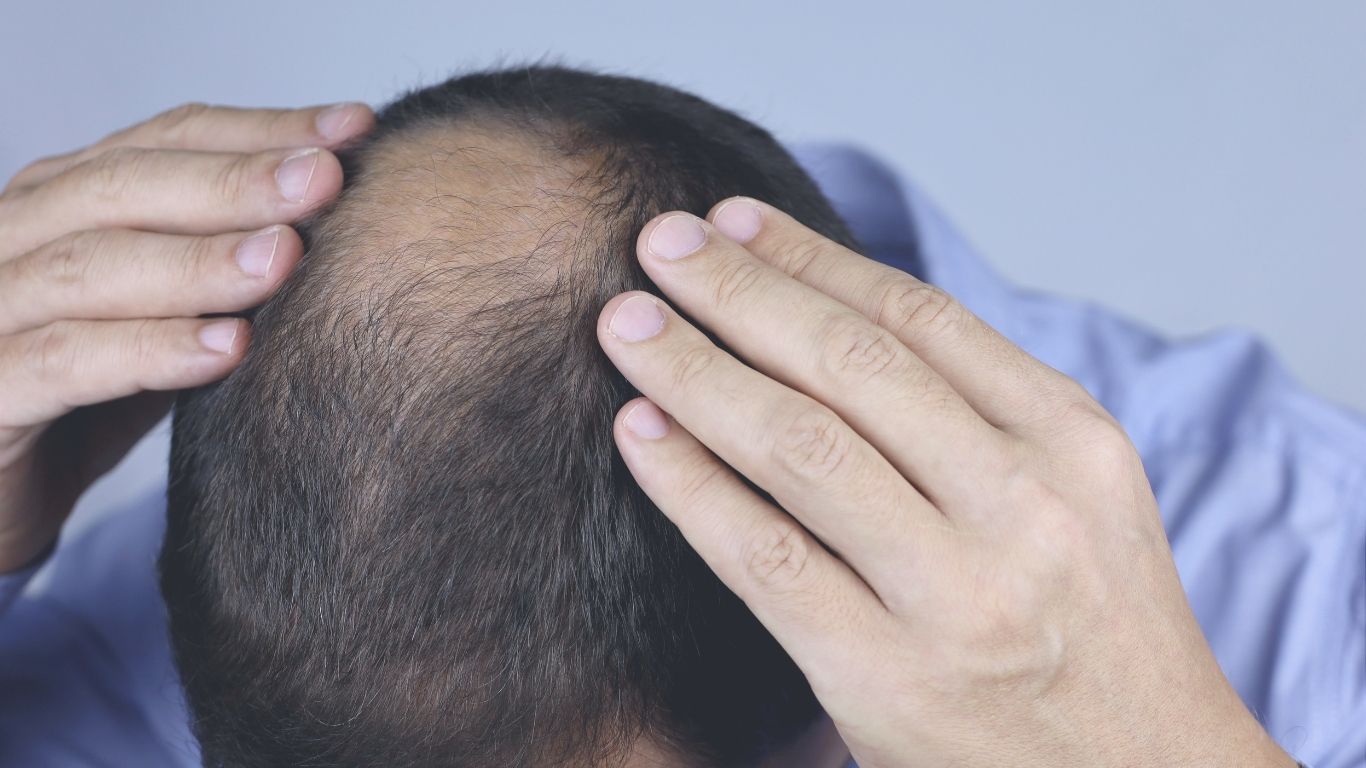
Gradual Thinning on Top of Head: This is the most common type of hair loss, affecting both men and women as they age. In men, it often begins with a receding hairline at the temples and thinning at the crown, eventually leading to the characteristic “M” shape. This is often referred to as male pattern baldness. In women, thinning typically presents as a broadening of the part or overall thinning at the crown, while the frontal hairline usually remains intact. This is known as female pattern hair loss .
Patchy Bald Spots: Some people experience smooth, coin-sized bald patches on the scalp. This is a hallmark symptom of alopecia areata, an autoimmune condition where the body’s immune system attacks the hair follicles . In some cases, this can extend to complete hair loss on the scalp (alopecia totalis) or the entire body (alopecia universalis) .
Sudden Loosening of Hair: A physical or emotional shock can cause hair to become loose and fall out in handfuls when washing or combing. This is known as telogen effluvium. It typically causes overall thinning rather than distinct bald patches .
Full-Body Hair Loss: Certain medical conditions and treatments, such as chemotherapy for cancer, can result in the loss of hair all over the body.
Patches of Scaling: If hair loss is accompanied by scaly, red, or pustular patches on the scalp, it could be a sign of a fungal infection like ringworm (tinea capitis) or an inflammatory condition like folliculitis .
The Root Causes of Hair Loss
The reasons for hair loss are as varied as the patterns it creates. Pinpointing the cause is the most important step toward effective management. Causes generally fall into several categories:
Genetic and Hormonal Factors: The most common cause of hair loss is a genetic predisposition known as androgenetic alopecia. It’s related to the influence of androgens, particularly dihydrotestosterone (DHT). DHT shrinks hair follicles, shortening the anagen (growth) phase and leading to thinner, shorter hairs until eventually, the follicles stop producing new hair altogether . This condition affects a significant portion of the population; one Canadian study noted it impacts 40-50% of men and women by age 50 .
Medical Conditions and Immune System Disorders:
Alopecia Areata: As mentioned, this is an autoimmune disease where the immune system mistakenly attacks healthy hair follicles, leading to patchy hair loss .
Thyroid Disorders: Both an overactive and underactive thyroid can disrupt the hair growth cycle, leading to diffuse thinning across the scalp .
Scalp Infections: Infections like ringworm can invade the hair and skin, leading to scaly, bald patches .
Hormonal Imbalances: Conditions like polycystic ovary syndrome (PCOS) can cause hormonal shifts, leading to hair thinning in women, sometimes accompanied by other signs like irregular periods and acne .
Physical and Emotional Stress: Significant stress can push large numbers of hair follicles into the telogen (resting) phase prematurely, a condition called telogen effluvium . Triggers can include:
A high fever or severe illness
Surgery or a traumatic injury
Rapid weight loss or malnutrition
Childbirth
Severe emotional stress
Nutritional Deficiencies and Lifestyle: Hair is non-essential tissue, meaning when the body is undernourished, it diverts nutrients to vital organs first. Deficiencies in key building blocks can lead to hair loss. Common nutritional causes include a lack of iron, protein, and zinc . Smoking has also been linked to premature greying and hair loss in men .
Medications and Treatments: Hair loss can be a side effect of certain drugs, including:
Anticoagulants (blood thinners)
Medications for high blood pressure and depression
Chemotherapy drugs
Hairstyling and Treatments: Excessive or harsh styling can damage hair follicles. Traction alopecia is caused by hairstyles that pull hair tight, such as cornrows, braids, or tight ponytails. Hot oil treatments and chemical relaxers can cause inflammation of the follicles, leading to scarring and permanent hair loss .
The Multifaceted Effects of Hair Loss
While hair loss is a physical condition, its effects often run much deeper, impacting psychological and social well-being. For many, hair is intertwined with identity, attractiveness, and self-esteem. The impact of hair thinning can be significant, detrimental to self-esteem, psychosocial functioning, and overall quality of life . It can lead to feelings of embarrassment, anxiety, and depression. Socially, individuals might withdraw from activities, feel less confident at work, or struggle with intimate relationships. Recognizing these emotional effects is just as important as treating the physical symptoms.
Proactive Prevention and General Management
When it comes to hair loss, an ounce of prevention can indeed be worth a pound of cure. While not all types of hair loss are preventable, certain strategies can help maintain a healthy scalp and minimize damage.
Lifestyle and Nutrition: A balanced diet rich in protein, iron, zinc, and vitamins is the foundation of healthy hair. Managing stress through techniques like yoga, meditation, or adequate sleep can help prevent stress-induced shedding. If you smoke, quitting is one of the best things you can do for your hair and overall health .
Gentle Hair Care: Treat your hair with care. Avoid tight hairstyles that pull at the root. Limit the use of harsh chemical treatments and high-heat styling tools. When washing, use a mild shampoo and avoid vigorous rubbing.
When to See a Doctor: It’s crucial to consult a healthcare professional if you notice sudden or patchy hair loss, if you’re a woman experiencing hair thinning along with other signs of hormonal imbalance (like voice changes or acne), or if hair loss is causing you significant distress . A dermatologist or trichologist can diagnose the underlying cause through physical exams, blood tests, or scalp biopsies .
A Closer Look at Homeopathic Treatment
Amidst the landscape of conventional treatments, homeopathy offers a different philosophy, one that is highly individualized and holistic. It’s based on the principle of “like cures like”—a substance that causes symptoms in a healthy person can, in a highly diluted form, help treat similar symptoms in a sick person. In the context of hair loss, homeopathy doesn’t just look at the scalp; it considers the person as a whole, including their physical constitution, emotional state, lifestyle, and specific patterns of hair loss. The goal is to identify and treat the root cause of the imbalance, whether it’s stress, a genetic predisposition, or a nutritional issue, thereby stimulating the body’s innate ability to heal itself.
Common Homeopathic Remedies for Hair Loss
It is vital to understand that homeopathic treatment is not a “one-size-fits-all” approach. A qualified homeopath will take a detailed case history to find the remedy that best matches the individual’s unique symptom picture. Here are a few commonly indicated remedies:
Phosphorus: This remedy is often indicated for individuals experiencing hair loss in large, distinct patches, as seen in alopecia areata. It may also be suited for those with dry scalps and dandruff. A compelling 2024 case report documented two patients with alopecia areata who were prescribed Phosphorus based on their individual symptoms. After 18 months of treatment, both achieved complete hair regrowth with no relapse, as measured by the Severity Alopecia Tool (SALT) score .
Jaborandi (Pilocarpus): This remedy is derived from a plant and is traditionally thought to stimulate hair follicles and promote growth. Homeopathic consultants suggest it can be useful for certain types of hair loss, particularly when used as a mother tincture, either topically or internally, to invigorate the follicles .
Arnica Montana: While famous for treating bruises and trauma, Arnica is also used in homeopathic hair tonics. Its anti-inflammatory properties are believed to soothe the scalp and create a healthy environment for hair to thrive. However, experts strongly caution against using undiluted Arnica, as it can be toxic .
What the Evidence and Experts Say
The conversation around homeopathy is often complex, balancing anecdotal success with scientific scrutiny.
The View from Practitioners: Homeopathic practitioners strongly advocate for the efficacy of their treatments. Dr. Anusha Dewan, a homeopathic consultant, explains that remedies like Jaborandi and Arnica can be effective because Jaborandi activates hair follicles and Arnica enhances scalp health . However, both Dr. Dewan and her colleague Dr. Neha Singh emphasize the absolute necessity of individualized treatment and professional consultation. They stress that a qualified practitioner must tailor the remedy and dosage to the patient’s specific needs, addressing the root causes in a holistic manner. Self-medication is strongly discouraged .
The View from Science: From a scientific standpoint, the evidence for homeopathy in treating hair loss is still emerging. While the case report on Phosphorus for alopecia areata is promising, it represents only two cases . A fact-checking review on Jaborandi and Arnica concluded that while homeopathic practitioners recommend these remedies, the scientific research supporting their benefits is “sparse and inconclusive” . There are few rigorous, large-scale clinical trials available. Many sources classify these treatments as “anecdotal” or “half-true” based on the current lack of robust scientific data .
Furthermore, it’s worth noting that modern evidence-based reviews, such as the 2025 Canadian consensus on androgenetic alopecia, did not include homeopathic remedies in their list of recommended interventions. In fact, they explicitly did not recommend “topical herbal formulations” and “rosemary oil” due to a lack of evidence in their specific review process .
Homeopathy offers a personalized, holistic path that resonates with many who seek to treat the underlying causes of their hair loss, not just the symptoms. However, its mechanisms are not yet fully validated by conventional scientific standards. Therefore, for individuals considering this route, it is not a matter of choosing one path as definitively “right” or “wrong.” Instead, it is about making an informed choice. Consulting with a qualified homeopathic practitioner can provide a tailored approach, but it is equally important to have a proper diagnosis from a dermatologist to rule out serious underlying conditions. A combined or integrative approach, where open communication is maintained between all healthcare providers, often offers the most comprehensive path toward understanding and managing hair loss, ensuring that your journey to healthier hair is both safe and well-informed.
Frequently Asked Questions About Hair Growth and Hair Loss
1. Is it normal to lose hair every day?
Yes, it is completely normal to lose between 50 to 100 hairs per day as part of the natural hair growth cycle. Most people don’t notice this shedding because new hair is simultaneously growing to replace what is lost. However, if you notice sudden excessive shedding, clumps of hair falling out, or visible thinning, it may indicate an underlying issue worth discussing with a healthcare provider.
2. Can stress really cause hair loss?
Absolutely. Significant physical or emotional stress can trigger a condition called telogen effluvium, where stress hormones push large numbers of hair follicles into the resting phase prematurely. This typically results in noticeable hair shedding about two to three months after the stressful event. The good news is that this type of hair loss is usually temporary, and hair often regrows once the stressor is resolved and the body returns to balance.
3. Does wearing hats or caps cause baldness?
No, wearing hats does not cause permanent hair loss. This is a common myth with no scientific backing. Hats may temporarily flatten hair or cause minor friction, but they do not suffocate follicles or restrict blood flow enough to cause balding. However, wearing extremely tight headgear consistently could potentially lead to traction alopecia, a form of hair loss caused by prolonged pulling on the hair roots.
4. Can hair loss be reversed, or is it permanent?
The answer depends entirely on the cause. Some types of hair loss are reversible, while others are permanent. Telogen effluvium from stress, nutritional deficiencies, or childbirth often resolves on its own within months. Alopecia areata may come and go unpredictably. Androgenetic alopecia (male or female pattern baldness) is progressive but can often be slowed or managed with treatments like minoxidil, finasteride, or low-level laser therapy. Hair transplantation offers a permanent solution for pattern baldness by moving resistant follicles to thinning areas.
5. Does frequent shampooing make hair fall out more?
No, washing your hair does not cause hair loss. What you may notice in the shower or drain is the hair that has already naturally shed from the follicle and was simply waiting to be dislodged. In fact, keeping the scalp clean can promote a healthy environment for hair growth by removing excess oil, debris, and dead skin cells that might clog follicles.
6. What vitamins and nutrients are most important for healthy hair?
Several nutrients play key roles in hair health. Iron deficiency is a common cause of hair loss, particularly in women. Protein is essential since hair is made primarily of keratin. Zinc supports follicle function and repair. Vitamin D may play a role in creating new follicles. B vitamins, especially biotin, are involved in keratin production. Omega-3 fatty acids help nourish follicles and support scalp health. A balanced diet rich in whole foods is generally the best approach, though targeted supplementation may help if deficiencies exist.
7. Can homeopathy really treat hair loss effectively?
Homeopathy takes an individualized approach, selecting remedies based on a person’s unique physical, emotional, and symptom profile. Some practitioners and patients report positive outcomes, particularly for conditions like alopecia areata, as seen in case reports. However, scientific evidence from large-scale clinical trials remains limited, and homeopathic remedies are not currently included in mainstream medical guidelines for hair loss treatment. If considering homeopathy, it is best to consult a qualified practitioner alongside a dermatologist to ensure a comprehensive approach.
8. At what age should I expect hair loss to begin?
Hair loss can begin at virtually any age depending on the cause. Androgenetic alopecia may start as early as the teenage years or early twenties for some men, while women often notice thinning around menopause, though it can begin earlier. Telogen effluvium can occur at any age following a triggering event. Pediatric hair loss is less common but can occur due to autoimmune conditions, fungal infections, or traction from tight hairstyles.
9. Are expensive shampoos and supplements worth the money?
Not always. While some medicated shampoos containing ingredients like ketoconazole may help with scalp conditions that affect hair, most over-the-counter “volumizing” or “growth” shampoos provide temporary cosmetic effects rather than true regrowth. Similarly, supplements are only beneficial if you have an actual deficiency. Without a deficiency, excess nutrients are simply excreted. It is wiser to invest in a proper diagnosis first, then target treatments accordingly rather than relying on marketing claims.
10. When should I see a homeopath about my hair loss?
You should consider consulting a homeopath if you notice sudden or patchy hair loss, if you are losing hair in clumps, if your scalp feels painful, itchy, or appears scaly, or if hair loss is accompanied by other symptoms like fatigue, irregular periods, or unexplained weight changes. Additionally, if hair loss is causing you significant emotional distress or affecting your quality of life, seeking professional help is warranted regardless of the amount being lost.
Conclusion
Hair is far more than a simple strand of keratin—it is a reflection of our internal health, a marker of our biological rhythms, and for many, an integral part of personal identity. Understanding the intricate dance of the hair growth cycle, from the active anagen phase to the resting telogen phase, reveals just how dynamic and responsive our hair truly is to the world within and around us.
The journey through hair loss is rarely straightforward. It can creep in gradually as a widening part or a receding temple, or it can announce itself suddenly with handfuls of hair in the shower drain. The causes are equally varied, spanning genetics, hormones, stress, nutrition, medication, and styling practices. What unites them all is the profound impact they have—not just on our appearance, but on our confidence, emotional well-being, and sense of self. Acknowledging this emotional dimension is not secondary to treatment; it is central to it.
Homeopathy presents an alternative lens through which to view hair loss—one that honors the uniqueness of each individual and seeks to restore balance from within. While the scientific evidence base for homeopathic remedies continues to evolve, the philosophy of treating the whole person rather than the isolated symptom resonates deeply with those seeking a more holistic path. The promising case reports and the clinical experience of practitioners remind us that there is room for multiple approaches in the pursuit of healing.
What emerges most clearly from this exploration is that there is no single answer that fits everyone. The path forward depends on understanding your specific type of hair loss, identifying its underlying triggers, and matching those findings with treatments that align with your values, your biology, and your goals. This may mean combining conventional diagnosis with complementary therapies, or it may mean pursuing one avenue deeply while keeping others in reserve.
Above all, the message is one of hope and empowerment. Hair loss, for all its distress, is not a dead end. Whether through lifestyle adjustments, medical intervention, homeopathic treatment, or simply the reassurance that some shedding is normal, there are steps to take and support to find. The key lies in becoming an informed advocate for your own health—asking questions, seeking professional guidance, and refusing to accept that nothing can be done.
Your hair tells a story, but you are the one writing it. With knowledge, patience, and the right support, you can navigate the challenges of hair loss and cultivate not only healthier hair but also a deeper understanding of the remarkable body that grows it.













1 thought on “How to Grow Hairs with Homeopathic Remedies?”