Table of Contents
ToggleUnderstanding Foot Corns: Symptoms, Causes, Effects, Prevention, and Homeopathic Remedies for Corn in Foot
Introduction
A foot corn, medically known as a clavus, is a common and often painful skin condition that affects millions of people worldwide. While it may seem like a minor nuisance, a corn can significantly impact one’s quality of life, making every step a painful reminder of its presence. This article explores the nature of foot corns in detail, examining their symptoms, underlying causes, potential effects, preventive strategies, and the role of homeopathic remedies in their management.
What Exactly Is a Foot Corn?
To understand a corn, it is helpful to distinguish it from a callus. Both are forms of hyperkeratosis, which is the skin’s natural thickening response to mechanical stress. However, they differ significantly in structure and symptomatology. A callus is a broad, diffuse area of thickened skin that is typically asymptomatic and serves a protective function .
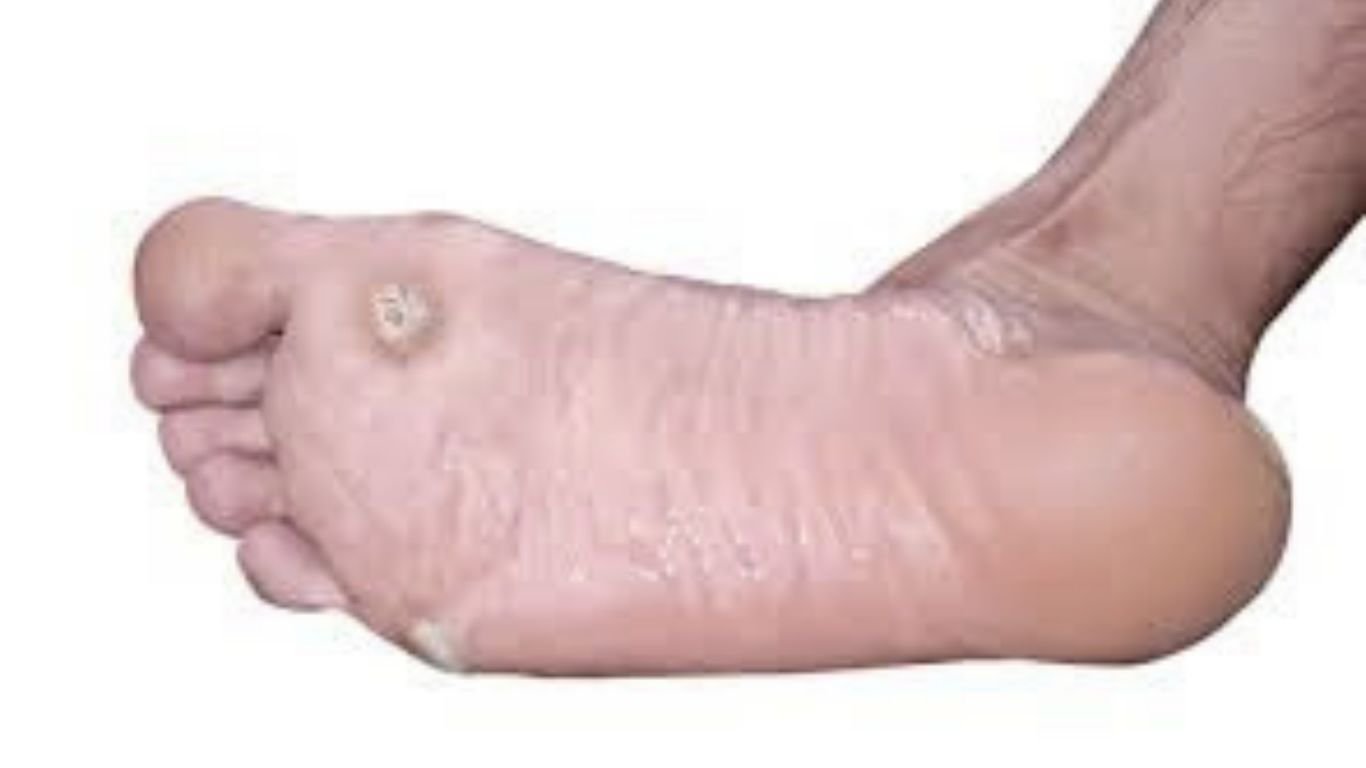
A corn, in contrast, is a sharply circumscribed, cone-shaped lesion with a hard, dense central core. This central core, often described as having a glassy or translucent appearance, points inward and presses deeply into the underlying dermal layers . It is this inward-pointing core that distinguishes a corn from a callus and is the primary source of pain, as it compresses nerve endings in the deeper skin layers . Corns are most commonly found on the toes and the soles of the feet, particularly over bony prominences where pressure is concentrated .
Recognizing the Symptoms
The symptoms of a foot corn are generally localized and directly related to the physical presence of the lesion.
The most prominent symptom is pain or tenderness when pressure is applied to the area. This pain is often described as a sharp, aching sensation that is particularly noticeable while standing or walking . The skin surrounding the corn may appear reddened and inflamed, indicating irritation . Visually, a hard corn presents as a small, round, yellowish or beige lump of hard skin. A soft corn, which typically develops between the toes where moisture is trapped, appears whitish and macerated .
In some cases, a fluid-filled sac known as a bursa may form beneath the corn as the body attempts to cushion the inflamed area . It is important to note that while corns are painful, calluses are usually not, unless they become excessively thick and dry, leading to cracking .
Uncovering the Root Causes
The fundamental cause of a foot corn is repeated mechanical stress—specifically, intermittent pressure and friction—applied to a localized area of skin. This stress triggers a hyperkeratotic response, where the skin thickens to protect itself. When the pressure is concentrated and persistent, the thickening becomes focal and forms the characteristic core of a corn .
Several factors contribute to this mechanical stress. The most common culprit is poorly fitting footwear. Shoes that are too tight, have a narrow toe box, or feature seams that rub against the skin can create the necessary friction and pressure . High-heeled shoes are particularly problematic as they shift body weight forward, increasing pressure on the forefoot and toes.
Foot deformities and abnormal biomechanics also play a significant role. Conditions such as hammer toes, bunions, and flat feet alter the way weight is distributed across the foot, creating focal points of high pressure . Additionally, certain gait abnormalities or high levels of physical activity can exacerbate friction on specific areas of the foot . The location of the corn often provides a clue to its cause: a corn on the top of a toe may indicate a toe deformity rubbing against a shoe, while a corn on the sole of the foot may point to an underlying metatarsal issue .
The Broader Effects of Foot Corns
While a corn is a localized skin lesion, its effects can extend beyond the immediate site of pain. The most direct effect is discomfort and reduced mobility. Individuals may unconsciously alter their gait to avoid putting pressure on the corn, which can lead to compensatory biomechanical changes in the foot, ankle, knee, or even the lower back.
For individuals with underlying health conditions, corns can pose more serious risks. People with diabetes or peripheral neuropathy often have reduced sensation in their feet, meaning they may not feel the pain of a corn. This can lead to delayed treatment and potentially serious complications, including ulceration and infection . Therefore, for these individuals, regular foot inspection and professional care are paramount.
Strategies for Prevention
Preventing corns is generally more effective than treating them after they have formed. The cornerstone of prevention is eliminating the source of mechanical stress.
Wearing properly fitting footwear is the most critical preventive measure. Shoes should have a roomy toe box that allows toes to move freely, and they should be made of soft, flexible materials that do not rub against the skin . Avoiding high heels and shoes with a narrow fit is advisable. For those with identified foot deformities or abnormal gait, custom orthotic inserts can be invaluable. These devices redistribute pressure away from high-risk areas and correct biomechanical imbalances, thereby preventing corn formation . The use of protective padding, such as moleskin or foam rings, can also help cushion bony prominences and reduce friction .
Maintaining good foot hygiene, including regular washing and moisturizing to keep the skin supple, can help prevent the skin from becoming overly dry and prone to cracking. For individuals with diabetes or circulatory issues, daily foot inspections are essential to catch early signs of skin irritation before they develop into corns or ulcers .
Homeopathic Approaches to Corn Management
Homeopathy offers a tradition of symptom-based treatment for various skin conditions, including corns. It is important to emphasize that homeopathic remedies are traditionally used based on the principle of “like cures like,” and their effectiveness is a subject of ongoing discussion. This section describes remedies that have been traditionally used in homeopathic practice for corns, and it is essential to consult a qualified homeopathic practitioner for individualized treatment.
Antimonium Crudum
Antimonium Crudum is a remedy frequently associated with hyperkeratotic skin conditions, including corns and warts. It is traditionally indicated for individuals with thick, dry, and scaly skin, particularly on the soles of the feet. The characteristic symptom picture includes large, horny, and painful corns that are highly sensitive to pressure, especially when walking on hard surfaces like stone pavements . The skin may also exhibit a tendency toward dry, burning eruptions. In homeopathic formulations, it is often combined with other remedies for corn management .
Thuja Occidentalis
Thuja Occidentalis is another prominent remedy in the homeopathic materia medica for skin growths, including warts and corns. It is traditionally considered for corns that are sensitive to touch and may have a fleshy or cauliflower-like appearance. Thuja is often prescribed for individuals who also have a tendency to develop other hyperkeratotic lesions or who have a history of suppressed skin eruptions . Its action is often described as addressing the underlying constitutional tendency toward such growths.
Silicea
Silicea, derived from flint, is a deep-acting constitutional remedy. In the context of corns, it is traditionally considered for individuals who have a tendency to form hard, painful corns, particularly on the soles of the feet. The person needing Silicea may be characterized by a generally dry skin, slow-healing tendencies, and a sensitivity to cold. It is often used to support the body’s natural processes of tissue repair and to address the tendency for recurrent skin issues .
Natrum Muriaticum
Natrum Muriaticum is often indicated for individuals with dry, cracked skin, particularly in areas with a tendency toward eczema or hyperkeratosis. In the context of corns, it may be considered for painful lesions on the soles of the feet, especially when there is a history of emotional stress or grief that is believed to be a contributing factor in homeopathic philosophy .
Sulphur
Sulphur is a widely used remedy for various skin conditions, known for its action on the skin’s vitality. It is traditionally considered for corns that are accompanied by burning and itching, which may be worse from warmth and washing. The individual may have a generally unhealthy-looking skin and a tendency toward various eruptions. Sulphur is often prescribed as a constitutional remedy to address the underlying susceptibility to skin problems .
Other Traditionally Used Remedies
Graphites is sometimes used for corns on a background of rough, dry, and cracked skin. It is often indicated for individuals with a tendency toward obesity and a sluggish constitution . Ranunculus Bulbosus has a traditional reputation for addressing corns on the soles of the feet that are associated with sharp, stitching pains . Causticum may be considered for corns that are painful and sensitive, particularly in individuals with a generally weak or debilitated constitution .
Disclaimer
The information provided in this article is for educational and informational purposes only and is not intended as a substitute for professional medical advice, diagnosis, or treatment. Homeopathic remedies should be used under the guidance of a qualified and licensed homeopathic practitioner. Always seek the advice of your physician or another qualified health provider with any questions you may have regarding a medical condition. If you have diabetes, peripheral neuropathy, or poor circulation, do not attempt to self-treat a foot corn. Consult a healthcare professional immediately for any foot problems.
Frequently Asked Questions About Homeopathic Remedies for Corn in Foot
1. Can homeopathic remedies really treat foot corns?
In traditional homeopathic practice, certain remedies are used to help manage the discomfort associated with foot corns. Product labels listed in the US DailyMed database show that ingredients such as Antimonium Crudum have a traditional use of “temporary relief of corns.” However, the same labels clearly state that these claims are based on traditional homeopathic practice and have not been evaluated by the US Food and Drug Administration (FDA) as effective, and that the FDA does not know of scientific evidence supporting homeopathy for corns. Several clinical trials are currently investigating individualized homeopathic treatment for foot corns. For example, a randomized, participant-blinded trial registered in India in 2025 plans to enroll 40 patients with foot corns and assess improvement over a 6-week period. These studies are ongoing, and their conclusions are yet to be published.
2. Which homeopathic remedies are commonly used for corns?
In traditional homeopathic literature and commercially available combination products, the following ingredients are frequently seen:
Antimonium Crudum is traditionally described for “large, horny, and painful corns” on the soles of the feet, especially when sensitivity worsens while walking on hard surfaces. Thuja Occidentalis appears in several combination products, often paired with Antimonium Crudum. Silicea, Natrum Muriaticum, and Sulphur are also found in the ingredient lists of some marketed corn combination preparations. Graphites and Ranunculus Bulbosus appear in the formulas of certain products as well. It is important to emphasize that these are records of traditional use, not conclusions of efficacy verified by modern clinical trials.
3. Should I choose an individualized single remedy or an off-the-shelf combination product?
This depends on the advice of the homeopathic practitioner you consult. Classical homeopathy emphasizes the principle of “individualization,” meaning a single remedy is selected based on the patient’s overall symptoms, constitution, and triggering factors. A published case report describes a young patient treated with an individually selected remedy, Antimonium Crudum, for corns over a course of 2 to 3 months. On the other hand, off-the-shelf combination products (such as drops or tablets containing multiple ingredients) use a fixed formula and do not require individualized case-taking. Several registered clinical trials also focus on “individualized homeopathic medicines” as their research subject. For instance, one study plans to enroll 30 patients aged 40 to 70 with plantar corns and use a Visual Analogue Scale and the Foot and Ankle Disability Index to assess pain and functional improvement.
4. Are homeopathic remedies safe to use alongside conventional corn treatment?
Homeopathic remedies are generally highly diluted and are often considered low-risk when used as directed on the product label. However, they should not replace proven conventional care, especially the removal of the mechanical cause of the corn, such as ill-fitting shoes or foot deformities. If you have diabetes, peripheral neuropathy, or poor circulation, do not self-treat a foot corn; consult a healthcare professional promptly, as corns can lead to ulceration and infection in these groups. Always inform your doctor about any homeopathic products you are using.
5. How long does homeopathic treatment for a corn take to show results?
There is no standard answer, because outcomes depend on the remedy selected, the size and depth of the corn, and whether the underlying mechanical stress is removed. In the published case report mentioned above, improvement was observed over 2 to 3 months with an individualized remedy. The ongoing clinical trials use observation periods of around 6 weeks. Traditional homeopathic practice generally advises patience and consistent follow-up with a qualified practitioner rather than frequent switching of remedies.
6. Do I still need to fix my footwear if I use homeopathic remedies?
Yes. The fundamental cause of a foot corn is repeated pressure and friction on a localized area of skin. Unless the mechanical source is addressed—through properly fitting shoes with a roomy toe box, protective padding, or orthotic inserts for foot deformities—the corn is likely to persist or recur regardless of any remedy used. Homeopathic remedies are traditionally regarded as a supportive measure alongside proper foot care and the elimination of mechanical stress, not as a substitute for it.
7. Can I use homeopathic remedies for a corn on a child’s foot?
Children can develop corns, though it is less common than in adults. Any treatment for a child should be guided by a qualified healthcare professional or an experienced homeopathic practitioner, who can assess the cause and select an appropriate approach. Avoid cutting or scraping a child’s corn at home, and do not use medicated corn plasters containing salicylic acid on children without medical advice.
8. What should I do if the corn does not improve?
If a corn does not improve despite removing sources of pressure and friction, or if it becomes increasingly painful, red, swollen, or shows signs of infection (such as pus or warmth), consult a healthcare professional. A doctor can confirm the diagnosis, rule out other skin conditions such as warts, and offer conventional treatments if needed. Homeopathic remedies are traditionally used for symptom management, but persistent or worsening foot problems warrant proper medical evaluation.
Disclaimer
This information is for educational purposes only and is not a substitute for professional medical advice, diagnosis, or treatment. Homeopathic remedies should be used under the guidance of a qualified practitioner. The traditional uses described here have not been evaluated by the FDA as effective for treating corns. Always consult your physician or another qualified healthcare provider about any medical condition, and never delay conventional care because of something you have read here.
Conclusion
It is crucial to understand that while homeopathic remedies are traditionally used for the management of corns, they are not a substitute for professional medical advice. The choice of remedy is highly individualized and depends on the totality of symptoms, not just the local lesion. A qualified homeopathic doctor will take a detailed history to select the most appropriate remedy. Furthermore, the primary treatment for a corn remains the removal of the mechanical stress that caused it; homeopathic remedies are often used as a supportive measure alongside proper footwear and foot care.













Your articles are very helpful to me. May I request more information?