Table of Contents
ToggleThe Enigmatic Healing Power of Homeopathic Medicine Acid Muriaticum: A Deep Dive into a Remedy
In the vast and intricate world of homeopathy, where substances from the mineral, plant, and animal kingdoms are transformed into potentized medicines, few remedies carry the profound, draining, and foundational significance of Acidum Muriaticum. Commonly abbreviated as Acid Mur or Mur-ac, this remedy, sourced from common hydrochloric acid, is a cornerstone for addressing states of profound weakness and specific pathological conditions that mirror the corrosive, consuming nature of its origin. This article explores the genesis, preparation, characteristic symptoms, clinical applications, and nuanced place of Acid Mur within the homeopathic materia medica.
Origin and Extraction: From Laboratory to Life Force
The origin story of Acidum Muriaticum is one of alchemy turning a commonplace chemical into a profound healing agent. Its source is hydrochloric acid (HCl), a clear, pungent, highly corrosive solution of hydrogen chloride in water. Naturally present in the gastric juices of the human stomach, HCl is essential for digestion. Industrially, it is produced in vast quantities for chemical manufacturing, steel pickling, and laboratory use.
The homeopathic procurement of the substance is straightforward. The concentrated hydrochloric acid itself serves as the mother tincture. From a homeopathic philosophical perspective, the remedy captures the essence of “acidity” not just in a physiological sense, but in a constitutional one—representing states that are worn down, eroded, and fundamentally weakened, much like the acid’s action on certain materials.
The extraction and potentization process follows the classical homeopathic method established by Samuel Hahnemann. A small quantity of the concentrated acid is diluted in a stepwise manner with a water-alcohol mixture. Each dilution is followed by a rigorous process of succussion (forceful shaking). This process, believed to imprint the energetic signature of the substance onto the solvent, produces the various potencies used in practice. The original crude substance’s toxic, caustic properties are left behind, while its therapeutic energy pattern is progressively awakened and refined.
The Spectrum of Potencies: Choosing the Right Key
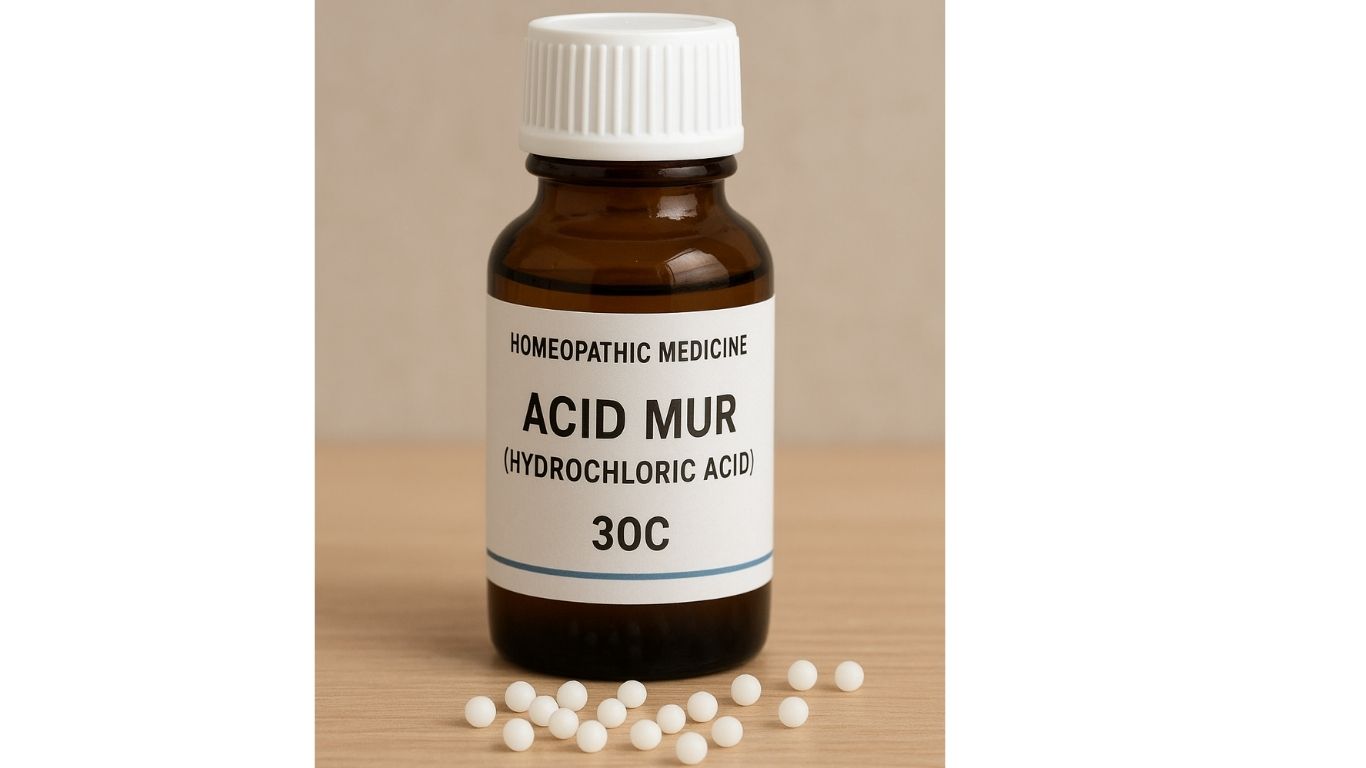
Like all homeopathic remedies, Acid Mur is available in a wide range of potencies, from low (e.g., 6C, 30C) to very high (e.g., 200C, 1M, and beyond). The selection of potency is a skilled art, dependent on the individual’s vitality, the depth of the condition, and the similarity between the patient’s symptoms and the remedy’s picture.
Lower potencies (6C, 30C) are often employed for more localized, acute conditions or to jump-start recovery in chronic states where the symptom picture is clear. For instance, a 30C potency might be used for an acute bout of hemorrhoids with characteristic burning and prolapse following diarrhea.
Higher potencies (200C and above) are reserved for deeper constitutional prescribing. When a person presents with the core Acid Mur state—profound weakness, mental and physical exhaustion, and a history of ailments that have led to this depleted condition—a high potency may be prescribed to act on the vital force more profoundly. The repetition of dose is infrequent, guided by the patient’s response rather than a fixed schedule.
The Symptom Portrait: Recognizing the Acid Mur Individual
Understanding Acidum Muriaticum requires moving beyond a list of diseases to grasp the unique way its needed individual experiences illness. The core theme is profound weakness and sinking vitality, often following exhausting or draining events.
Mental and Emotional Symptoms: A key characteristic is extreme mental exhaustion. The mind is weak, forgetful, and unable to sustain thought. There is a marked aversion to conversation; answering questions feels like a tremendous labor. Despite this, there may be sudden, impulsive utterances of shocking or indecent language, especially during fever or delirium—a striking contradiction to their usual drained state. Anxiety is often present, felt in the pit of the stomach. Emotionally, there can be a sense of hopelessness and despair, as if the life force is ebbing away.
Physical Generalities: The weakness is not just felt; it is pervasive. It is particularly noticeable in the sphincter muscles—those circular muscles that act as valves. This leads to a central group of symptoms: involuntary stool from the slightest passing of flatus, prolapse of the rectum (often during stool, but sometimes even from coughing or walking), and a weak, dribbling urinary flow. The patient feels worse from any exertion, even the effort of talking or chewing. They have a strong desire for acids (like vinegar, pickles) and alcohol, which often aggravate their condition.
Characteristic Particulars:
Mouth: Profuse salivation; gums are swollen, spongy, and bleed easily, with a characteristic dark red or bluish hue. Ulcers in the mouth.
Throat: The uvula is often elongated and edematous (swollen), feeling like a constant lump.
Stomach/Digestion: Nausea and burning, but the classic symptom is hemorrhoids that are large, swollen, bluish, burning, and protruding like a bunch of grapes. They are exquisitely painful and protrude with every stool.
Skin: Ulcers with a bluish, bruised appearance and a burning sensation. Old scars may reopen. Intertrigo (raw, sore skin) in folds and between toes.
Fever: A peculiar, characteristic chilliness, often with a chill that begins in the knees and ascends. Profuse, drenching sweat that does not relieve.
Modalities: Worse from cold air, exertion, and alcohol. Better from warmth and lying on the back.
Clinical Uses and Applications
In clinical homeopathic practice, Acid Mur is not a first-line remedy for simple, acute illnesses in robust individuals. Its domain is the aftermath, the depleted terrain.
Recovery from Debilitating Illness: It is a premier remedy for convalescence after severe infections (e.g., typhoid, mononucleosis, influenza), where the patient is left in a state of lingering weakness, mental torpor, and slow recovery.
Chronic Weakness and Fatigue: For patients presenting with chronic fatigue syndrome or neurasthenia, where the keynote symptoms of sphincter weakness, mental exhaustion, and a sinking vitality are present.
Proctological Issues: It is one of the most specific remedies for hemorrhoids that match its picture: protruding, burning, bluish, and associated with extreme weakness.
Oral Health: For spongy, bleeding gums (akin to scurvy symptoms) and aphthous ulcers that fit the modality.
Dermatology: For slow-healing, bluish ulcers and recurrent intertrigo.
Geriatric Care: For elderly patients with general muscular atony, weakness of sphincters, and a sense of physical and mental decline.
Side Effects and the Homeopathic Aggravation
Within the homeopathic framework, the concept of “side effects” differs from allopathic medicine. A correctly chosen homeopathic remedy stimulates the body’s self-healing response. A possible initial response is a homeopathic aggravation—a temporary, mild intensification of existing symptoms, indicating that the vital force has been stirred and is responding. This is seen as a positive prognostic sign. For Acid Mur, if prescribed in a potency too high or repeated too often for a particular individual, it might theoretically produce a transient worsening of weakness or hemorrhoidal pain.
It is crucial to emphasize that the potentized remedy contains no molecules of the original acid and is non-toxic. However, improper prescribing (a poorly matched remedy) will simply yield no therapeutic effect, not a toxic pharmacological one. The “prevention” of issues lies in skilled prescription by a qualified practitioner who individualizes the remedy and potency.
Comparative Analysis: Distinguishing Acid Mur from Its Peers
A remedy’s true identity is clarified by comparison. Here is how Acid Mur stands in relation to other important homeopathic medicines.
vs. Phosphoric Acid: Both are renowned for exhaustion and mental weakness. Phosphoric Acid patients suffer from apathy following emotional shocks (grief, loss) or acute illness. They are indifferent, silent, and answer slowly. Their weakness is more neurological, with trembling. Acid Mur weakness is more physical and muscular, focused on sphincters, with a marked irritability and aversion to conversation, not just indifference.
vs. Nitric Acid: Both are “acid” remedies with affections for mucous membranes and ulcers that bleed easily. Nitric Acid is famous for splinter-like pains and conditions arising from prolonged anxiety about health (hypochondriasis). Their discharges are offensive, and they have a marked irritability and vindictiveness. Acid Mur’s pains are more burning, and its keynote is prolapse and weakness, not the sharp, splinter pains and intense psychological profile of Nitric Acid.
vs. Sepia: Sepia shares the prolapse tendency and weakness. However, Sepia’s weakness is coupled with a bearing-down sensation as if everything will protrude, and it is profoundly associated with hormonal changes (post-partum, menopause). Sepia patients are often irritable and indifferent to family. Acid Mur lacks the hormonal focus of Sepia; its prolapse is from sheer muscular atony, and its mental state is one of exhaustion, not the specific “weary of life” indifference of Sepia.
vs. Aloe Socotrina: Aloe is a close competitor for hemorrhoids. Aloe’s hemorrhoids are also protuberant, but they are associated with constant bearing-down in the rectum, uncertainty about whether gas or stool will pass, and immediate urging upon entering a warm room. Acid Mur hemorrhoids are distinguished by their bluish color and the fact they protrude with any strain, coupled with the overarching theme of general debility.
Frequently Asked Questions (FAQs) About Homeopathic Acidum Muriaticum (Acid Mur)
Q1: What exactly is Acidum Muriaticum, and where does it come from?
A: Acidum Muriaticum, often shortened to Acid Mur or Mur-ac, is a homeopathic remedy prepared from hydrochloric acid (HCl). This is the same acid naturally found in our stomachs, essential for digestion. In homeopathy, the original, concentrated acid undergoes a specific process of serial dilution and vigorous shaking (called potentization). This process is believed to remove any toxic physical effects while activating the therapeutic energy or “vibrational pattern” of the substance. It is not used as a direct supplement for stomach acid.
Q2: What kind of person or condition is Acid Mur best known for treating?
A: Acid Mur is famously known as a remedy for profound exhaustion and weakness, especially after debilitating illnesses like severe flu, mononucleosis, or typhoid fever, where recovery is unusually slow. Its most distinctive physical symptom revolves around weakness of sphincter muscles. This manifests as hemorrhoids that protrude easily, a rectum that prolapses during stool (or even coughing), and a general sense of the body’s “hold” being lost. Mentally, the person feels too weak to think or engage in conversation.
Q3: I have hemorrhoids. How do I know if Acid Mur is the right remedy for mine?
A: Acid Mur is one of homeopathy’s top remedies for hemorrhoids, but it fits a very specific picture. Key signs that point to Acid Mur include:
Appearance: The hemorrhoids look dark, bluish, or purple, often described as a “bunch of grapes.”
Sensation: They burn and are extremely painful.
Prolapse: They protrude or prolapse very easily, not just during bowel movements but sometimes from slight straining, walking, or coughing.
Associated Weakness: The hemorrhoids are accompanied by a deep feeling of overall exhaustion and weakness in the body.
If your hemorrhoids are more itchy, bleeding brightly, or lack this specific bluish color and profound weakness, another remedy (like Hamamelis, Aesculus, or Aloe) may be more suitable.
Q4: Can Acid Mur be used for mouth ulcers or gum problems?
A: Yes, it can be a very effective remedy for certain oral issues. The classic Acid Mur presentation in the mouth includes:
Gums: They are spongy, swollen, and bleed easily. They often have a dark red or bluish-red hue, rather than being bright red.
Ulcers: Mouth ulcers (canker sores) that have a burning sensation.
Saliva: There may be profuse salivation.
Uvula: The little punching bag at the back of the throat (uvula) is often swollen and elongated, feeling like a constant lump.
Q5: What are the mental and emotional symptoms of someone needing Acid Mur?
A: The mental state is dominated by extreme weakness. The mind feels empty and exhausted. The person has a strong aversion to conversation because thinking and answering questions feels like hard labor. They may prefer to be left alone in silence. A peculiar, contradictory symptom can be the sudden, impulsive utterance of shocking, indecent, or profane language, especially during a state of fever or delirium. Underlying this is often a deep-seated anxiety or despair, as if their vital energy is draining away.
Q6: Are there any side effects of taking Acid Mur?
A: In the conventional sense of drug side effects, no. Homeopathic remedies are highly diluted and are not known to cause pharmacological toxicity or dependency. However, if the remedy is well-matched to your symptoms, you might experience a “homeopathic aggravation.” This is a temporary, mild intensification of your existing symptoms, seen as a sign that the remedy has stimulated your body’s healing response. This usually passes quickly. If you experience new or worsening symptoms that don’t resemble your original complaint, the remedy is likely not the correct match and should be discontinued.
Q7: How do I choose the right potency (e.g., 6C, 30C, 200C) of Acid Mur?
A: Potency selection is nuanced. As a general guide for self-care of acute, minor issues:
6C or 30C: These are good starting points for clear-cut, localized symptoms (e.g., a flare-up of characteristic hemorrhoids after diarrhea). Doses can be repeated a few times a day, stopping as symptoms improve.
200C and higher: These are typically reserved for deeper, constitutional prescribing or states of long-standing exhaustion. They are usually prescribed by a professional as a single or infrequently repeated dose.
Important: For chronic conditions, fatigue states, or if you are unsure, consulting with a qualified homeopathic practitioner is strongly recommended. They can select the potency and dosage schedule based on your complete health picture.
Q8: How is Acid Mur different from other exhaustion remedies like Phosphoric Acid or Sepia?
A: This is a key distinction:
vs. Phosphoric Acid: Both are exhausted, but the cause differs. Phosphoric Acid is for apathy and indifference after emotional shocks (like grief) or acute illness. The person is quiet and answers slowly. Acid Mur exhaustion is more physical (muscular weakness in sphincters) and mental irritation from the effort of thinking or talking.
vs. Sepia: Both can have prolapse and irritability. Sepia is deeply linked to hormonal changes (postpartum, menopause) and has a “bearing-down” sensation. The person is indifferent to loved ones. Acid Mur lacks the hormonal focus; its prolapse is from pure muscular weakness, and the mental state is exhaustion, not Sepia’s specific “weary of life” feeling.
Q9: Are there things that make an Acid Mur person feel better or worse?
A: Yes, these “modalities” are crucial for identifying the remedy:
Worse from: Cold air, cold drinks, exertion (even talking), and interestingly, from consuming alcohol, which often aggravates their symptoms.
Better from: Warmth, lying on the back, and rest.
Q10: Is it safe to use Acid Mur while taking conventional medications?
A: Homeopathic remedies are generally considered safe to use alongside conventional medications, as they work on a different, non-pharmacological principle. They are not known to interact with drugs. However, it is essential to inform all your healthcare providers (doctor, homeopath, pharmacist) about every treatment you are using. Do not stop taking prescribed medication without consulting your doctor. A homeopath will take your full medical history, including all medications, into account when prescribing.
Conclusion
Acidum Muriaticum stands as a profound testament to homeopathy’s principle of “like cures like.” A substance capable of causing corrosion and breakdown in its material form becomes, through the alchemy of potentization, a key remedy for rebuilding and restoring those suffering from states of profound depletion and weakness. Its portrait is not one of acute inflammation, but of a system that has been drained, its structural integrity compromised. From the mind too tired to think to the sphincters too weak to hold, Acid Mur addresses a fundamental erosion of vitality. Its power lies not in suppressing symptoms, but in resonating with the body’s own healing intelligence to reverse the tide of decay and restore a foundation of strength. As with all homeopathic remedies, its magic is unlocked not by a diagnosis, but by the careful, holistic matching of its unique symptom signature to the individual before the practitioner.