
Table of Contents
ToggleCervical Pain: Causes, Effects, Prevention, and effective Homeopathic Medicines for Cervical Pain
Introduction:
Cervical pain, often simplistically referred to as “neck pain,” is a pervasive health issue in the modern world. It ranges from a mild, nagging stiffness to a sharp, debilitating condition that can radiate pain into the shoulders, arms, and head. Given the central role of the neck in almost every movement we make—from turning our heads to driving and working on computers—cervical pain can significantly diminish one’s quality of life. This article delves into the intricate details of cervical pain, exploring its anatomy, symptoms, root causes, systemic effects, preventive strategies, and the role of homeopathic treatment, providing a holistic view of this common ailment.
What is Cervical Pain?
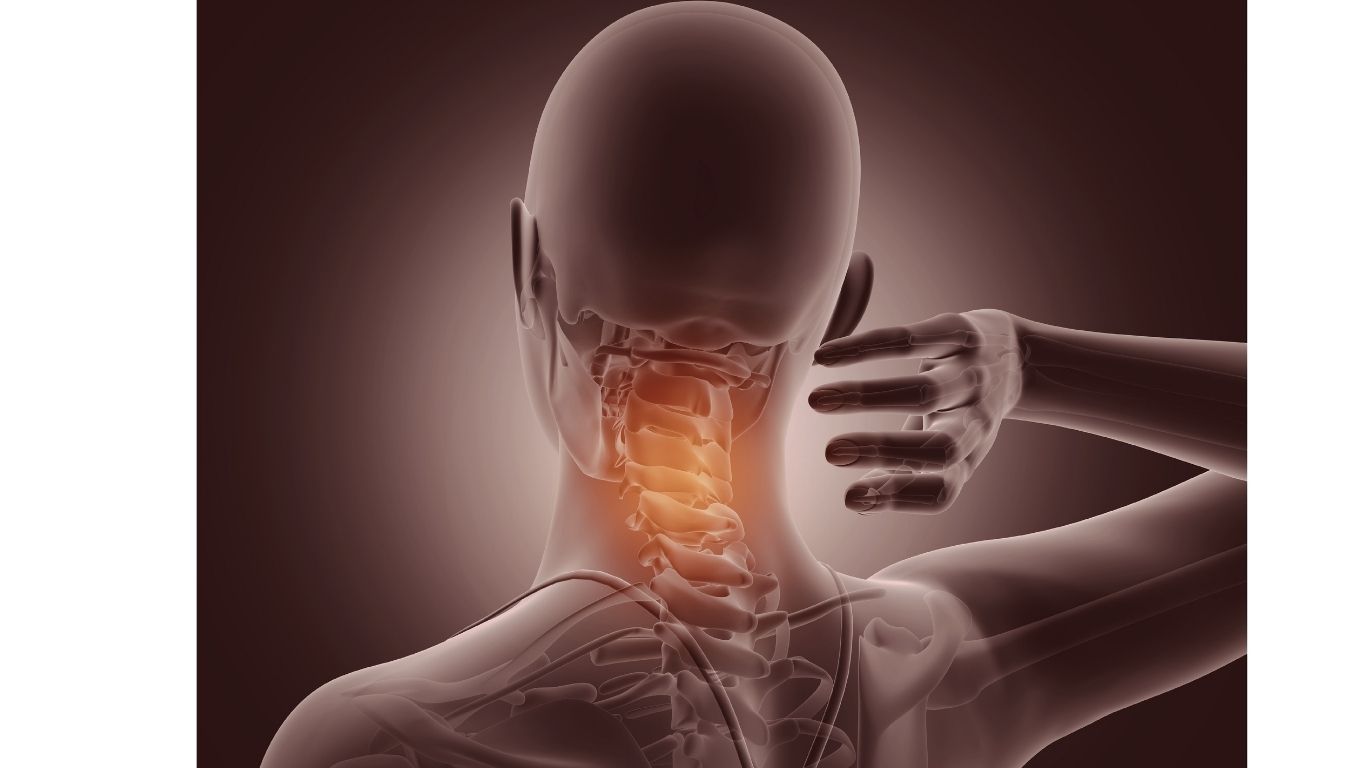
Cervical pain refers to discomfort or pain localized in the cervical spine, which is the medical term for the neck . The cervical spine is a complex structure composed of the first seven vertebrae (C1 to C7) stacked atop each other, forming the upper part of the spinal column. This region is a marvel of bioengineering; it must be strong enough to support the full weight of the head—which averages about 10 to 12 pounds—yet flexible enough to allow for a wide range of motion, including nodding, turning, and tilting .
Between these vertebrae are intervertebral discs that act as shock absorbers, and a network of ligaments, muscles, and nerves provides stability and sensation. Because of this complexity and constant use, the cervical spine is highly vulnerable to stress, strain, and injury. Cervical pain can be acute (short-term) or chronic (lasting more than three months) and may originate from any of these structures, including the bones, discs, muscles, or nerves .
Symptoms of Cervical Pain
The presentation of cervical pain is rarely uniform and varies greatly depending on the underlying cause. Recognizing the specific symptoms is crucial for early intervention and effective treatment. The symptoms can be broadly categorized into localized pain and radicular symptoms (pain that travels along the nerve pathway) .
Primary Localized Symptoms
Persistent Ache or Sharp Pain: The pain can be a dull, constant ache or sudden, sharp, stabbing sensations localized in the neck.
Stiffness and Reduced Mobility: Difficulty turning the head from side to side or bending it forward or backward. This stiffness is often worse in the morning.
Muscle Tightness and Spasms: The muscles in the neck and upper back may feel hard, knotted, and tender to the touch.
Cervicogenic Headaches: Pain that originates in the neck and radiates to the back of the head, temples, or forehead.
Radicular Symptoms (Nerve Involvement)
When the pain involves the nerve roots, it leads to cervical radiculopathy, which produces symptoms beyond the neck .
Radiating Pain: Pain that shoots down into the shoulder, shoulder blade, arm, and sometimes into the fingers.
Tingling and Numbness: A “pins and needles” sensation or numbness in the upper limb, indicating nerve compression.
Weakness: A feeling of heaviness or weakness in the arms or hands, making it difficult to grip objects or lift the arms.
Red-Flag Symptoms
While most neck pain is benign, certain “red-flag” symptoms warrant immediate medical attention :
Pain following a major trauma, such as a fall or car accident.
Loss of bladder or bowel control.
Radiating pain, numbness, or weakness in both arms or both legs.
Fever, chills, or unexplained weight loss accompanied by neck pain.
Causes of Cervical Pain
The causes of cervical pain are multifaceted, ranging from modern lifestyle habits to degenerative medical conditions. Identifying the root cause is the cornerstone of effective treatment .
1. Poor Posture and Muscle Strain
This is the most common culprit in the 21st century. Spending long hours hunched over computers, smartphones, or tablets leads to a condition often called “text neck.” This forward head posture places immense strain on the cervical muscles and ligaments, forcing them to work harder to support the head. Sleeping in an awkward position, carrying heavy bags on one shoulder, and sudden jerking movements during exercise are also common triggers .
2. Degenerative Conditions
As the body ages, the cervical spine undergoes wear and tear. This is known as cervical spondylosis, a general term for age-related, chronic degeneration of the cervical spine, including the discs and vertebrae . It affects 80-90% of people by the age of 50 . Related to this is Degenerative Disc Disease, where the spinal discs dehydrate and shrink, losing their cushioning ability. In some cases, the outer layer of a disc can tear, causing the soft inner material to bulge out—a condition known as a Herniated Disc or Cervical Disc Prolapse—which can press on nearby nerves .
3. Injuries and Trauma
Whiplash is a classic injury sustained during rear-end car collisions, where the head is jerked violently backward and then forward, stretching and tearing the soft tissues of the neck. Sports injuries and falls can also cause similar trauma .
4. Other Medical Conditions
Cervical Spinal Stenosis: Narrowing of the spinal canal, which can compress the spinal cord.
Inflammatory Diseases: Conditions like rheumatoid arthritis can cause inflammation and destruction of the joints in the neck.
5. Risk Factors
Several factors increase the likelihood of developing cervical pain. These include a sedentary lifestyle, smoking, stress (which leads to muscle tension), and occupations requiring repetitive neck movements or heavy lifting .
Effects of Cervical Pain
Ignoring cervical pain can have repercussions that extend far beyond a sore neck, affecting physical, mental, and social well-being.
Physical Impairment: Chronic pain can limit mobility, making it difficult to drive, work, or perform simple household chores. Radiating symptoms like numbness and weakness can lead to a loss of fine motor skills in the hands .
Sleep Disturbances: Finding a comfortable sleeping position becomes a nightly struggle, leading to insomnia and fatigue, which in turn lowers the body’s pain threshold and ability to heal.
Mental and Emotional Toll: Persistent pain is a known contributor to stress, anxiety, and depression. The constant discomfort can lead to irritability, mood swings, and a feeling of helplessness.
Reduced Productivity and Economic Burden: Cervical pain is among the top causes of absenteeism from the workplace, creating a significant economic burden on individuals and society due to lost wages and healthcare costs . Globally, it ranks in the top five causes of years lived with disability .
Prevention of Cervical Pain
Prevention is always better than cure. By integrating simple ergonomic and lifestyle changes, one can significantly reduce the risk of developing chronic neck issues .
Mastering Posture: Be mindful of your alignment. While standing, keep your shoulders aligned over your hips and your ears directly over your shoulders. While sitting, choose a chair with good lumbar support, keep your knees slightly lower than your hips, and your feet flat on the floor.
Ergonomic Workspace: This is critical for desk workers. Position your computer monitor at eye level so you don’t have to bend your neck. Use a headset for long phone calls instead of cradling the phone between your ear and shoulder.
Smart Sleep Hygiene: Sleep on your back or side, not your stomach. Stomach sleeping twists the neck. Use a supportive pillow that maintains the natural curve of your neck. Specialized cervical pillows can be a good investment .
Regular Movement and Exercise: Avoid static positions for long periods. Take frequent breaks to stand, stretch, and walk around. Incorporate neck-strengthening exercises and stretches into your routine, such as chin tucks, gentle neck tilts, and shoulder rolls.
Stress Management: Since stress manifests as physical tension in the neck and shoulders, practices like yoga, meditation, or deep breathing can be beneficial.
Homeopathic Treatment for Cervical Pain
Homeopathy is a system of alternative medicine based on the principle of “like cures like”—the idea that a substance that causes symptoms in a healthy person can, in very small doses, treat similar symptoms in a sick person. For cervical pain, homeopathy offers an individualized approach, focusing on the patient’s unique symptom profile rather than just the disease label.
Principles of Homeopathic Treatment
In homeopathy, treatment is highly personalized. Two patients with cervical spondylosis might receive different remedies based on their specific pain modalities (e.g., pain worse from motion vs. better from motion), their mental state, and other constitutional factors. The goal is to stimulate the body’s own healing mechanisms .
Evidence and Research
While homeopathy is widely used, scientific evidence remains a nuanced topic. Recent rigorous studies have explored its efficacy:
A 2025 double-blind, randomized, placebo-controlled trial on cervical radiculopathy found that while individualized homeopathic medicines (IHMs) showed some improvement, the trial could not generate conclusive evidence that the therapy was effective beyond placebos. Natrium muriaticum was the most frequently prescribed medicine in this study .
Another 2023 randomized controlled trial on cervical spondylosis found that improvements were clinically significant and higher in the IHM group than the placebo group. At the 2-month mark, the IHM group showed significantly greater improvement in pain and stiffness compared to placebo. Sulfur was the most frequently prescribed medicine in this trial .
This research suggests a potential benefit, but experts agree that more large-scale studies are needed to definitively prove its efficacy.
Commonly Used Homeopathic Remedies
Based on clinical practice and the research cited above, several homeopathic remedies are commonly considered for cervical pain. It is crucial to consult a qualified homeopathic practitioner for a proper prescription, as self-medication can be ineffective.
Rhus Toxicodendron: Often indicated for neck pain that is characterized by stiffness and pain that is worse upon first moving after rest (morning stiffness) but improves with continued motion and warmth. It is suitable for strains and sprains.
Bryonia Alba: This remedy is indicated for pain that is sharp, stitching, and aggravated by the slightest motion. The patient tends to be irritable and wants to remain completely still.
Sulfur: In the 2023 trial on cervical spondylosis, Sulfur was the most frequently prescribed remedy. It is often indicated for chronic conditions, burning pains, and patients with a tendency to heat .
Natrum Muriaticum: Identified as a common remedy in the 2025 trial, it is often suited to individuals who suppress emotions, and it can be indicated for headaches and neck pain associated with grief or stress .
Arnica Montana: Primarily used for injuries and trauma. It is indicated for neck pain resulting from falls, whiplash, or muscle overexertion, where the neck feels sore and bruised .
Ruta Graveolens: Useful for injuries to the bones and periosteum. It is often indicated for strained cervical ligaments and pain that feels like the bone is bruised .
The Holistic Integration
Homeopathic treatment for cervical pain should not be seen as a standalone magic bullet but as part of a holistic approach. The research trials often included concomitant care advice, such as hot fomentations, spinal extensor exercises, and ergonomic adjustments alongside the homeopathic remedies . This integrative approach—combining individualized homeopathy with physical therapy, lifestyle changes, and ergonomic discipline—offers the most promising path toward lasting neck health.
Frequently Asked Questions About Cervical Pain
1. What is the difference between cervical pain and cervical spondylosis?
Cervical pain is a symptom—it refers to the actual sensation of pain or discomfort in the neck area. Cervical spondylosis, on the other hand, is a medical condition. It’s an umbrella term for the age-related wear and tear affecting the spinal discs and joints in your neck. Think of it this way: cervical spondylosis (the condition) is one of many possible causes of cervical pain (the symptom).
2. When should I worry about my neck pain and see a doctor?
You should seek immediate medical attention if your neck pain follows a significant injury like a fall or car accident. You also need to see a doctor promptly if the pain is accompanied by any “red flag” symptoms, such as loss of bladder or bowel control, numbness or weakness in your arms or legs, a fever, or unexplained weight loss. If the pain is severe, persistent, or getting worse despite home care, it’s always best to get it checked.
3. Can stress really cause neck pain?
Yes, absolutely. Stress is a major contributor to neck pain. When you’re stressed, your body instinctively tightens its muscles as part of the “fight or flight” response. This chronic tension often settles in the shoulders and neck, leading to stiffness, pain, and tension headaches. This creates a vicious cycle where pain causes more stress, which in turn causes more pain.
4. What is the best sleeping position to avoid neck pain?
The best positions for your neck are sleeping on your back or your side. Sleeping on your back allows your head, neck, and spine to rest in a neutral position. If you sleep on your side, ensure your pillow is the right height to keep your head aligned with your spine—not tilted up or down. Sleeping on your stomach is the worst position as it forces you to twist your neck to the side for hours, putting significant strain on the cervical spine.
5. How can I set up my workstation to prevent neck pain?
Ergonomics is key. Your computer monitor should be at eye level so you can look straight ahead without bending your neck. Your chair should provide good lower back support, with your feet flat on the floor and knees slightly lower than your hips. If you talk on the phone frequently, use a headset or speakerphone to avoid cradling it between your ear and shoulder. Remember to take short breaks every 30-60 minutes to stand and stretch.
6. Is it safe to crack or pop my own neck?
While it might provide temporary relief, regularly cracking your own neck is generally not recommended. If done too forcefully or frequently, it can put stress on the joints, stretch the ligaments, and in very rare cases, increase the risk of a blood vessel injury. It’s better to address the underlying muscle tension through stretching, massage, or seeing a professional like a physical therapist or chiropractor.
7. Are there effective homeopathic remedies for cervical pain?
Homeopathy is used by many people for cervical pain, with remedies chosen based on the individual’s specific symptoms. For example, Rhus Toxicodendron is often used for pain that is worse upon first waking but improves with movement, while Bryonia is for pain that worsens with the slightest motion. However, the effectiveness of homeopathy is a subject of ongoing research, with some studies showing promise and others being inconclusive. It is crucial to consult a qualified homeopathic practitioner for a personalized prescription and not to self-medicate.
8. How is cervical radiculopathy different from regular neck pain?
Regular neck pain is typically confined to the neck area and is often related to muscle or ligament strain. Cervical radiculopathy, sometimes called a “pinched nerve,” occurs when a nerve root in the cervical spine is compressed or irritated. This causes symptoms that travel, or “radiate,” away from the neck, such as pain, tingling, numbness, or weakness down the shoulder, arm, and into the hand.
9. What exercises are safe for neck pain?
Gentle stretching and strengthening exercises are usually safe and beneficial once the sharp pain has subsided. Safe exercises include chin tucks (pulling your head straight back, creating a “double chin”), gentle neck tilts (ear to shoulder), and shoulder blade squeezes. It is vital to avoid any exercises that cause sharp or shooting pain. It’s always best to consult a physical therapist for a program tailored to your specific condition.
10. Can a poor diet affect my neck pain?
While diet isn’t a direct cause, it can influence the inflammation levels in your body. A diet high in processed foods, sugar, and unhealthy fats can promote inflammation, which may exacerbate pain. Conversely, an anti-inflammatory diet rich in fruits, vegetables, whole grains, and omega-3 fatty acids (found in fish like salmon) can support overall health and may help in managing chronic pain conditions.
11. How long does it typically take for acute neck pain to go away?
Most episodes of acute neck pain, such as from a minor muscle strain or poor sleeping position, will resolve on their own within a few days to a couple of weeks. During this time, staying active, applying ice or heat, and using over-the-counter pain relievers can help. If the pain persists for more than a few weeks or becomes chronic (lasting over three months), it’s important to seek professional medical advice.
12. Is it better to use ice or heat for neck pain?
Both can be effective, but for different reasons. As a general rule, use ice (a cold pack wrapped in a towel) for the first 24-48 hours after an acute injury to reduce inflammation and numb sharp pain. After that, or for general stiffness and muscle tension, use heat (a warm towel, heating pad, or warm bath) to increase blood flow, relax tight muscles, and soothe soreness. You can alternate between the two based on what feels best for your specific symptoms.
Conclusion
Cervical pain is a complex condition with causes ranging from the modern scourge of poor posture to the inevitable wear and tear of aging. Its effects can ripple through every aspect of life, causing not just physical discomfort but also mental and emotional distress. However, it is a condition that can be managed and often prevented. By understanding the mechanics of the neck, recognizing early warning signs, and implementing ergonomic and lifestyle changes, we can build resilience against pain. For those seeking treatment, options are diverse, ranging from conventional physical therapy to alternative systems like homeopathy. While research on homeopathy shows mixed but sometimes encouraging results, its true strength may lie in its patient-centered, holistic philosophy. Ultimately, taking proactive control of your neck health—through awareness, movement, and professional guidance—is the surest path to a life free from the nagging grip of cervical pain.