Table of Contents
ToggleExplore differences between homeopathy and allopathy to get a right answer to the common question, “Is homeopathy better than allopathy?”
Introduction
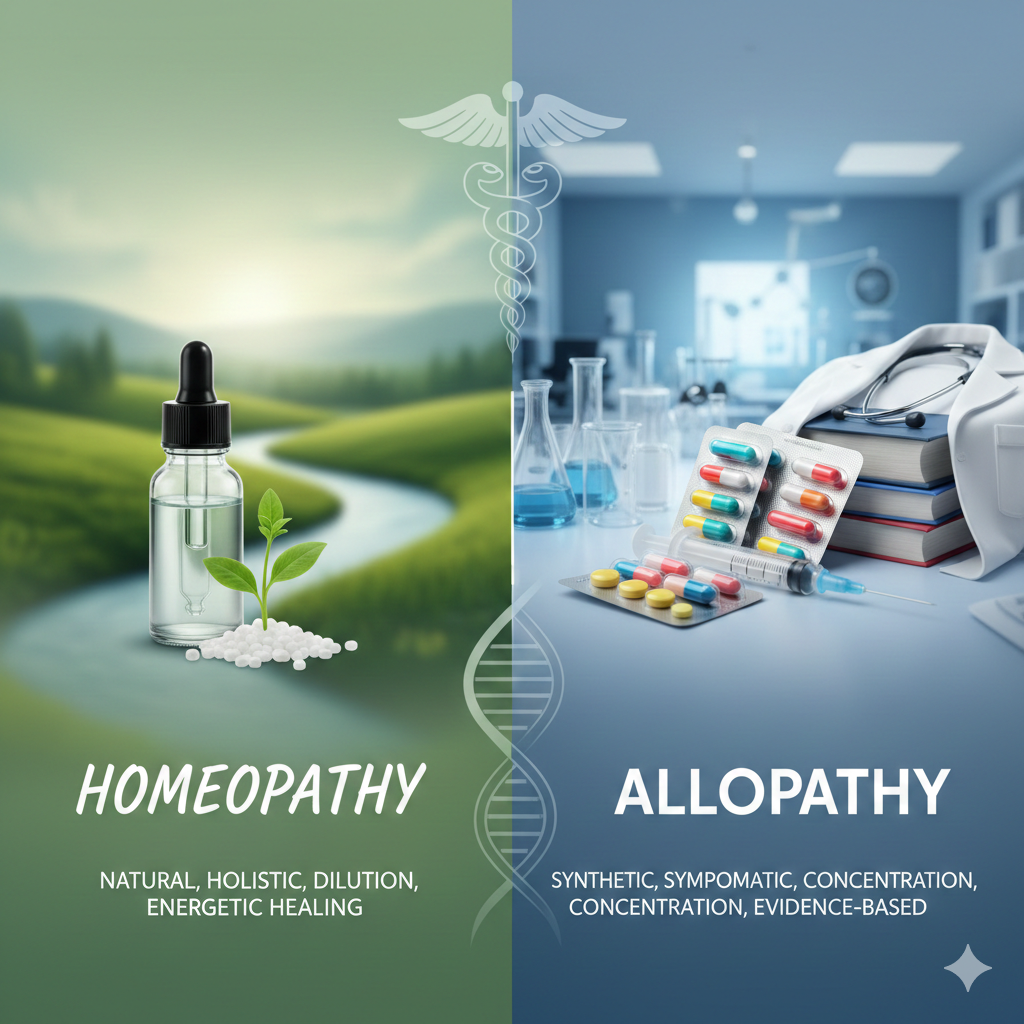
The question “Is homeopathy better than allopathy?” represents one of the most enduring debates in healthcare. This comparison involves fundamentally different medical philosophies, methodologies, and approaches to healing. Homeopathy, a 200-year-old system developed by Samuel Hahnemann, operates on the principle of “like cures like” and uses highly diluted substances. Allopathy (a term often used for conventional Western medicine) employs evidence-based approaches using pharmaceuticals, surgery, and other interventions to treat diseases. Rather than declaring one system universally “better,” this analysis will explore their respective principles, applications, strengths, and limitations.
Understanding the Foundations
The Philosophy of Homeopathy
Homeopathy rests on three core principles:
The Law of Similars (Like Cures Like): Substances that produce symptoms in healthy individuals can treat similar symptoms in sick people.
The Law of Infinitesimals (Potentization): Remedies become more potent through serial dilution and succussion (vigorous shaking).
Holistic Individualization: Treatment is tailored to the individual’s complete symptom picture, including emotional and mental states, not just the disease diagnosis.
Homeopathy views symptoms as the body’s attempt to heal itself, and treatment aims to stimulate this inherent self-healing capacity. Remedies are typically derived from plants, minerals, or animal products and are diluted to extremes—often beyond Avogadro’s limit, meaning no molecules of the original substance theoretically remain.
The Philosophy of Allopathy (Conventional Medicine)
Allopathy, or conventional Western medicine, is characterized by:
Evidence-Based Approach: Treatments are validated through rigorous scientific testing, including randomized controlled trials.
Pathophysiology Focus: Diagnosis and treatment target specific disease mechanisms and anatomical/physiological abnormalities.
Standardization: Treatment protocols are developed based on population studies and applied to individuals with similar diagnoses.
Interventionist Orientation: Pharmaceuticals, surgery, and other interventions aim to eliminate pathogens, correct physiological imbalances, or manage symptoms.
Conventional medicine operates within a biological framework that emphasizes measurable physical processes and typically separates mental and physical health in treatment approaches.
Comparative Analysis Across Healthcare Dimensions
Scientific Evidence and Research
Allopathy’s Strength: Conventional medicine’s greatest advantage is its robust scientific foundation. The modern medical research apparatus—from basic science to clinical trials—represents humanity’s most systematic effort to understand disease and develop treatments. The gold standard of randomized, double-blind, placebo-controlled trials provides reliable evidence about what works, for whom, and with what risks.
Homeopathy’s Controversy: Homeopathy faces significant criticism from the scientific community. Most systematic reviews and meta-analyses conclude that homeopathic remedies perform no better than placebos for specific medical conditions. The extreme dilutions contradict established principles of chemistry and pharmacology. However, proponents argue that conventional research methodologies may not capture homeopathy’s individualized approach or its subtle energetic effects.
The World Health Organization recognizes homeopathy as a form of traditional and complementary medicine, while also emphasizing the importance of evidence-based approaches for health conditions.
Safety Profile
Homeopathy’s Advantage: When prepared according to standards, homeopathic remedies are generally considered safe due to their high dilutions. They lack chemical toxicity and typically don’t cause direct side effects or interactions with conventional medications. This makes them appealing for vulnerable populations, though improper use (delaying necessary conventional treatment) poses indirect risks.
Allopathy’s Complex Safety Profile: Conventional medications often carry well-documented side effects and potential for interactions. However, these risks are systematically studied, quantified, and managed through dosage guidelines, monitoring protocols, and pharmacovigilance systems. Surgical interventions carry inherent risks balanced against potential benefits.
Efficacy for Different Conditions
Acute, Life-Threatening Conditions: Allopathy is unequivocally superior for emergencies (heart attacks, strokes, severe infections, trauma). Its interventions save millions of lives through emergency medicine, surgery, antibiotics, and other acute treatments.
Chronic and Functional Disorders: This is where the debate intensifies. Many patients report benefits from homeopathy for conditions like:
Certain allergies
Mild to moderate anxiety and depression
Some rheumatological conditions
Functional gastrointestinal disorders
Recurrent upper respiratory infections in children
For these conditions, conventional medicine sometimes offers only symptom management with significant side effects, creating space for complementary approaches.
Preventive Medicine: Allopathy excels in vaccination and evidence-based screening. Homeopathy offers constitutional remedies aimed at strengthening “vital force,” though lacking conventional evidence for disease prevention.
The Individualized Approach
Homeopathy’s Strength: The detailed, holistic intake process addresses the person rather than just the disease. This therapeutic encounter itself may have healing effects through the placebo response, practitioner attention, and the narrative reconstruction of illness.
Allopathy’s Advancement: While historically criticized for reductionism, conventional medicine increasingly embraces personalized medicine through pharmacogenomics, tailored cancer therapies, and recognition of psychosocial factors. However, time constraints in modern practice often limit holistic engagement.
Cost and Accessibility
Homeopathy: Remedies themselves are inexpensive. However, the initial consultation time (often 60-90 minutes) makes practitioner costs significant. In many countries, homeopathy isn’t covered by public health systems.
Allopathy: Costs vary enormously by country and system. While expensive pharmaceuticals and technologies drive costs up, public health systems and insurance make many treatments accessible. The evidence-based approach allows for cost-effectiveness analyses.
The Placebo Question and Healing Context
A crucial dimension in this comparison involves the placebo effect and the therapeutic encounter. Research confirms that placebo responses are powerful, particularly for subjective symptoms like pain, fatigue, and mild to moderate depression. The elaborate homeopathic consultation, the symbolic meaning of “natural” treatment, and the expectation of healing likely generate significant placebo effects.
Conventional medicine increasingly recognizes and studies these contextual healing elements but often struggles to incorporate them within time-constrained, technology-focused practice. Integrative medicine attempts to bridge this gap by combining evidence-based conventional treatments with complementary approaches while honoring the therapeutic relationship.
Regulatory and Educational Standards
Allopathy: Involves extensive standardized education (typically 10+ years), licensed practice, and stringent regulatory oversight of drugs and devices. This ensures baseline competency but may limit flexibility.
Homeopathy: Training and regulation vary significantly worldwide. Some countries have formal recognition and standards; others have little to no regulation, leading to variability in practitioner training and quality control of remedies.
The Integration Perspective: Beyond Either/Or
Rather than an either/or choice, many healthcare systems and patients are moving toward integration. The World Health Organization’s Traditional Medicine Strategy 2014-2023 advocates for integrating traditional and complementary medicine where evidence supports safety and efficacy.
Potential Integrative Models:
Parallel Use: Patients use homeopathy for chronic conditions while relying on allopathy for acute care.
Complementary Use: Homeopathy addresses side effects of conventional treatments (like chemotherapy-induced nausea).
Sequential Use: Patients try homeopathy for certain conditions before or alongside conventional approaches.
Important safeguards in integration include:
Ensuring patients don’t abandon effective conventional treatments for serious conditions
Promoting transparency and informed consent
Encouraging communication between all healthcare providers
Continuing research on interactions and outcomes
FAQs: Homeopathy vs. Allopathy
1. What is the fundamental difference between homeopathy and allopathy?
Homeopathy is based on the principle of “like cures like” (using highly diluted natural substances to stimulate the body’s self-healing), while allopathy (conventional medicine) focuses on treating diseases with substances or interventions (like drugs or surgery) that counteract or suppress symptoms.
2. Is homeopathy scientifically proven?
Homeopathy is controversial within the scientific community. Most large-scale scientific reviews conclude that its effects are consistent with placebo effects. Proponents argue that it works through principles not yet understood by conventional science, but it lacks robust evidence from randomized controlled trials to support its efficacy for specific diseases.
3. Is allopathy always evidence-based?
Allopathy is grounded in evidence-based medicine, meaning treatments are tested through scientific research. However, not every treatment or practice is equally supported by evidence, and some areas of conventional medicine continue to evolve as new research emerges.
4. Which is safer: homeopathy or allopathy?
In terms of direct toxicity, homeopathic remedies are highly diluted and generally considered safe with minimal risk of side effects or interactions. However, safety concerns arise if homeopathy is used instead of necessary conventional treatment for serious conditions. Allopathic medicines can have significant side effects but are rigorously tested for safety, and risks are monitored and managed.
5. Can homeopathy and allopathy be used together?
Yes, many people use them in an integrative or complementary way. For example, homeopathy might be used to manage side effects of chemotherapy or stress, while allopathy treats the primary illness. It is crucial to inform all healthcare providers about all treatments being used to avoid conflicts.
6. Which is better for chronic illnesses like arthritis or asthma?
For chronic conditions, the choice depends on the severity and individual response. Allopathy often provides fast symptom relief and disease management (e.g., inhalers for asthma, anti-inflammatories for arthritis). Some patients report improvement with homeopathy for chronic issues, but it should not replace conventional care without medical advice, especially for progressive diseases.
7. Does homeopathy work faster than allopathy?
Not typically. Allopathic treatments often provide quicker relief for acute symptoms (e.g., antibiotics for infection, painkillers for headache). Homeopathy may require more time, as it aims to treat the “whole person” and stimulate long-term healing rather than suppress symptoms rapidly.
8. Why do some people prefer homeopathy over allopathy?
Reasons include a preference for natural treatments, concerns about side effects of pharmaceuticals, dissatisfaction with conventional care for chronic issues, or a philosophical alignment with holistic and individualized approaches.
9. Are homeopathic doctors real doctors?
This varies by country. In some places, homeopaths undergo specific training and certification but are not medical doctors. In others, conventional medical doctors may also train in homeopathy. Always check a practitioner’s qualifications, especially if you have a serious health condition.
10. Is allopathy only about treating symptoms?
No. While it often targets symptoms for relief, allopathy also aims to treat root causes—like antibiotics for bacterial infections, surgery for appendicitis, or insulin for diabetes. The approach is based on diagnosing the underlying pathology.
11. Can homeopathy treat serious diseases like cancer or heart disease?
Homeopathy should not be used as a primary treatment for life-threatening conditions like cancer, heart disease, or severe infections. While it may complement conventional care (e.g., easing anxiety or side effects), relying solely on homeopathy for serious illnesses can delay proven treatments and worsen outcomes.
12. Is homeopathy just a placebo effect?
Many scientific studies suggest that homeopathy’s benefits are consistent with placebo effects. However, the placebo effect itself is powerful and real, and the detailed consultation process in homeopathy may enhance therapeutic outcomes through psychological and emotional support.
13. Which is more expensive?
Costs vary widely. Homeopathic remedies are often inexpensive, but consultations can be lengthy and costly, especially if not covered by insurance. Allopathic treatments can be expensive due to drug prices, hospital stays, and technology, but insurance or public healthcare may offset costs.
14. How do I choose between homeopathy and allopathy?
Consider:
The nature and severity of your condition (e.g., emergencies require allopathy).
Your personal health philosophy.
Evidence for treatment options.
Advice from qualified healthcare providers.
An integrative approach may offer a balanced path.
15. Are there conditions where homeopathy is particularly recommended?
Homeopathy is often explored for non-life-threatening chronic issues (e.g., mild allergies, stress, eczema, recurrent colds), functional disorders, or as adjunct care. It is not recommended as sole treatment for acute, severe, or progressive diseases.
16. Do governments and health organizations recognize homeopathy?
Recognition varies globally. Some countries (e.g., India, Germany, Switzerland) integrate homeopathy into their health systems. Others (like the UK) have restricted public funding due to lack of evidence. Organizations like the WHO recognize it as traditional medicine but emphasize evidence-based practice.
17. What should I avoid when using homeopathy?
Avoid substituting it for proven conventional treatments in serious illnesses. Also, beware of unqualified practitioners, and always disclose homeopathic use to your doctor, especially before surgery or if taking prescription drugs.
18. Can children and pregnant women use homeopathy?
Many homeopathic remedies are considered safe due to high dilutions, but pregnant women and children should consult both a homeopath and a conventional doctor before use, as some source substances might be risky, and proper diagnosis is essential.
19. How are homeopathic remedies regulated?
Regulation differs by country. In some places, remedies are regulated as drugs (e.g., by the FDA in the U.S., but not held to the same efficacy standards as pharmaceuticals). In others, they may be sold as supplements with minimal oversight.
20. What is the future of homeopathy and allopathy?
Trends point toward integrative medicine, combining evidence-based conventional treatments with complementary approaches like homeopathy where safe and desired. Research continues on both sides, aiming for personalized, holistic, and effective healthcare.
Conclusion: Toward a Patient-Centered Synthesis
Is homeopathy better than allopathy? The answer is neither straightforward nor universal. Each system excels in different domains:
Allopathy is superior for:
Diagnosis of complex diseases through advanced technology
Emergency and acute care
Surgical intervention
Conditions with clear pathophysiology requiring targeted intervention
Evidence-based preventive measures like vaccination
Homeopathy offers value for:
Certain chronic conditions where conventional medicine has limited options
Patients seeking a holistic, individualized approach
Conditions with strong mind-body components
Individuals sensitive to pharmaceutical side effects
When the therapeutic encounter itself is healing
The “better” system depends entirely on context: the specific health condition, its severity, individual patient values and beliefs, cultural context, and available evidence.
For minor, self-limiting conditions or certain chronic issues where conventional medicine offers only partial solutions, homeopathy provides a low-risk option that many find beneficial. For serious, acute, or progressive diseases, conventional medicine’s evidence-based approaches are indispensable.
The future of healthcare likely lies not in ideological battles between systems, but in:
Rigorous, open-minded research on homeopathic approaches using both conventional and novel methodologies
Respectful integration that prioritizes patient safety and autonomy
Recognition that healing involves both science and art, both technology and human connection
Honest dialogue about what we know, what we don’t know, and how different approaches might complement each other
Ultimately, the goal of any medical system should be to alleviate suffering, promote health, and respect patient autonomy. Rather than asking which system is universally better, we might ask: “How can we combine the strengths of different approaches to serve this patient’s unique needs?” In that question lies the path toward more compassionate, effective, and personalized healthcare.