Table of Contents
ToggleHomeopathic Medicine Ailanthus Glandulosa: The Neglected Remedy from the Tree of Heaven
In the vast and intricate world of homeopathy, where remedies are derived from sources as diverse as venomous snakes, precious metals, and humble weeds, Ailanthus glandulosa occupies a unique and somber space. Known more commonly as the “Tree of Heaven,” a name that belies its dark medicinal portrait, Ailanthus is not a first-line remedy for common ailments. Instead, it is a profound and specific medicine for states of profound toxicity and collapse, painting a clinical picture so stark it has been termed a “typhoid of the blood.” This article delves into the origin, preparation, characteristic symptoms, therapeutic uses, and nuanced place of Ailanthus within the homeopathic materia medica.
Botanical Origin and Historical Context
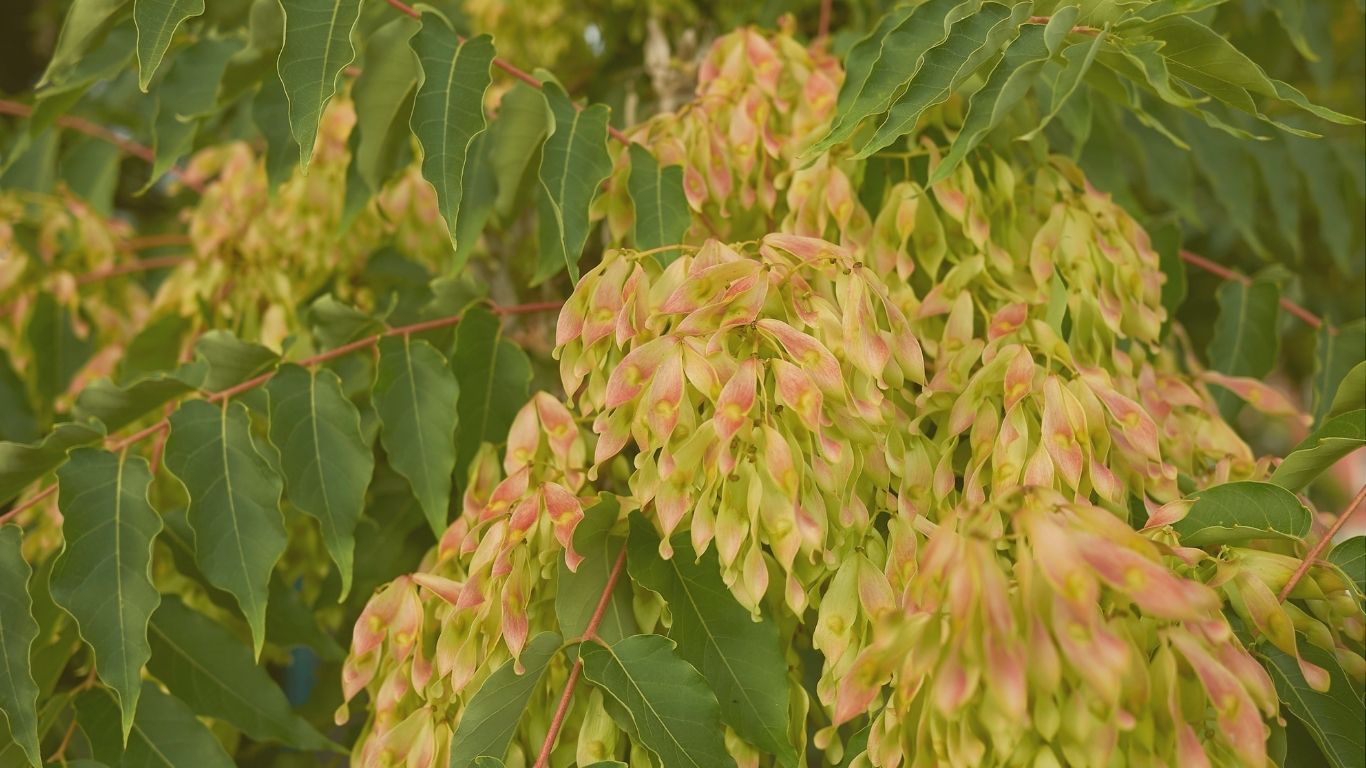
Ailanthus altissima (formerly Ailanthus glandulosa) is a deciduous tree native to northeast and central China and Taiwan. It was introduced to Europe and North America in the late 18th century as an ornamental plant, prized for its rapid growth and tolerance to pollution. However, it soon earned a reputation as an invasive species, aggressively colonizing disturbed soils and outcompeting native flora—a metaphor for the invasive, consuming disease states it is used to treat in homeopathy.
The tree’s common name, “Tree of Heaven,” is thought to be a derivation of the Ambonese word ai lanto, meaning “heaven-tree” or “tree reaching for the sky.” Ironically, its homeopathic application deals with conditions that are the antithesis of heavenly vitality: putrefaction, sepsis, and profound adynamia (weakness).
The homeopathic proving of Ailanthus was conducted by Dr. H.C. Allen and published in the late 19th century. The inspiration for its proving came from observations of a severe epidemic of malignant scarlet fever (scarlatina) that swept through Pennsylvania in 1864. Allen noted that the symptoms of this particularly virulent epidemic closely mirrored the toxic effects observed in animals that had ingested the leaves or bark of the Ailanthus tree. This led to a formal proving, cementing its place as a key remedy in desperate, septic conditions.
Extraction and Preparation: From Bark to Potency
Like all classical homeopathic remedies, Ailanthus is prepared according to the strict guidelines of homeopathic pharmacopoeias. The primary source material is the fresh bark of the tree, harvested at the appropriate season to ensure its biological activity.
The process begins with the creation of a mother tincture. The fresh bark is cleaned, finely chopped, and macerated in a mixture of alcohol and water. This allows the active phytochemical principles—alkaloids, quassinoids, and other compounds responsible for the tree’s toxicological effects—to dissolve into the solvent. After a period of maceration, the liquid is pressed, filtered, and the resulting solution is labeled as the mother tincture (Ø).
From this mother tincture, the various potencies are prepared through serial dilution and succussion (vigorous shaking), a process known as dynamization. Homeopathic potencies are categorized as:
-
X or D Potencies: Decimal scale dilutions (1:10).
-
C Potencies: Centesimal scale dilutions (1:100).
-
LM or Q Potencies: Fifty millesimal scale dilutions (1:50,000), used in more advanced practice.
For Ailanthus, the choice of potency is critical and depends entirely on the individual case’s severity, the patient’s vitality, and the prescriber’s assessment. Lower potencies (e.g., 6C, 30C) may be used for more localized or acute presentations, while very high potencies (200C, 1M) might be employed for deep, systemic septic states under the guidance of an experienced practitioner. The LM scale offers a gentler, more repeatable option for prolonged weakness.
The Cardinal Symptom Picture: A Portrait of Sepsis and Collapse
The genius of Ailanthus—its unique, identifying symptom pattern—revolves around putrefaction, stupor, and profound weakness. It is the embodiment of a body losing the battle against a overwhelming infection.
1. Mind and Sensorium:
The patient is in a state of dullness, confusion, and stupor. They may be delirious, with a sensation as if in a dream. There is a characteristic indifference or inability to comprehend their own severe illness. The face often reflects this internal state: besotted, expressionless, or wearing a look of utter prostration.
2. Characteristic Physical Symptoms:
-
Malignant Scarlet Fever (Scarlatina): This is the classic indication. The rash is dark, livid, purple, or almost black, not a bright red. It may be irregular, disappearing in some areas while remaining vivid in others. The throat is deeply ulcerated, dark red to purplish, with a foul, putrid odor.
-
Putridity: A horribly foul odor pervades the patient—from the breath, bodily discharges, and even the perspiration. This is a key differentiating symptom.
-
Glandular Swelling: The glands, especially cervical (neck) glands, become enormously swollen, hard, and painful. The swelling may extend to the parotids (mumps) when associated with a septic state.
-
Extreme Prostration: Weakness is disproportionate to the illness. The patient slides down in bed, too weak to maintain their position. This is not just tiredness but a typhoid-like adynamia.
-
Headaches: A sensation of a heavy weight on the top of the head, or a headache that feels as if the skull is being crushed in a vise.
-
Desires and Aversions: A notable craving for tomatoes or tomato-based products is often reported in the provings and clinical experience.
Therapeutic Uses and Clinical Applications
Ailanthus is not a remedy for minor complaints. Its application is reserved for serious, often critical conditions where the symptom picture matches. Its primary uses include:
-
Severe, Septic Sore Throats and Tonsillitis: When the throat is dark, swollen, ulcerated, with foul-smelling breath and extreme prostration. It may be indicated in severe cases of mononucleosis or peritonsillar abscess (quinsy).
-
Malignant or Hemorrhagic Scarlet Fever: As historically used, for scarlatina with the characteristic dark rash and profound toxicity.
-
Glandular Fever and Severe Mumps: With tremendous swelling and induration of the glands, accompanied by stupor and foulness.
-
Post-Viral Fatigue and Recovery: In cases where a severe illness leaves behind a state of lingering mental dullness, confusion, and debilitating weakness that fails to improve.
-
Septic States and Blood Poisoning: As an intercurrent remedy in conditions trending towards sepsis, with putrid discharges and rapid decline of vitality.
Side Effects, Aggravations, and Prevention
In homeopathic philosophy, a correctly prescribed remedy acts as a catalyst for the body’s self-healing response. An improperly chosen remedy will simply have no effect. However, a poorly matched high-potency remedy could theoretically cause a “homeopathic aggravation”—a temporary intensification of existing symptoms, indicating a medicinal reaction. With a remedy as deep-acting as Ailanthus, this underscores the necessity of professional guidance.
There are no pharmacological side effects as understood in conventional medicine, due to the extreme dilution of the active material. The “side effects” are essentially the failure to act or a proving of the remedy’s picture if misused.
Prevention, in the homeopathic sense, relates to constitutional prescribing. A homeopath might consider Ailanthus as a possible constitutional remedy for individuals who exhibit a tendency towards sluggishness, lymphatic congestion, and a predisposition to severe, debilitating illnesses with the characteristic mental dullness. In acute epidemics matching its picture, it may be used prophylactically, but this is a specialized practice.
Comparative Materia Medica: Distinguishing Ailanthus from Its Peers
To truly understand Ailanthus, one must see it in relation to other remedies with overlapping spheres of action.
vs. Pyrogenium: This is perhaps the closest analogue, both being premier remedies for septic states with extreme restlessness and foul discharges. Pyrogen has a characteristic “septic restlessness”—the patient is terribly weak but feels internally compelled to move, and the bed feels painfully hard. The odor is also horribly putrid. Ailanthus has more stupor, less restlessness, and the peculiar crushing headache and tomato craving. Pyrogen’s pulse is often disproportionately rapid relative to the fever.
vs. Baptisia Tinctoria: Another great septic remedy with stupor, delirium, and a “broken-down” feeling. The Baptisia patient feels scattered, as if body parts are disconnected, and has a besotted look. However, Baptisia’s discharges are not as strikingly foul as Ailanthus, and its key throat symptom is a painless, dark red, dry sensation, unlike the painfully ulcerated throat of Ailanthus.
vs. Lachesis: Both have dark purplish discolorations and left-sided aggravations. Lachesis is marked by extreme loquacity, jealousy, and sensitivity to touch (especially on the throat). The patient is intense, not stuporous. Ailanthus is silent, dull, and indifferent.
vs. Belladonna: For bright red, hot, burning scarlet fever with sudden onset, violent throbbing, and wild delirium. Belladonna is a picture of intense, active congestion and inflammation. Ailanthus is the opposite: a picture of passive, putrid congestion and collapse.
vs. Muriaticum Acidum: Shares the extreme prostression (sliding down in bed) and foul, ulcerated throat. However, Muriatic acid has a strong affinity for the rectal area (hemorrhoids, fissures) and is marked by a sense of hurry and anxiety, lacking the dense stupor of Ailanthus.
Frequently Asked Questions (FAQs) About Homeopathic Medicine Ailanthus Glandulosa
Homeopathic medicines often spark curiosity and questions. For a remedy as specific and intense as Ailanthus glandulosa, understanding its proper context is key. Here are answers to some of the most commonly asked questions.
1. What is Ailanthus glandulosa, and where does it come from?
Ailanthus glandulosa is a homeopathic remedy prepared from the bark of the Ailanthus altissima tree, commonly known as the Tree of Heaven. The tree is native to parts of Asia but has become widespread globally. The homeopathic preparation was first developed after observations of its effects during a severe scarlet fever epidemic in the 19th century, leading to a formal “proving” to document its medicinal symptoms.
2. What kinds of symptoms or illnesses is Ailanthus used for?
Ailanthus is not a general-purpose remedy. It is specifically indicated for severe, debilitating conditions with a strong element of toxicity or “putridity.” Its classic uses include:
-
Severe, dark purple or livid rashes (as in some scarlet fever cases).
-
Profound weakness where the patient slides down in bed.
-
Ulcerated, dark red throats with a foul odor.
-
Swollen, hard, and painful glands.
-
A state of mental dullness, stupor, or dream-like confusion during illness.
3. Can I use Ailanthus for a common sore throat or fever?
It is very unlikely. A common sore throat or mild fever does not match the intense, septic picture of Ailanthus. This remedy is for extreme presentations where the throat is deeply ulcerated and dark, the breath is foul, and the patient is extremely weak and mentally dull. Using it for a minor illness would likely have no effect. Always consult a qualified homeopath for an accurate prescription.
4. Are there any known side effects of taking Ailanthus?
In the traditional pharmacological sense, no. Due to the extreme dilution in homeopathic preparation, there is no chemical toxicity. However, in homeopathic practice, if a remedy is not well-matched to the patient’s symptoms, it may simply not work. In rare cases, a poorly selected high-potency remedy could cause a temporary “homeopathic aggravation,” where symptoms briefly intensify before improvement. This underscores why professional guidance is recommended for such a deep-acting medicine.
5. How is Ailanthus different from other homeopathic fever remedies like Belladonna or Pyrogenium?
This is a crucial distinction:
-
Belladonna: Used for sudden, high fevers with bright redness, throbbing, and intense, active delirium. It’s a picture of violent heat and inflammation.
-
Pyrogenium: Used for septic states with intense restlessness (despite weakness) and foulness. The patient feels the bed is too hard.
-
Ailanthus: Used for states with dark discolorations, foul odors, but with marked stupor, indifference, and prostration. The weakness is more passive and overwhelming.
6. What does a “craving for tomatoes” mean in relation to this remedy?
During the homeopathic proving of Ailanthus, a distinct craving for tomatoes was noted. In clinical practice, such peculiar, specific symptoms can be valuable clues for a homeopath. If a severely ill patient with a septic condition expresses a strong, unusual desire for tomatoes (or tomato juice, ketchup), it might point toward Ailanthus as a possible remedy, alongside the other core symptoms.
7. Can Ailanthus be used preventively, for example, during flu season?
Homeopathic prophylaxis is a specialized practice. While some remedies are used based on their matched symptom picture of a prevailing epidemic, Ailanthus is not typically a first-line preventive remedy. Its picture is too specific to severe, toxic states. A homeopath might consider it only if the circulating illness was clinically presenting with the exact, characteristic symptoms of Ailanthus in many patients.
8. What potencies of Ailanthus are commonly available, and how do I choose?
Ailanthus is available in standard homeopathic potencies (e.g., 6C, 30C, 200C, 1M). Choosing a potency is not a matter of personal preference but of professional judgment.
-
Lower potencies (like 6C or 30C) may be repeated more frequently and are sometimes used for more acute, physical manifestations.
-
Higher potencies (200C and above) are used for deep-seated conditions and are generally prescribed by a practitioner for a single dose.
Self-selection of a high-potency remedy like Ailanthus is strongly discouraged due to the complexity of its indicated state.
9. Where can I purchase Ailanthus glandulosa?
It is available from reputable homeopathic pharmacies, both online and in stores that specialize in natural health products. However, purchasing it should ideally follow the advice of a homeopathic practitioner who has confirmed it is the correct remedy for your specific case.
10. Is there any scientific evidence that Ailanthus works?
Like many homeopathic remedies, Ailanthus is not evaluated by large-scale, double-blind clinical trials in the way conventional drugs are. Its evidence base rests on the homeopathic model, which includes:
-
The Homeopathic Proving: Documented effects of the substance on healthy volunteers.
-
Clinical Verification: Over 150 years of documented clinical experience from homeopathic practitioners observing its effects in patients whose symptoms match the Ailanthus picture.
-
Principle of Similars: Its use is based on the core homeopathic principle that a substance capable of producing certain symptoms in a healthy person can treat similar symptoms in a sick person.
Disclaimer: This information is for educational purposes only and is not a substitute for professional medical advice, diagnosis, or treatment. Always seek the advice of a qualified homeopathic practitioner or healthcare provider with any questions you may have regarding a medical condition.
Conclusion
Ailanthus glandulosa stands as a powerful testament to homeopathy’s principle of “like cures like.” A tree known for its aggressive, almost toxic vitality provides the healing stimulus for conditions where life force is at its lowest ebb, threatened by putrefaction and decay. It is not a remedy for casual use but a specialized tool in the homeopathic armamentarium for specific, grave clinical pictures. Its value lies in its precise symptomatology—the dark discolorations, the foul odors, the crushing headache, the craving for tomatoes, and above all, the profound stupor and weakness that define a battle for survival. In the hands of a skilled practitioner, this “Tree of Heaven” can offer a lifeline, helping to clear the septic fog and guide a patient back from the brink towards recovery and renewed vitality. It reminds us that in nature, often within the most invasive or troublesome species, lies the potential for profound healing when understood through the nuanced lens of homeopathic law.