Table of Contents
ToggleThe Enigmatic Laurel: A Comprehensive Guide to Homeopathic Medicine Laurocerasus
In the vast and intricate world of homeopathy, every remedy tells a story, derived from the very essence of a substance and its profound effects on the living organism. Among these, Laurocerasus, a remedy sourced from the beautiful yet potentially dangerous cherry laurel plant, holds a unique and vital place. It is a medicine of crisis, often indicated in conditions where there is a sudden and alarming collapse of vitality, particularly affecting the heart and respiration. To understand Laurocerasus is to understand a state of profound weakness and desperate struggle for air and life.
Origin and Extraction: From Ornamental Shrub to Homeopathic Remedy
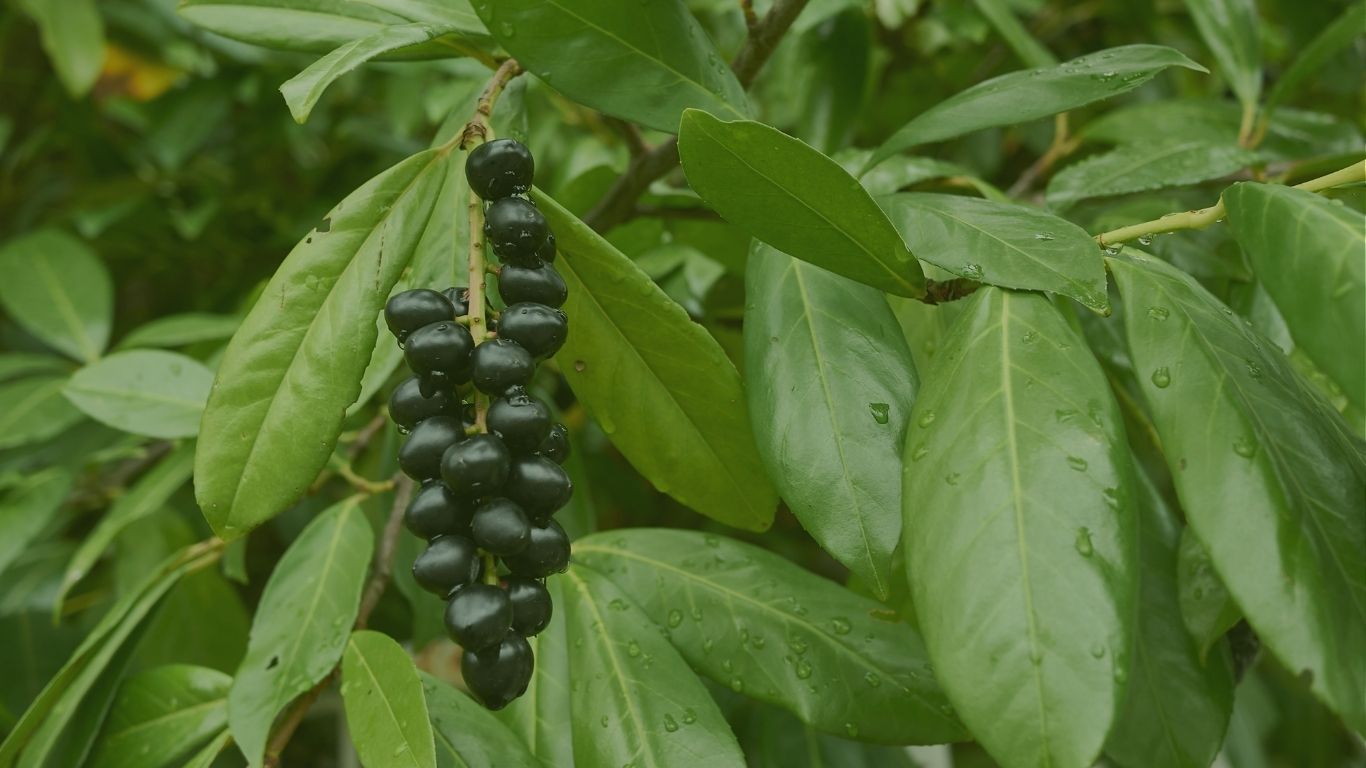
The story of Laurocerasus begins with its botanical source, Prunus laurocerasus, commonly known as the cherry laurel or English laurel. This evergreen shrub is a familiar sight in gardens and parks across Europe and Southwest Asia, prized for its glossy, dark green leaves and clusters of fragrant white flowers that later develop into small, black cherry-like fruits. Despite its attractive appearance, the plant harbors a hidden danger. Its leaves, twigs, and seeds contain cyanogenic glycosides, primarily prulaurasin. When these plant tissues are crushed or damaged, they release hydrogen cyanide (prussic acid), a potent and fast-acting toxin.
The preparation of the homeopathic remedy Laurocerasus is a perfect example of the principle of “like cures like,” the foundational doctrine of homeopathy. The substance that can cause a set of symptoms in a healthy individual can, in a highly diluted and potentized form, cure those same symptoms in a sick person.
The extraction and preparation process, as detailed in the Homeopathic Pharmacopoeia, is meticulous. The fresh leaves and flowers of the cherry laurel plant are collected at their peak. These are then pounded and macerated to release their juices. This crude plant material is then soaked in alcohol to create the mother tincture, designated as Ø. This initial tincture contains the full biochemical imprint of the plant, including its toxic principles.
From this mother tincture, the various homeopathic potencies are prepared through a process of serial dilution and succussion (vigorous shaking). For example, to make a 1C potency, one drop of the mother tincture is diluted in 99 drops of an alcohol-water mixture and succussed vigorously. This process is repeated; one drop of this 1C solution is diluted in another 99 drops of diluent and succussed to create a 2C potency, and so on. This method is believed to imprint the energetic signature of the original substance onto the solvent while eliminating any toxicological material dose.
A Spectrum of Potencies and Their Application
Laurocerasus is available in a wide range of potencies, from low potencies like 6C or 30C to very high potencies like 1M or even 10M. The selection of potency is a critical decision made by a homeopathic practitioner based on the individual’s specific symptoms and their vitality.
Lower potencies, such as 6C or 30C, are often used for more acute, physical manifestations. For instance, a sudden, spasmodic cough or a palpitation might call for a 30C potency, repeated several times a day. These potencies are thought to act more on the physical plane.
Higher potencies, like 200C or 1M, are typically reserved for deeper, more constitutional states or for severe acute crises where the mental and emotional picture is very clear. A state of profound shock or a chronic heart condition with a strong Laurocerasus symptomatology might be treated with a high, single dose. The guiding principle is that the potency must match the intensity and depth of the disease state.
The Symptom Picture: A Portrait of Collapse and Suffocation
The essence of Laurocerasus can be distilled into a few key themes: suddenness, collapse, blueness, and a desperate struggle for breath. It is a remedy for states where the vital force seems to be giving up.
Key Physical Symptoms:
-
Cardiovascular and Respiratory Collapse: This is the core domain of Laurocerasus. There is a sensation of great weakness and emptiness in the chest, as if the heart has stopped. Palpitations are common, often accompanied by a bluish discoloration of the face and lips (cyanosis). The pulse is typically weak, irregular, intermittent, and may be abnormally slow. The patient feels a sudden, profound weakness, as if all strength has been drained away.
-
Respiratory Distress: Breathing is difficult, labored, and suffocative. There is a characteristic gasping for breath, as if the patient cannot get enough air. The cough is dry, hard, and spasmodic, worse at night and often accompanied by a feeling of suffocation. It can sound like a “machine-like” cough. There may be a sensation of a weight or load on the chest.
-
Cyanosis and Coldness: A marked blueness of the skin, especially the face and lips, is a leading indicator for Laurocerasus. The body is often cold to the touch, yet the patient may not feel chilly. This coldness is a sign of circulatory failure.
-
Sleep Issues and Nighttime Aggravation: Many symptoms are worse during sleep or upon waking. The patient may wake up suddenly, gasping for air, with a feeling of suffocation or a pounding heart. There is often a dread of going to sleep for fear of these attacks.
-
Other Symptoms: It can be indicated for certain types of fainting spells, dropsy (edema) especially with heart involvement, and even nosebleeds that occur with heart disease. There may be a cold sensation in the stomach.
Key Mental and Emotional Symptoms:
The physical collapse is mirrored in the mental state. The Laurocerasus patient is often profoundly hopeless and despairing. They may exhibit a deep indifference to their surroundings and even to their own recovery. There is a sense of being beyond help. This is not a fearful anxiety like Aconite, but a quiet, resigned despair. Their face may appear gloomy and sunken, reflecting the internal state of vitality.
Clinical Uses and Applications
In clinical homeopathic practice, Laurocerasus is not a frequently used constitutional remedy but is an invaluable tool in acute and critical situations. Its primary uses include:
-
Cardiac Conditions: It is a key remedy for various heart ailments, particularly when there is weakness, palpitations, irregular pulse, and accompanying cyanosis. It may be considered in cases of mitral valve disease, angina pectoris with a sensation of coldness and suffocation, and congestive heart failure.
-
Respiratory Ailments: For a spasmodic, suffocative cough that resembles whooping cough or croup, especially when the child turns blue during coughing spells. It can be helpful in severe asthma attacks, bronchitis, and emphysema where the characteristic gasping and weakness are present.
-
Syncope and Shock: In cases of fainting or shock accompanied by a weak, intermittent pulse, coldness, and bluish skin.
-
Sleep Apnea: For obstructive sleep apnea where the person wakes up gasping for air, with a feeling of suffocation and a pounding heart.
-
Post-Stroke Recovery: It is sometimes used in the aftermath of a stroke, particularly when there is paralysis and a bluish, cold appearance to the affected side.
Side Effects and Safety Considerations
As a homeopathic preparation, properly potentized Laurocerasus is considered safe and non-toxic. The process of serial dilution ensures that there are no measurable molecules of the original plant material left in the higher potencies, eliminating any risk of cyanide poisoning.
However, as with any homeopathic remedy, there is a possibility of a “homeopathic aggravation.” This is a temporary intensification of existing symptoms following a dose, which is often seen as a positive sign that the remedy is acting and the vital force is responding. This aggravation is usually short-lived and is followed by improvement.
The most significant safety consideration is one of omission. The conditions for which Laurocerasus is indicated—such as heart failure, severe respiratory distress, or stroke—are medical emergencies. It is absolutely crucial to seek immediate conventional medical attention in such situations. Homeopathy can be used as a complementary support, but it should never replace standard medical diagnosis and treatment. Self-prescribing for serious conditions is strongly discouraged.
Prevention and Constitutional Fit
Laurocerasus is not typically considered a preventive remedy in the way that some homeopathic nosodes can be. Its application is almost entirely geared toward treating acute, manifesting symptoms or specific constitutional states that match its picture.
A person who might benefit from Laurocerasus as a constitutional remedy is one who exhibits a tendency towards the core themes of the medicine. They may have a history of heart or lung weakness, a disposition towards gloom and despair, and a physical constitution that is prone to cyanosis and coldness. However, identifying this requires a deep, constitutional analysis by an experienced homeopath.
Comparisons with Other Homeopathic Remedies
To fully grasp the uniqueness of Laurocerasus, it is helpful to compare it with other remedies that share some similar symptoms.
-
Laurocerasus vs. Carbo Vegetabilis: Both remedies feature collapse, coldness, and cyanosis, earning them the nickname “the coroner’s remedies.” However, the key difference lies in the quality of collapse. Carbo Veg patients are in a state of decay; they are sluggish, stagnant, and crave moving air to help them breathe. They feel they are dying and are afraid of it. Laurocerasus, in contrast, has a more sudden, paralytic collapse. The patient is more passive and indifferent, and the coldness and blueness are more pronounced. The cough of Carbo Veg is loose and weak, while Laurocerasus has a dry, spasmodic, suffocative cough.
-
Laurocerasus vs. Aconitum Napellus: Both can be used for sudden onset of symptoms, especially respiratory and cardiac. Aconite is the remedy for intense fear, panic, and anxiety. The Aconite patient is restless, fearful, and believes they will die. The onset is often after a shock or exposure to cold, dry wind. Laurocerasus lacks this intense fear; its keynote is despair and indifference. The collapse in Aconite is from terror, while in Laurocerasus, it is from a seeming failure of the vital force itself.
-
Laurocerasus vs. Digitalis: Both are major heart remedies with slow, irregular pulses and a sensation as if the heart would stop. Digitalis, however, has a strong element of extreme sadness and grief, often following an emotional shock. The Digitalis patient may feel worse from motion and have a fear that the heart will stop if they move. Laurocerasus has a more passive despair and the characteristic bluish discoloration is more central to its picture.
-
Laurocerasus vs. Antimonium Tartaricum: This is a key comparison for respiratory issues. Both have a rattling cough with an inability to expectorate, leading to suffocation. However, Antimonium Tart is for the final stages of mucus accumulation; the patient is drowsy, weak, and covered in cold sweat. Laurocerasus has a dry, hacking, machine-like cough with marked cyanosis and a sense of paralysis in the chest.
Frequently Asked Questions (FAQs) about Homeopathic Medicine Laurocerasus
Q1: What is the main source of the homeopathic remedy Laurocerasus?
A1: Laurocerasus is prepared from the fresh leaves and flowers of the Prunus laurocerasus plant, commonly known as the cherry laurel or English laurel. This ornamental shrub contains compounds that can release cyanide when crushed, making the raw plant toxic. However, the homeopathic preparation process of serial dilution and succussion (vigorous shaking) renders the final remedy non-toxic while harnessing its unique healing properties.
Q2: For which key symptoms should I consider Laurocerasus?
A2: Laurocerasus is a key remedy for sudden collapse and weakness, particularly involving the heart and lungs. Its most characteristic symptoms include:
-
A sensation of the heart stopping or feeling weak and empty in the chest.
-
Difficulty breathing, with sudden gasping for air and a feeling of suffocation.
-
A dry, hard, spasmodic cough that sounds machine-like and is worse at night.
-
A bluish discoloration of the face, lips, or skin (cyanosis).
-
A weak, slow, or irregular pulse.
-
A state of profound indifference, gloom, or despair.
Q3: How is Laurocerasus different from other homeopathic heart remedies like Carbo Vegetabilis?
A3: While both are used for collapse and cyanosis, the core feeling is different. Carbo Vegetabilis patients feel sluggish and stagnant, like a dying fire; they crave fresh air blown on them and may be anxious. Laurocerasus patients have a more sudden, paralytic collapse. They are profoundly indifferent, passive, and do not show the same anxiety or desire for air. The cough of Carbo Veg is also typically weak and loose, while Laurocerasus has a dry, hacking, suffocative cough.
Q4: Can Laurocerasus be used for coughs and breathing problems in children?
A4: Yes, it can be very effective for specific types of coughs in children. The key indicator is a sudden, violent, spasmodic cough where the child struggles to breathe and may turn blue or purple in the face during the coughing fit. This can be seen in conditions like whooping cough (pertussis) or severe croup. The child may wake up gasping for air. It is crucial, however, to seek immediate medical attention for any child experiencing breathing difficulties or cyanosis.
Q5: Is it safe to use Laurocerasus at home for self-limiting conditions?
A5: For minor issues like a mild, tickling cough that doesn’t match the strong Laurocerasus symptoms, it is likely safe. However, due to the serious nature of the conditions it treats—heart failure, severe respiratory distress, and collapse—self-prescribing Laurocerasus for major symptoms is strongly discouraged. The symptoms that indicate Laurocerasus are often signs of a medical emergency that requires conventional diagnosis and treatment. It is always best to consult a qualified homeopathic practitioner for guidance.
Q6: What does the “despair and indifference” of a Laurocerasus patient look like?
A6: Unlike the intense fear and anxiety of an Aconite patient, the Laurocerasus state is one of profound hopelessness. The patient may show no interest in their recovery, their family, or their surroundings. They appear gloomy, sunken, and resigned to their fate, as if all vitality has been drained away. This mental state, combined with the physical symptoms of collapse and blueness, creates the complete picture for the remedy.
Q7: Are there any side effects from taking the homeopathic preparation of Laurocerasus?
A7: The potentized homeopathic remedy itself is considered safe and non-toxic, as it contains no measurable chemical material from the original plant. The main “side effect” to be aware of in homeopathy is a “homeopathic aggravation,” where symptoms temporarily intensify after taking a dose before improvement begins. This is usually mild and short-lived. The primary risk is using Laurocerasus instead of seeking urgent medical care for a life-threatening condition.
Q8: What potency of Laurocerasus is commonly used?
A8: The potency depends on the situation. For acute, sudden symptoms like a coughing fit or palpitations, lower potencies like 30C may be used repeatedly. For deeper, more chronic conditions involving the heart, or for a clear constitutional picture, a homeopath would likely prescribe a single high potency like 200C or 1M. The selection of potency is a professional decision and should be individualized.
Q9: Can Laurocerasus help with sleep apnea?
A9: It can be a considered remedy for obstructive sleep apnea, especially when the person wakes up suddenly with a intense feeling of suffocation, gasping for air, and a pounding or fluttering heart. The key is the sensation of being suffocated and the struggle to draw a breath upon waking. A thorough medical evaluation for sleep apnea is essential.
Q10: Is Laurocerasus used as a preventive medicine?
A10: No, Laurocerasus is not typically used as a preventive remedy. Its application is almost entirely therapeutic, meaning it is used to treat symptoms that are already present and that closely match its specific symptom picture. It is not used like a vaccine to prevent illness from occurring.
Conclusion
Laurocerasus stands as a powerful and specific remedy in the homeopathic armamentarium. It is the portrait of a body in acute crisis, where the heart falters and the breath becomes a desperate struggle. Its value lies in its ability to address these states of collapse with a precision that few other remedies can match. Yet, its power is a reminder of the respect we must hold for both the art of homeopathy and the critical importance of conventional medical care in safeguarding human life.