Table of Contents
ToggleMenopause: Causes, Effects, Prevention, and Effective Homeopathic Remedies for Menopause
Introduction
Menopause is not a disease but a natural biological milestone, marking the permanent end of menstruation and fertility. It is a significant transition that every woman experiences, typically in middle age, bringing with it a complex interplay of hormonal changes that can affect nearly every aspect of physical and emotional health . Far from being a single event, it is a gradual process, and understanding its phases, symptoms, and management options is crucial for navigating this stage with confidence and vitality. This article delves into the details of menopause, exploring its symptoms, underlying causes, wide-ranging effects, preventive strategies, and the role of homeopathic treatment.
What is Menopause and When Does It Occur?
Menopause is diagnosed retrospectively after a woman has gone without a menstrual period for 12 consecutive months . The average age for this in the United States is 51, but it typically occurs between the ages of 45 and 55 . The transition to menopause is not abrupt and is divided into three key stages:
-
Perimenopause: Meaning “around menopause,” this is the transition phase leading up to menopause. It can last anywhere from 4 to 10 years, with an average of about four years . During perimenopause, the ovaries gradually produce less estrogen. This leads to fluctuating hormone levels, causing menstrual cycles to become irregular and menopausal symptoms to begin . A woman is still considered premenopausal during this time and can still become pregnant .
-
Menopause: This is the single point in time when a woman has not had a menstrual period for 12 consecutive months. The ovaries have stopped releasing eggs, and estrogen production has dropped significantly .
-
Postmenopause: These are the years following menopause. For the rest of a woman’s life, she is considered postmenopausal. While vasomotor symptoms like hot flashes may ease for many, the lower hormone levels can lead to longer-term health effects .
Symptoms of Menopause
The symptoms associated with menopause are primarily due to the body’s adjustment to fluctuating and declining estrogen levels. They can vary dramatically from one woman to another in both type and severity. While some women experience minimal discomfort, others find the symptoms significantly disruptive to their quality of life . The four core symptoms are often referred to as postmenopausal syndrome: hot flashes, poor sleep, genitourinary symptoms, and mood changes .
Vasomotor Symptoms
-
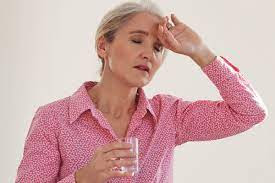
Hot Flashes: This is the most common symptom of menopause, experienced by up to 80% of women . A hot flash is a sudden sensation of intense heat, often centered on the face, neck, and chest, which can rapidly become generalized . It typically lasts between two to four minutes and may be accompanied by perspiration, palpitations, and a feeling of anxiety, sometimes followed by chills . The frequency can range from occasional to several times an hour.
-
Night Sweats: These are simply hot flashes that occur during sleep. They can drench sleepwear and sheets, leading to significant sleep disruption .
Genitourinary Syndrome of Menopause (GSM)
-
Vaginal Dryness and Atrophy: Declining estrogen causes the vaginal tissues to become thinner, drier, less elastic, and more fragile, a condition known as vulvovaginal atrophy . This can lead to itching, burning, and discomfort.
-
Dyspareunia: Due to vaginal dryness and atrophy, sexual intercourse can become painful .
-
Urinary Symptoms: The urinary tract is also affected by estrogen loss. Women may experience increased urinary frequency, urgency, a higher risk of urinary tract infections (UTIs), and stress incontinence (leaking urine during coughing, sneezing, or exercise) .
Psychological and Cognitive Symptoms
-
Mood Changes: Fluctuating hormones can contribute to irritability, anxiety, and an increased risk of depression. In fact, there is a threefold increased risk for a major depressive episode during the perimenopausal period .
-
Sleep Disturbances: Insomnia is prevalent in nearly 50% of menopausal women . It can be caused by night sweats, but also by anxiety and other mood disorders .
-
Brain Fog: Many women report difficulties with memory, concentration, and attention. These cognitive changes, often described as “brain fog,” are usually temporary .
Physical Changes
-
Weight Gain and Metabolic Changes: A slowing metabolism and hormonal shifts often lead to weight gain, particularly around the abdomen .
-
Skin, Hair, and Joint Changes: Skin may become thinner and drier. Some women experience joint and muscle aches or increased hair loss .
-
Menstrual Irregularity: During perimenopause, cycles become unpredictable. Periods may become shorter or longer, lighter or heavier, and the time between periods may vary .
Causes and Contributing Factors
The root cause of menopause is the natural aging and depletion of the ovarian follicles, which are the structures that produce and release eggs . This leads to a permanent decline in the production of the hormones estrogen and progesterone.
The Biological Process
As ovarian function ceases, the negative feedback loop that controls the hypothalamic-pituitary-gonadal (HPG) axis is disrupted. The brain (hypothalamus and pituitary gland) produces more follicle-stimulating hormone (FSH) and luteinizing hormone (LH) in a futile attempt to stimulate the ovaries, leading to significantly elevated levels of these hormones in the blood .
Modern research has identified that specific neurons in the hypothalamus, called KNDy neurons (which co-express kisspeptin, neurokinin B, and dynorphin), play a central role in this process. The decline in estrogen destabilizes these neurons, leading to an over-activation of the body’s heat-loss mechanisms, which is now understood to be the direct cause of hot flashes .
Risk Factors for Early Menopause
While age is the primary factor, several influences can cause menopause to occur earlier (before age 45) or prematurely (before age 40) .
-
Genetics: A family history of early menopause is a strong predictor .
-
Autoimmune Diseases: Conditions like rheumatoid arthritis or thyroid disease can sometimes trigger an earlier decline in ovarian function .
-
Lifestyle Factors: Smoking is a significant risk factor, as toxins in cigarettes can accelerate the depletion of eggs and lead to earlier menopause by several years .
-
Medical Treatments: Surgical removal of the ovaries (oophorectomy) or medical treatments like chemotherapy and radiation therapy for cancer can induce immediate menopause .
-
Environmental Toxins: Exposure to certain endocrine-disrupting chemicals (EDCs) found in some pesticides and plastics may also play a role .
Effects on Long-Term Health
The estrogen deficiency that defines postmenopause has profound effects on long-term health, increasing the risk for several chronic conditions.
-
Osteoporosis: Estrogen plays a vital role in maintaining bone density. With its decline, bone resorption outpaces bone formation, leading to a loss of bone mass and an increased risk of fractures, particularly in the hip, spine, and wrist .
-
Cardiovascular Disease: Estrogen has a protective effect on the cardiovascular system. After menopause, the risk of heart disease and stroke increases significantly due to negative changes in cholesterol levels (increased LDL or “bad” cholesterol), blood pressure, and blood vessel function .
-
Genitourinary Complications: As described in the symptoms, the physical changes to the vaginal and urinary tract are permanent and tend to progress without treatment, leading to ongoing discomfort and an increased risk of infections .
Prevention and Management Through Lifestyle
While the hormonal changes of menopause are inevitable, their impact can be profoundly influenced by lifestyle choices. Prevention in this context focuses on mitigating symptoms and reducing the risk of associated long-term health problems.
-
Dietary Choices: A balanced diet is paramount.
-
Calcium and Vitamin D: Increasing intake of calcium-rich foods (dairy, leafy greens, fortified products, small fish with bones) and ensuring adequate vitamin D (from sunlight, food, or supplements) is crucial for bone health .
-
Phytoestrogens: Foods containing plant-based estrogens, such as soy products (tofu, edamame), flaxseeds, and whole grains, may help mildly modulate estrogen activity and ease symptoms for some women .
-
Limit Triggers: Reducing or avoiding caffeine, alcohol, and spicy foods can help decrease the frequency and severity of hot flashes .
-
Nutrient-Rich Foods: A diet rich in fruits, vegetables, whole grains, and lean proteins provides the vitamins and minerals needed for energy and overall health. Omega-3 fatty acids (from fish, walnuts) can help support mood and reduce inflammation .
-
-
Regular Physical Activity: Exercise is a powerful tool.
-
Weight-Bearing Exercise: Activities like walking, jogging, dancing, and strength training help build and maintain bone density, combating osteoporosis .
-
Aerobic Exercise: Helps manage weight, improves mood, and supports cardiovascular health.
-
Mind-Body Practices: Yoga and tai chi can reduce stress, improve sleep, and help with flexibility and balance .
-
-
Stress Management and Mental Health: Chronic stress can exacerbate menopausal symptoms. Techniques like mindfulness, meditation, deep breathing exercises, and engaging in hobbies can be very effective . Cognitive-behavioral therapy (CBT) has also been shown to be beneficial for managing mood and sleep issues . The support of family and a strong social network is invaluable during this transition .
The Homeopathic Approach to Menopause
Homeopathy offers a distinct and holistic approach to managing menopause, focusing on the individual as a whole rather than just the presenting symptoms. It is based on the principle of “like cures like” and uses highly diluted natural substances to stimulate the body’s own healing response .
Principles of Homeopathic Treatment
In homeopathy, the treatment is highly individualized. A homeopath will spend considerable time understanding not only the physical symptoms a woman is experiencing (e.g., the timing and nature of her hot flashes) but also her emotional state, personality, fears, and even her sleep patterns and food preferences. The goal is to find a single remedy or a short list of remedies that match her “constitution” or complete symptom picture . This personalized care is a cornerstone of its appeal .
Commonly Used Homeopathic Remedies for Menopause
Research and clinical practice have identified several key remedies frequently used for menopausal complaints .
-
Lachesis mutus: Often indicated for women who experience intense hot flashes, particularly in the upper body. It is also considered for those who are talkative, jealous, or suspicious, and whose symptoms are worse after sleep and by heat or pressure on the neck .
-
Sepia officinalis: This remedy is frequently prescribed for the classic “dragging down” sensation in the pelvis, along with extreme mental and physical fatigue, irritability, and indifference towards loved ones. Women needing Sepia often feel better with vigorous exercise and worse with consolation . Interestingly, dopamine, a neurotransmitter involved in mood, is a constituent of the ink of the cuttlefish from which Sepia is derived, hinting at a potential neuroendocrine mechanism .
-
Other remedies: Depending on the individual’s symptom profile, a homeopath might consider remedies like Sulfur (for heat and burning sensations), Calcarea carbonica (for anxiety, weight gain, and sweats), or Pulsatilla (for a gentle, weepy disposition with changeable symptoms) .
Integrating Homeopathy with Conventional Care
Homeopathy is often used as a complementary therapy alongside conventional medicine . It can be particularly helpful for addressing specific symptoms like mood swings, anxiety, or sleep disturbances that may not be fully resolved by MHT alone . Some women also turn to homeopathy to help manage the side effects of conventional treatments.
It is crucial for any woman considering homeopathy to:
-
Consult a Qualified Practitioner: Treatment should always be guided by an experienced and certified homeopath who can properly assess the case and prescribe the correct remedy and potency.
-
Inform All Healthcare Providers: It is vital to inform both your primary care physician and your homeopath about all treatments and supplements you are taking to ensure safe and coordinated care .
For severe symptoms like significant bone loss (osteoporosis) or debilitating hot flashes that severely impact daily life, homeopathy should not be used as a replacement for conventional medical evaluation and treatment but rather as a complementary approach to enhance overall well-being .
Frequently Asked Questions About Homeopathic Remedies for Menopause
Navigating the myriad of treatment options for menopause can be overwhelming. Homeopathy is often considered by women seeking a natural, individualized approach. Here are answers to some of the most common questions about using homeopathic remedies during this transition.
1. How does homeopathic treatment for menopause differ from conventional medicine?
The fundamental difference lies in the approach. Conventional medicine, such as Menopausal Hormone Therapy (MHT), typically works by directly addressing the root cause of symptoms—hormone deficiency—by supplementing the body with estrogen and progesterone. It is a “replacement” model.
Homeopathy, in contrast, operates on a “stimulation” model. It uses highly diluted natural substances to trigger the body’s own self-regulating and healing mechanisms. Instead of giving the body the hormones it is lacking, a homeopath aims to prescribe a remedy that matches the individual’s unique symptom profile, with the goal of helping the body rebalance itself. This means two women with hot flashes could receive completely different homeopathic remedies based on their other symptoms, emotional states, and personal characteristics.
2. Are homeopathic remedies safe to take alongside Hormone Replacement Therapy (HRT)?
Generally, homeopathic remedies are considered safe to use alongside conventional medications because they are such highly diluted substances. They are unlikely to cause direct drug interactions or interfere with the pharmacological action of HRT.
However, it is absolutely essential to inform all your healthcare providers about everything you are taking. You should tell your homeopath that you are on HRT, and you must tell your doctor prescribing the HRT that you are also seeing a homeopath. This allows for coordinated, holistic care. A homeopath, for example, might use remedies to address symptoms like fatigue or mood swings that persist even while on HRT, or to help the body adjust as a woman begins to wean off hormone therapy under her doctor’s supervision.
3. How long does it take to see results with homeopathic treatment?
The timeline for results is highly variable and depends on several factors, including the chronicity and severity of the symptoms, the individual’s overall health and vitality, and the accuracy of the remedy prescription.
Some women, particularly those with acute and intense symptoms, may experience noticeable improvements in a matter of hours or days. For others with more deep-seated or chronic conditions, it may take several weeks or even a few months of consistent treatment under a homeopath’s guidance to see significant changes. The initial response is often a subtle shift in energy levels or mood, followed by a gradual easing of physical symptoms like hot flashes. Patience and open communication with your homeopath are key.
4. Can homeopathy help with symptoms other than hot flashes, like mood swings and fatigue?
Yes, absolutely. In fact, homeopathy is particularly well-suited for addressing the complex tapestry of menopausal symptoms. Because treatment is individualized, a homeopath considers the whole person.
For example, a remedy like Sepia is not only considered for physical symptoms like a dragging pelvic sensation and hot flashes, but also for the characteristic emotional state of irritability, indifference toward loved ones, and overwhelming exhaustion. Similarly, a woman experiencing anxiety, restlessness, and a fear of being alone might benefit from a different remedy altogether. By matching the remedy to the entire symptom picture—physical, emotional, and mental—homeopathy aims to restore balance on all levels.
5. Is there a one-size-fits-all homeopathic remedy for menopause?
This is a very common misconception. There is no single “menopause remedy” in classical homeopathy. While you may see combination products in health food stores labeled for “menopause relief,” these are considered clinical or complex homeopathy and work on a different principle.
Classical homeopathy, which is the most traditional and individualized form, holds that the remedy must be uniquely matched to the person. A hot flash that comes with a feeling of suffocation and is worse at night points to a different remedy (Lachesis) than a hot flash accompanied by sudden weakness and a craving for fresh air. The individual’s unique experience of their symptoms is the most important guide for the prescription.
6. Are there any side effects from homeopathic remedies?
When prescribed by a qualified practitioner, homeopathic remedies are extremely safe and have a strong track record of being free from significant adverse effects or toxicity due to their high level of dilution. They are non-addictive and do not interact negatively with other medications in the way that pharmaceutical drugs can.
However, some individuals may experience a “homeopathic aggravation.” This is a temporary and mild worsening of existing symptoms shortly after taking a remedy. In classical homeopathy, this is often interpreted as a positive sign that the remedy is working and the body has begun a healing response. This aggravation typically subsides quickly. If it occurs, it is important to report it to your homeopath, who can advise on whether to stop, continue, or adjust the remedy. You should never attempt to self-prescribe for complex conditions.
7. How do I find a qualified homeopath?
Finding a reputable and qualified practitioner is the most important step. Look for a homeopath who has undergone formal, accredited training and holds a recognized certification or license, if applicable in your region.
In many countries, there are professional regulatory bodies that maintain directories of registered practitioners. These organizations often require members to meet specific educational standards and adhere to a code of ethics. You can also ask for recommendations from your primary care physician, a trusted naturopath, or friends who have had positive experiences. A good initial consultation should be thorough, lasting an hour or more, as the homeopath gathers a complete picture of your health and history.
Conclusion
Menopause is a profound and multifaceted transition in a woman’s life, driven by the natural decline in ovarian hormones. Its symptoms—from hot flashes and sleep disturbances to mood changes and long-term health risks—can be challenging, but they are manageable. A proactive approach that combines a healthy lifestyle, including a balanced diet rich in calcium and regular exercise, forms the foundation of good health during this time. For those needing additional support, conventional medicine offers effective options like MHT and non-hormonal medications. Simultaneously, holistic approaches like homeopathy provide an individualized, gentle method to address both the physical and emotional nuances of the experience. By understanding the full spectrum of changes and available treatments, women can work with their healthcare providers to navigate menopause not as an ending, but as a new chapter of health and well-being.