Table of Contents
ToggleCanker Sores: Unveiling the Painful Intricacies, Prevention and Homeopathic Remedies for Canker Sores
Introduction
If you have ever felt a sharp, burning sting in your mouth every time you take a sip of orange juice or bite into a crispy apple, you have likely met the canker sore. These small, shallow lesions appear on the soft tissues inside your mouth—on the inside of your lips, cheeks, the base of your gums, or under your tongue. Despite their tiny size, they can cause remarkable discomfort, turning eating, drinking, and even talking into a painful chore.
Unlike cold sores, which are caused by a virus and appear on the outside of the lips, canker sores are not contagious. They are one of the most common oral conditions, affecting an estimated 20% of the general population at any given time. While they usually heal on their own within one to two weeks, recurrent outbreaks can be frustrating and debilitating. This article explores everything you need to know about canker sores—from recognizing the first tingle to preventing future flare-ups and using homeopathic remedies for gentle, holistic relief.
What Exactly Are Canker Sores?
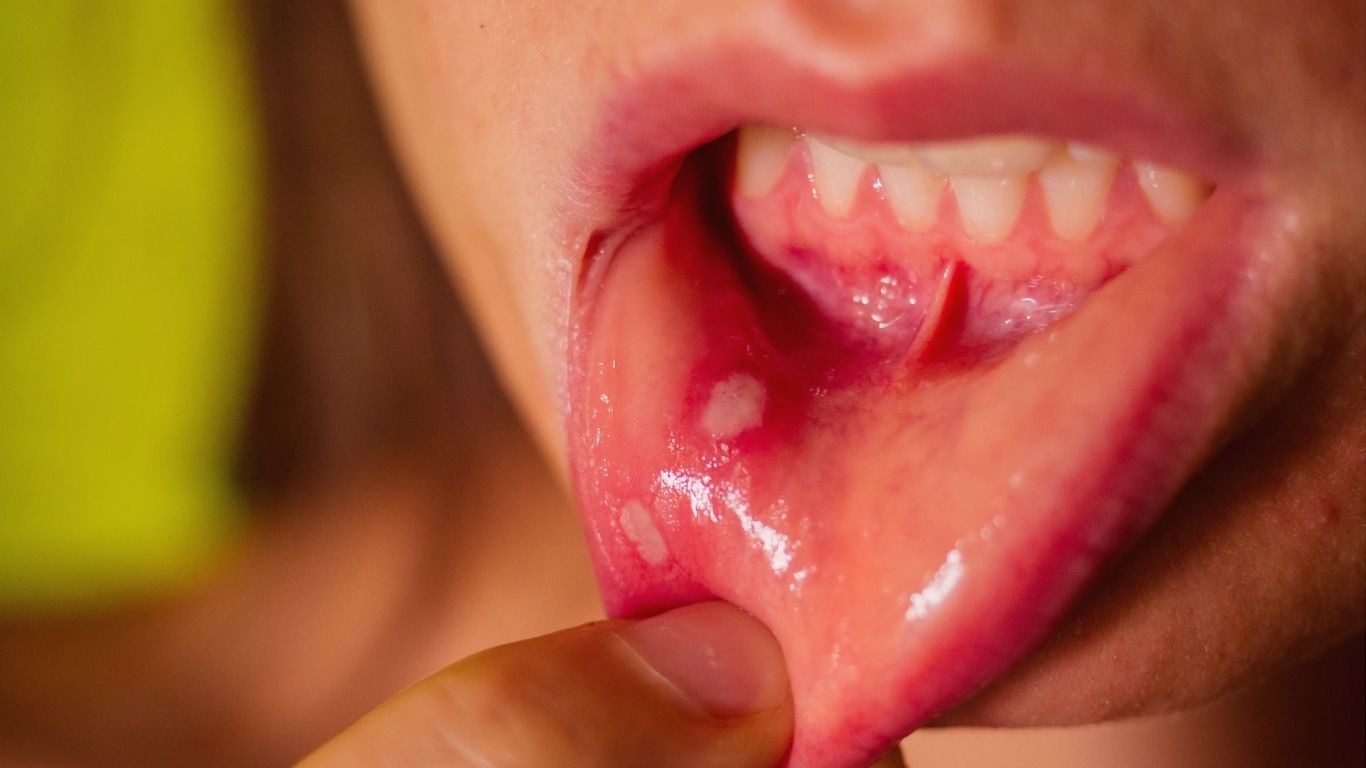
Medically known as aphthous ulcers, canker sores are round or oval lesions with a white, yellow, or gray center and a distinct red, inflamed border. They form only on non-keratinized tissue—meaning the soft, movable parts of your mouth that are not tightly bound to bone. You will never find a canker sore on the hard palate (roof of the mouth) or on the outer lips.
There are three main types of canker sores:
Minor canker sores are the most common, making up about 80% of cases. They are small—usually less than one centimeter in diameter—and heal without scarring in 7 to 14 days.
Major canker sores are larger and deeper, often exceeding one centimeter. They take much longer to heal, sometimes up to six weeks, and can leave noticeable scarring. These are less common but significantly more painful.
Herpetiform canker sores are the rarest type. Despite their name, they have nothing to do with the herpes virus. They appear as clusters of tiny, pinhead-sized ulcers that merge together to form an irregular, larger sore. They tend to heal faster than major ulcers, usually within 7 to 10 days.
Recognizing the Symptoms: From First Tingle to Full Ulcer
The onset of a canker sore is rarely sudden. Most people experience a prodromal stage—a warning phase that begins one to two days before the sore becomes visible. During this phase, you might feel a mild burning, tingling, or prickling sensation in a specific spot inside your mouth. The area may feel raw or sensitive to touch, even though nothing appears abnormal yet.
Within 24 to 48 hours, a small red bump or blister-like spot appears. This quickly collapses and becomes an open ulcer with a yellowish-white membrane covering the center. The surrounding tissue becomes inflamed and bright red. At this stage, the pain is at its peak. Every movement of the mouth—smiling, chewing, speaking—can tug on the ulcer and trigger sharp, stinging pain.
Other common symptoms include:
A persistent, localized burning sensation that worsens with spicy, acidic, or salty foods. Even mild foods like bread or cheese can hurt if they rub against the sore.
Swelling of the nearby lymph nodes under the jaw or in the neck, especially if multiple sores appear at once.
A low-grade fever or general feeling of fatigue, though this is more common with major or herpetiform outbreaks.
Difficulty maintaining oral hygiene because brushing near the sore causes pain, which can lead to secondary issues like bad breath or gum inflammation.
In severe cases, especially with major canker sores, the pain can be so intense that it interferes with sleep, causes unintentional weight loss due to avoiding food, or leads to dehydration from reduced fluid intake.
What Causes Canker Sores? Unpacking the Triggers
The exact cause of canker sores remains unknown, which is why they are often called an “idiopathic” condition. However, researchers have identified a long list of triggers and contributing factors. In most people, canker sores result from a combination of several of these factors, rather than a single cause.
Physical injury is one of the most common triggers. Accidentally biting your cheek, brushing your teeth too aggressively, burning your mouth on hot pizza cheese, or scraping your gums with a crunchy tortilla chip can all provoke an ulcer. In people prone to canker sores, even a minor trauma that most people would not notice can trigger a full-blown lesion.
Nutritional deficiencies play a surprisingly large role. Low levels of vitamin B12, folate (vitamin B9), iron, and zinc are consistently linked to recurrent canker sores. These nutrients are essential for maintaining the integrity of the mucous membrane and for rapid cell turnover. When you are deficient, the oral tissues become thinner, more fragile, and slower to repair minor injuries, making them more vulnerable to ulcer formation.
Food sensitivities are another major category. For many people, certain foods act as direct irritants or triggers. Acidic foods like citrus fruits (oranges, lemons, grapefruit), pineapples, tomatoes, and strawberries are classic culprits. Spicy foods, coffee, chocolate, eggs, nuts (especially walnuts), and cheese have also been reported as triggers. Some researchers believe this is due to an immune reaction to specific proteins or acids rather than a true allergy.
Hormonal changes influence canker sore frequency in many women. Outbreaks often occur just before or during menstruation, when progesterone levels drop and estrogen fluctuates. Pregnant women sometimes notice either a dramatic reduction or increase in canker sores, depending on their individual hormonal balance.
Stress and lack of sleep are perhaps the most frequently cited triggers. Psychological stress alters immune function and increases systemic inflammation. Many people report that their worst outbreaks happen during exam weeks, job interviews, relationship conflicts, or after several nights of poor sleep.
Genetic predisposition is undeniable. If both of your parents suffered from recurrent canker sores, you have a 90% chance of having them as well. Even with just one affected parent, the risk is elevated. Specific genetic markers related to immune response have been identified in families prone to severe, recurrent aphthous ulcers.
Certain health conditions are strongly associated with canker sores. These include inflammatory bowel diseases like Crohn’s disease and ulcerative colitis, celiac disease (gluten sensitivity), Behçet’s disease (a rare disorder causing blood vessel inflammation), and HIV/AIDS. In these cases, the canker sores are often more severe, larger, and slower to heal than in otherwise healthy individuals.
Finally, immune system dysfunction plays a central role. The leading theory is that canker sores represent a localized autoimmune reaction. Something triggers your immune system to attack a specific patch of your own oral mucosa as if it were a foreign invader. This explains why anti-inflammatory medications and immune-modulating treatments often help.
The Real Effects: Beyond a Simple Mouth Sore
While canker sores are rarely dangerous, their effects on daily life can be profound. The physical pain is only the beginning. Because the mouth is involved in nearly every basic human function—eating, drinking, speaking, smiling, kissing, brushing teeth—a painful sore can disrupt all of these activities simultaneously.
Nutritional effects are common. People in the midst of an outbreak often avoid fruits, vegetables, and whole grains because these foods are either acidic, crunchy, or rough. Instead, they gravitate toward soft, bland, low-nutrient foods like white bread, yogurt, mashed potatoes, and ice cream. Over time, recurrent outbreaks can lead to subtle nutritional deficiencies, which ironically may trigger even more sores.
Emotional and social effects are underappreciated. Many people feel self-conscious about talking or laughing openly when they have a large sore. Kissing becomes painful or impossible. Sharing food or drinks becomes a source of anxiety. Some individuals with chronic, severe canker sores report avoiding social situations altogether during flare-ups, leading to feelings of isolation and even depression.
Work and school performance can suffer. The constant, gnawing pain makes it hard to concentrate. Speaking for long periods—whether giving a presentation, teaching a class, or working a customer service job—can be exhausting and painful. People with frequent outbreaks may miss work or underperform without ever mentioning the real reason why.
In rare, severe cases, major canker sores can cause complications. These include secondary bacterial infection of the ulcer (signaled by increasing pain, pus, or fever), scarring that alters the flexibility of the lip or cheek, and difficulty swallowing if the sore is located near the throat or tonsils.
Prevention Strategies That Actually Work
Preventing canker sores requires a personalized approach because triggers vary so much from person to person. However, several evidence-based strategies help most people reduce the frequency and severity of their outbreaks.
Start with a food and symptom diary. For one month, write down everything you eat and drink, along with your stress levels, sleep quality, and any mouth injuries. Also note when canker sores appear. Over time, patterns will emerge. You might discover that your sores always come two days after eating a handful of walnuts, or the morning after a sleepless night. Once you know your triggers, you can avoid them.
Optimize your nutrition. Even if blood tests show “normal” levels of B12, folate, iron, and zinc, being on the low end of normal can still trigger sores in susceptible people. Consider a maintenance supplement: 1000 mcg of vitamin B12 (sublingual or methylcobalamin form), 400 to 800 mcg of folate (as methylfolate), and 15 to 30 mg of zinc picolinate daily. Many people notice a dramatic reduction in outbreaks within two to three months.
Switch to a soft-bristled toothbrush and a non-irritating, sulfate-free toothpaste. Sodium lauryl sulfate (SLS), a foaming agent found in most toothpastes, is a known irritant for many people with recurrent canker sores. SLS strips away the protective mucous layer inside your mouth, making the tissue more vulnerable to injury and ulcers. Look for SLS-free toothpastes from brands like Sensodyne (certain formulations), Biotene, or natural toothpaste lines.
Manage your stress actively, not passively. Passive stress relief like watching television rarely helps prevent canker sores because it does not lower cortisol levels effectively. Instead, try 10 minutes of deep belly breathing, a 15-minute walk outdoors, progressive muscle relaxation, or guided meditation. These active techniques have been shown to reduce outbreak frequency in clinical studies.
Protect your mouth from injury. Be mindful while eating—slow down, chew carefully, and avoid talking with food in your mouth. If you wear braces, dentures, or retainers, ask your dentist about orthodontic wax to cover sharp edges. If you grind your teeth at night (bruxism), a custom night guard can prevent you from biting your cheeks and tongue while you sleep.
Address underlying health conditions. If your canker sores are frequent, large, or slow to heal, ask your doctor about testing for celiac disease, Crohn’s disease, and nutritional deficiencies. Treating the root condition often makes the canker sores disappear entirely.
Homeopathic Treatment for Canker Sores
Homeopathy offers a gentle, individualized approach to treating canker sores. Rather than suppressing the ulcer with numbing gels or cauterizing chemicals, homeopathic remedies aim to stimulate the body’s own healing response. The key is matching the remedy to the person’s unique set of symptoms—not just the sore itself.
Borax is one of the most frequently indicated remedies for canker sores, especially in children. The person needing Borax has ulcers that are shallow, white, and extremely sensitive. The defining feature is that the pain is worse from warm food or drink but relieved by cold liquids. These individuals often have a peculiar symptom: the mouth feels as if it is full of loose, scalded skin, and they may drool excessively during sleep. Borax 30C taken three times daily for two to three days often speeds healing dramatically.
Nitricum Acidum is for deep, splinter-like pain. The canker sores are irregular, jagged, and bleed easily when touched. The pain is so sharp and raw that the person describes it as feeling like a piece of glass or a splinter is stuck in the sore. These ulcers tend to occur in people who are irritable, anxious about their health, and sensitive to noise and pain. Nitricum Acidum 30C, taken twice daily, can reduce pain within hours and shorten healing time by half.
Mercurius Solubilis suits canker sores that are large, moist, and covered with a grayish-white membrane. The mouth feels tender and swollen, and there is excessive, foul-smelling saliva. The person often has bad breath, a metallic taste in the mouth, and night sweats. These ulcers worsen from warm drinks and from lying down at night. Mercurius 30C every four hours for two days often brings rapid relief.
Arsenicum Album is for burning, restless canker sores. The pain is a relentless, burning sensation that is temporarily relieved by warm drinks or warm compresses—unlike Borax, where cold helps. The person is anxious, restless, and feels better from company and warmth. These ulcers often appear after food poisoning, digestive upset, or periods of intense anxiety. Arsenicum 30C every four to six hours can calm the burning and promote healing.
Sulphuric Acid is a lesser-known but highly effective remedy for canker sores triggered by acidic foods and drinks. The ulcers are flat, yellowish, and surrounded by a very pale, almost white border. The person feels exhausted and physically weak, as if they have been overexerting themselves. Sulphuric Acid 30C taken before meals when acidic foods are unavoidable can prevent a sore from forming.
For homeopathic treatment to work well, choose the remedy that most closely matches your overall symptom picture, not just the appearance of the ulcer. Take the remedy in 30C potency, three to four pellets under the tongue, away from food and drink. Repeat every two to four hours for severe pain, then reduce to twice daily as improvement begins. If no improvement occurs after six doses, a different remedy is needed.
When to See a Doctor or Dentist
Most canker sores are harmless and self-limiting, but certain signs warrant professional evaluation. See a healthcare provider if any ulcer lasts longer than three weeks, is unusually large (over one centimeter), or spreads to other parts of your mouth. Seek immediate attention if you have a high fever, difficulty swallowing or breathing, or if the pain is so severe that you cannot eat or drink for more than 24 hours. Recurrent, frequent outbreaks—more than three or four per month—also deserve a medical workup to rule out underlying conditions.
Frequently Asked Questions About Homeopathic Remedies for Canker Sores
1. How do I choose the right homeopathic remedy for my canker sore?
Choosing the right remedy is about matching your unique symptoms to the remedy picture, not just treating the sore itself. Ask yourself specific questions: Does the pain burn or does it feel like a splinter? Is it relieved by cold drinks or by warm drinks? Do you feel anxious, restless, or exhausted along with the sore? Do you have bad breath, excessive saliva, or a metallic taste? Read the remedy descriptions carefully and pick the one that feels like it was written about you. If two remedies seem equally fitting, start with the one that matches your most unusual or intense symptom—for example, the sensation of a splinter points strongly toward Nitricum Acidum.
2. Can I take homeopathic remedies alongside my regular pain relievers or prescription medications?
Yes, homeopathic remedies are generally safe to take with conventional medications because they are highly diluted and have no known chemical interactions. However, you should still inform your doctor or pharmacist about everything you are taking. Keep in mind that strong flavors like mint, camphor, coffee, and eucalyptus can sometimes interfere with homeopathic remedies, so try to take your pellets at least 15 to 20 minutes away from toothpaste, mouthwash, coffee, or medicated lozenges.
3. How long does it take for a homeopathic remedy to work on a canker sore?
This depends on the severity of the sore and how well the remedy matches your symptoms. In acute cases, you may notice a reduction in pain within 30 minutes to two hours. The sore often stops growing, the burning or stinging fades, and healing begins noticeably faster than usual—often within three to five days instead of the typical seven to fourteen. If you see no improvement at all after six doses over two days, the remedy is likely not the correct match, and you should try a different one or consult a homeopath.
4. Are homeopathic remedies safe for children with recurrent canker sores?
Absolutely, and they are often the first choice for parents who want to avoid numbing gels or steroid pastes in young children. Borax is particularly well-suited for children, especially those who drool heavily during sleep or who cannot tolerate warm food when they have a sore. For infants and toddlers under two years old, dissolve one pellet in a small amount of clean water and give it by spoon. For children over two, the standard three pellets under the tongue is fine. Always use the 30C potency for acute sores unless a homeopath advises otherwise.
5. Can homeopathy prevent canker sores from coming back, or is it only for treating active sores?
Homeopathy can be used both for acute treatment during an outbreak and for long-term prevention if you suffer from frequent, recurrent sores. For prevention, a constitutional approach works best—this means working with a professional homeopath who will take a full case history (personality, sleep patterns, food cravings, medical history, and emotional tendencies) and prescribe a single, deep-acting remedy. Many people with lifelong recurrent canker sores find that a well-chosen constitutional remedy reduces outbreaks from monthly to once or twice a year, or eliminates them entirely.
6. What potency should I use for canker sores: 6C, 30C, or 200C?
For self-treatment of an active, painful canker sore, 30C is the most practical and effective potency. It is strong enough to act quickly but gentle enough to be safe for repeated dosing over two to three days. 6C is milder and may work for very minor, barely noticeable sores, but often requires more frequent dosing (every hour or two). 200C is a higher potency that can work dramatically for some people, but it should be taken only once or twice total for an acute sore, not repeatedly. If you are new to homeopathy, stick with 30C—it is the most forgiving and reliable choice.
7. Can I use topical homeopathic gels or sprays instead of oral pellets?
Yes, topical homeopathic products for canker sores do exist, often containing remedies like Calendula, Hydrastis, or Mercurius in gel or spray form. These can provide rapid, localized relief and are especially helpful for people who do not like taking pills or pellets. However, oral pellets tend to work more deeply and systemically, addressing the underlying immune or inflammatory response rather than just numbing the surface. For best results, many people use both: a topical gel for immediate comfort and an oral remedy to speed overall healing.
8. What should I avoid while taking homeopathic remedies for canker sores?
Strong mint, camphor, eucalyptus, and coffee are the most commonly cited substances that can antidote or weaken a homeopathic remedy. This does not mean you must avoid them entirely, but try not to take them within 15 to 20 minutes of your remedy. For example, if you drink coffee in the morning, take your homeopathic pellets first, wait 20 minutes, then have your coffee. Similarly, avoid using mentholated cough drops, Vicks VapoRub, or eucalyptus-based mouthwashes right around the time you take your remedy. Regular food, water, and most beverages (except coffee and strong peppermint tea) are fine.
9. Can homeopathic remedies make a canker sore worse before it gets better?
A temporary, mild worsening of symptoms—often called a “healing aggravation”—is possible but uncommon, especially with the 30C potency. If it happens, it usually lasts only a few hours and is followed by rapid, complete healing. True worsening (the sore becomes larger, more painful, or spreads) is not a normal homeopathic response and suggests that the remedy is incorrect or that the sore has become infected. In that case, stop the remedy and consult a healthcare provider.
10. How do I store homeopathic remedies so they stay effective?
Keep them away from strong electromagnetic fields (televisions, microwaves, computers, cell phones), direct sunlight, and strong smells (perfume, essential oils, camphor, menthol). A small wooden box or a drawer in a cool, dark room is ideal. Do not store them in the bathroom, where heat and humidity fluctuate. Also, avoid touching the pellets with your hands—pour them directly into the cap of the tube and then drop them under your tongue. The natural oils on your fingers can degrade the remedies over time.
11. Are there any scientific studies supporting homeopathy for canker sores?
Research on homeopathy for canker sores is limited but promising. A small randomized controlled trial published in the journal Homeopathy in 2007 found that a complex homeopathic remedy significantly reduced the number, duration, and pain of recurrent aphthous ulcers compared to placebo. Another study in Oral Diseases (2013) showed that individualized homeopathic treatment reduced outbreak frequency by over 50% in patients with severe recurrent canker sores after six months. While more large-scale research is needed, the existing evidence and extensive clinical experience suggest homeopathy can be a valuable tool, especially for people who do not respond well to conventional treatments.
12. When should I stop homeopathic treatment and see a professional homeopath or doctor?
Stop self-treatment and seek professional help if your canker sore has not begun to improve within three days of starting a well-matched remedy, if the sore grows larger than one centimeter, if new sores keep appearing while you are taking the remedy, or if you have systemic symptoms like fever, fatigue, or swollen lymph nodes that do not resolve. A professional homeopath can take a much deeper case and prescribe a constitutional remedy for long-term prevention. A doctor or dentist should evaluate any sore that lasts longer than three weeks, bleeds easily, or looks unusual in any way.
Conclusion
Canker sores are a common, painful, and frustrating condition, but they are manageable. By understanding your personal triggers, optimizing your nutrition, protecting your mouth from injury, and using targeted homeopathic remedies when outbreaks occur, you can reduce both the frequency and severity of these troublesome ulcers. Listen to your body, keep a symptom diary, and do not hesitate to seek professional help if simple measures fail. With patience and persistence, most people can find a combination of prevention and treatment that allows them to live free from the constant fear of the next painful sore.













There are two types of herpes simplex virus: HSV-1 and HSV-2. Both virus types can cause sores around the mouth (herpes labialis) and on the genitals (genital herpes). It’s also crucial to learn as much as you can about your diagnosis. Seek options, Find out about what’s out there that could help, that was how i came across about Dr Okosun online, an african herbalist who eliminated my four years HSV with herbal supplement and today i,m permanently cured from herpes which i never believed was possible, I recommend Dr okosuns herbs to yall with any health issues. drokosun55@gmail.com
+2349117617336